
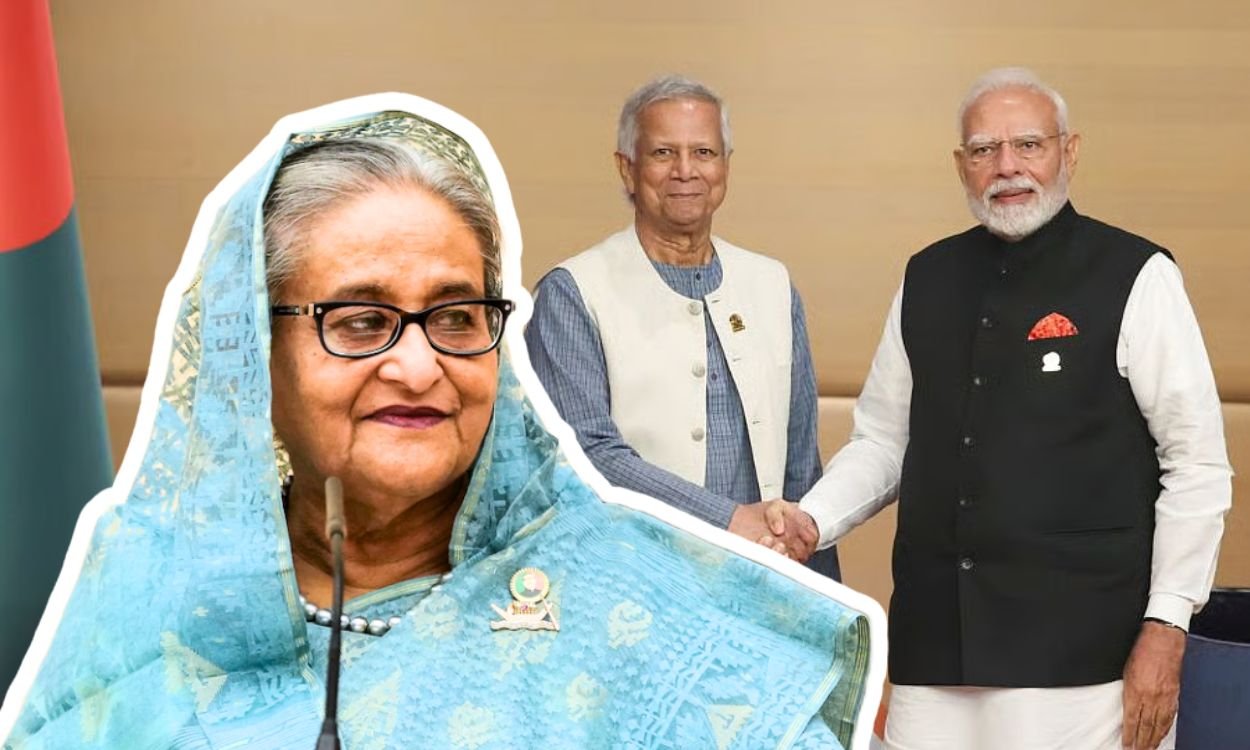

New Delhi: The political and legal crisis in Bangladesh has landed squarely on India’s doorstep, with the interim government in Dhaka formally requesting the extradition of former Prime Minister Sheikh Hasina. The request cites the 2013 India-Bangladesh Extradition Treaty following an arrest warrant issued by Bangladesh’s International Crimes Tribunal (ICT) against Hasina for “crimes against humanity.”
India’s decision will now hinge on intricate legal provisions within the bilateral treaty and its own domestic laws, with multiple clauses offering New Delhi grounds to refuse the demand.
The Extradition Hurdles for Dhaka
While the ICT’s arrest warrant legally satisfies the minimum procedural condition for an extradition request, India has two significant legal barriers it can invoke:
- 1. The Dual Criminality Test: Articles 1 and 2 of the treaty require that the alleged offence must be punishable under the domestic laws of both countries. While “crimes against humanity” is recognized under Bangladesh’s war-crimes framework, India typically interprets such charges within the context of international tribunals, not domestic political events. This divergence offers India a legal basis to argue that the charge does not meet the definition required for extradition under the Indian legal system.
- 2. The Political Offence Exception: The most significant defense for Hasina lies in Article 6(1) of the treaty, which explicitly states that extradition may be refused if the alleged offence is considered an “offence of a political character.” Given that Hasina was ousted by a political uprising and the current administration is her political adversary, India can categorize the accusations, trial, and verdict as inherently political. Furthermore, Article 8(3) allows India to deny extradition if the request is not made in good faith or in the interests of justice, a clause that may be cited considering the ongoing political turbulence in Bangladesh.
The Role of India’s Domestic Law
India’s own Extradition Act (1962) provides additional legal grounds for refusal:
- Section 31 prohibits the surrender of a fugitive if the alleged offence is of a political character, reinforcing the treaty’s exception.
- Section 29 allows India to reject an extradition request if it appears not to be made in good faith or is politically motivated.
Bangladesh may attempt to invoke Article 6(2), which provides exceptions to the political-offence bar, but for this to succeed, Dhaka would need to convincingly demonstrate the charges were brought in good faith—a difficult task given the context of a political upheaval.