

By Vijay M. Kumar
In recent years—particularly during election cycles—the word “development” has been stretched to its limits in Kerala’s political discourse. Competing narratives from both the ruling front and the opposition have largely reduced governance to visible, physical infrastructure—roads, buildings, and projects—often sidelining a more foundational question: the protection of individual freedoms and the quality of democratic engagement.
Over the past decade of Pinarayi Vijayan’s rule, concerns over the erosion of individual freedoms have repeatedly surfaced. Instances of dissent being met with stringent legal action have added to this perception. The controversy around the proposed amendment to the Kerala Police Act, 2011—specifically Section 118A, which sought to criminalise expressions causing “injury to mind”—became a defining example. The provision was widely criticised as excessive and open to misuse, drawing objections not just from opposition parties but also from sections within the Left ecosystem itself. Though it was eventually withdrawn, the very attempt—and similar such efforts during the period—left a lingering sense of how expansively the law could be used to curtail individual freedom. The apprehension it generated ran deep, gradually settling into public consciousness. Over time, a significant section of society appeared to internalise these constraints as a new normal, growing accustomed to them even as the idea of individual freedom receded from everyday political expectation.
This narrowing of public expectation is not incidental. It reflects a broader shift where governance is increasingly evaluated through deliverables that are tangible, immediate, and politically marketable. The deeper constitutional guarantees—freedom of expression, institutional accountability, and space for dissent—have consequently taken a backseat.
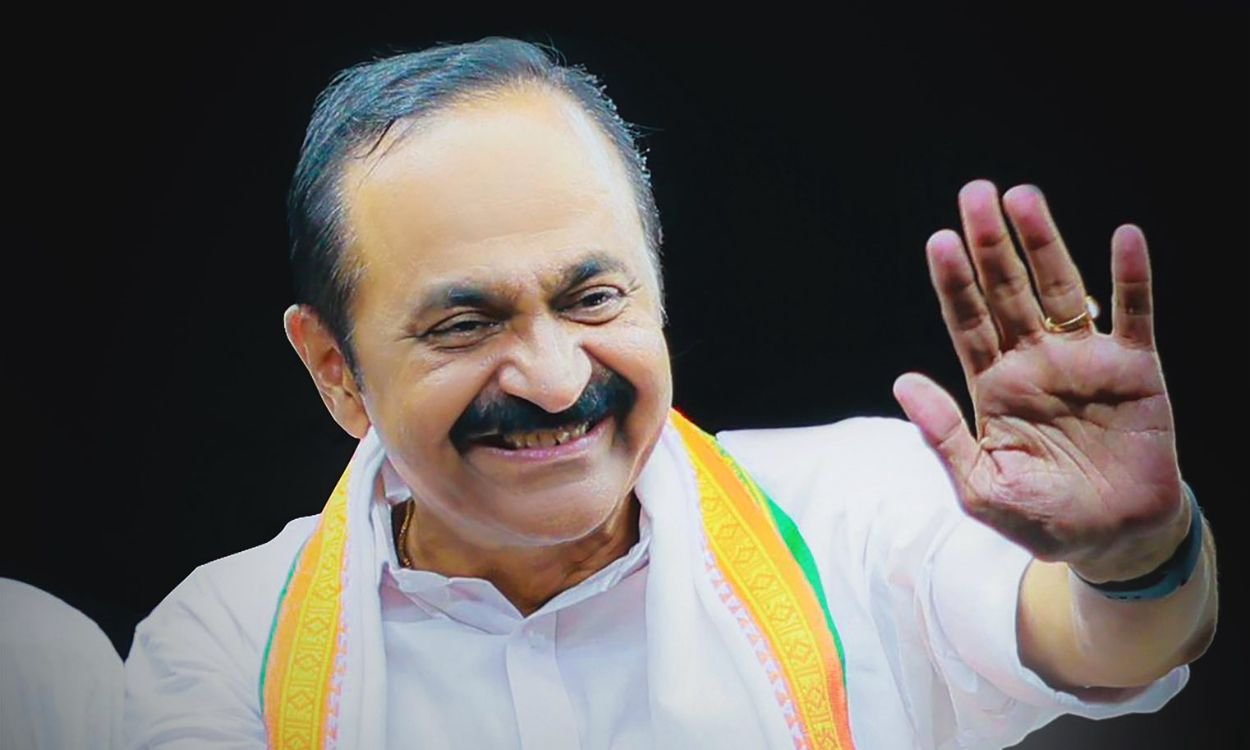
It is precisely in this context that a leader with demonstrable legislative sharpness and a consistent record of contesting executive overreach—such as V D Satheesan—assumes significance, as the restoration of broader constitutional guarantees depends as much on institutional vigilance as on electoral change.
Any transition of power, therefore, is not merely administrative; it carries the burden of resetting this framework. And it is within this context that the leadership question within the Congress-led United Democratic Front (UDF) assumes significance.
The Question of Natural Leadership
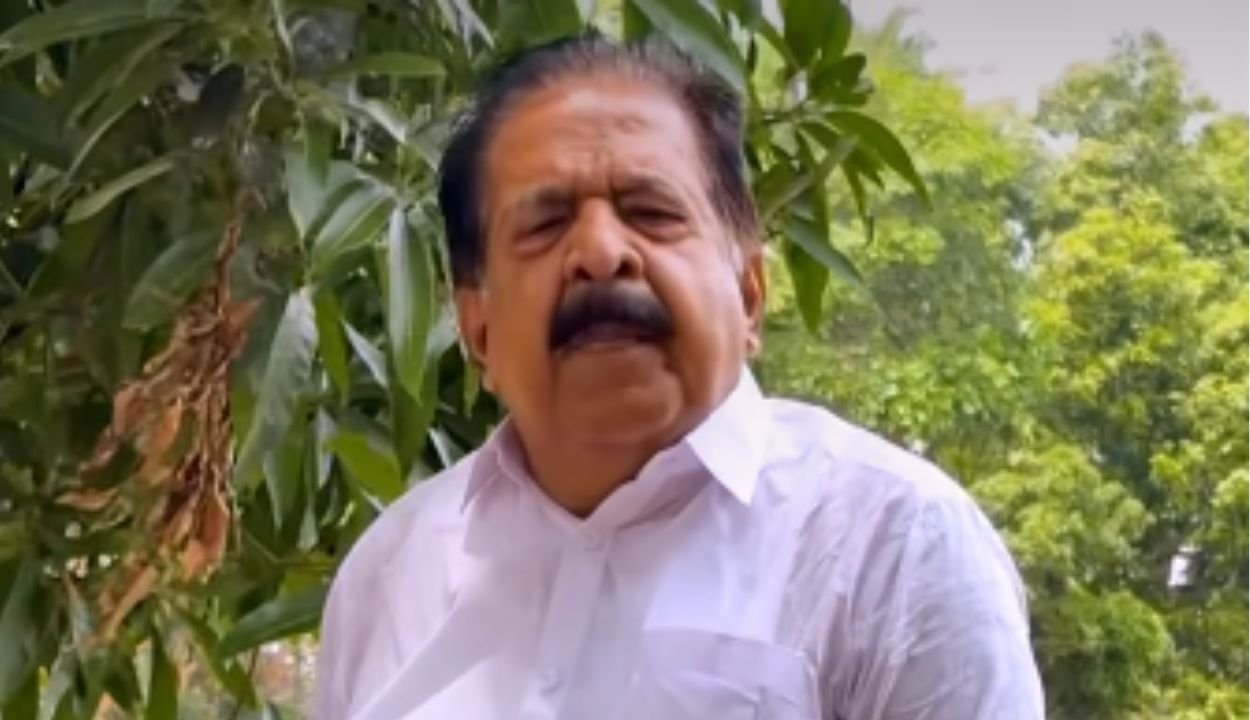
Three names are often mentioned in discussions around chief ministerial prospects: V D Satheesan, Ramesh Chennithala, and K C Venugopal.
At a basic level, the debate itself appears somewhat misplaced. In parliamentary democracies, leadership continuity is not merely a matter of preference but convention. The individual who has led the opposition through a full legislative term typically emerges as the natural claimant to executive leadership if the electoral mandate shifts. By that metric alone, Satheesan’s position is structurally stronger. But beyond convention, the distinction becomes clearer when performance, political method, and institutional engagement are examined.
Satheesan’s tenure as Leader of the Opposition has been marked by a particular style of legislative intervention—one that relies less on rhetoric and more on procedural precision.
A case in point is his consistent use of Rule 50 (Adjournment Motions) in the Legislative Assembly. These motions are designed to interrupt scheduled business to discuss urgent public matters. While the government has often highlighted the number of such discussions permitted as evidence of its democratic openness, the internal dynamics tell a more complex story.
Traditionally, the structure of an adjournment motion gives the opposition a strategic final word—especially through the walkout speech delivered by the Opposition Leader. Satheesan has repeatedly used this moment to present tightly argued critiques, often backed by detailed subject study, leaving the government with limited scope for rebuttal.
The subsequent shift by the treasury benches towards converting more of these into full discussions—where ministers regain the last word—can be read less as an expansion of democratic space and more as a tactical recalibration to manage this disadvantage. This is not a stylistic observation; it reflects a deeper legislative competence—an understanding of procedure, timing, and argumentative framing that distinguishes a parliamentarian from a conventional political speaker.
The Intellectual Dimension of Leadership
Modern governance increasingly demands cognitive bandwidth beyond political instinct. Policy complexity, real-time information flows, and public scrutiny require leaders who can process, interpret, and respond with depth.
Satheesan’s reputation within political circles rests significantly on this dimension. His well-known reading habits—annotating texts, revisiting them, and integrating ideas into political argument—are not incidental traits but part of a broader intellectual discipline.
This has also shaped his ability to engage across communities. At a time when sections of minority groups, particularly within Christian denominations, had shown signs of drifting from the Congress, his interventions—grounded in familiarity with religious texts and cultural contexts—helped reopen lines of engagement. His invitations to speak across denominational platforms reflect not just political outreach but a degree of intellectual preparation uncommon in routine political mobilization.
Political Clarity Over Electoral Convenience
Another dimension where V D Satheesan has drawn clear distinction is in his positioning on politically sensitive alignments—particularly with organisations like the Social Democratic Party of India and influential community bodies such as the SNDP Yogam and the Nair Service Society.
In a political environment where electoral arithmetic often dictates cautious ambiguity, Satheesan adopted a markedly different approach. Ahead of the elections, he stated unequivocally that the Congress did not require the votes of the Social Democratic Party of India, distancing the party from any perception of indirect alignment.
More significantly, his stance extended beyond one organisation. He openly articulated that community organisations should not intervene in electoral politics—an argument that runs counter to a long-standing practice in Kerala, where political parties across the spectrum have, to varying degrees, engaged in calibrated appeasement of such bodies.
This position was not without consequence. Both the NSS and the SNDP responded with direct criticism, including personal attacks, signalling the political cost of such a stance. Yet, Satheesan did not recalibrate or dilute his position.
The importance of this lies less in the immediate electoral impact and more in what it signals about political method. At a time when most leadership figures tend to negotiate with, accommodate, or tactically align with pressure groups, this approach reflects a willingness to prioritise institutional clarity over electoral convenience.
If the UDF were to secure a favourable mandate despite such positioning, it would carry a larger implication: that electoral success need not necessarily be contingent on negotiated alignments with community power structures. In that scenario, the question of leadership would become less about internal deliberation and more about recognising the political line that secured public endorsement.
Why the Alternatives Appear Less Convincing
The comparison with the other two contenders highlights the contrast more sharply.
Ramesh Chennithala brings administrative experience and organizational familiarity. However, his tenure as Opposition Leader coincided with an electoral defeat for the UDF. While electoral outcomes are collective, leadership is inevitably judged by them. The argument that he “missed his chance” does not sufficiently address the more substantive question of whether his leadership model demonstrated the adaptability or sharpness required in the current political environment.
In practical terms, projecting him again risks appearing retrospective rather than forward-looking.
K C Venugopal, on the other hand, still appears anchored to a more traditional style of politics—one that depends on building support among power centres, often through mutual accommodation, and drawing on the Congress high command when required. But operating from a position where the game is already tilted in one’s favour is not the same as demonstrating the ability to lead and win it on one’s own terms.
A more decisive approach—firmly backing V D Satheesan and shutting down attempts to trigger a leadership contest—might have strengthened both his own standing and that of the Congress. It would also have allowed the Congress party to maintain a sharper, more focused political offensive rather than dissipating energy on internal speculation.
Also, since he operates primarily within the national organizational structure of the Congress, his strengths lie in coordination, high-command interface, and electoral management at a macro level. The state leadership—particularly in a politically literate and debate-driven space like Kerala—demands sustained legislative visibility and direct engagement with state-specific issues. The absence of that continuous, ground-level legislative presence places him at a relative disadvantage in a chief ministerial context.
What emerges from this comparison is not merely a preference for one individual over others, but a broader distinction between types of political leadership- One rooted in procedural mastery and legislative engagement, another in organizational continuity and past experience, and the third in centralized political management.
In the current context, where the critique of governance increasingly revolves around institutional functioning, civil liberties, and democratic practice, the first model appears more aligned with the demands of the moment.
The Larger Implication
The leadership debate within the Congress is, in many ways, a reflection of a larger tension in Kerala’s politics—between visible development and invisible democratic depth.
If the electorate is indeed seeking not just a change in government but a recalibration of governance priorities, then leadership becomes a signal. It indicates whether the shift will be merely administrative or substantively political.
Within that framework, Satheesan’s candidacy appears less like an internal preference and more like a continuation of a political method that has already been tested in opposition—and could, if extended, redefine how governance itself is argued and practiced. It is also, from a public standpoint, the more logical progression if the UDF secures a mandate. In that sense, if voters have endorsed this leadership, reopening the question after the result would risk undermining that verdict rather than respecting it. And the price to pay would be too heavy.