Sunday, September 20, 2026
Home Blog Page 124

Father Dies After Son’s Assault During Family Dispute; Accused Arrested

0

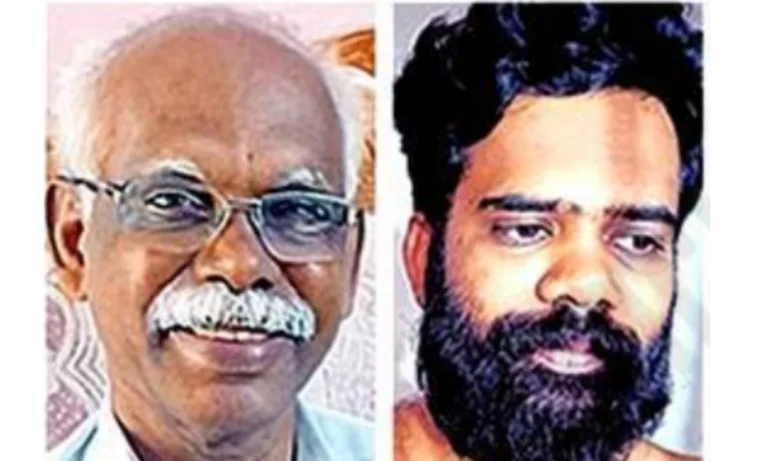
KATTAKADA • A 65-year-old heart patient died in a hospital here after he was allegedly punched in the chest and pushed to the ground by his son during a domestic altercation on Monday night. The Neyyar Dam police have arrested the son in connection with the incident.

The deceased has been identified as Raveendran of Nisha Bhavan, Vanchikkuzhi. His son, Nishad (38), has been taken into custody.

According to a statement given to the police by Vasantha, the victim’s wife, the tragedy unfolded around 10 PM on Monday. Nishad, an employee at a private Ayurvedic firm, reportedly returned home after an Onam celebration and began scolding his two-and-a-half-year-old daughter. When Vasantha intervened and questioned his behaviour, Nishad allegedly pushed her.

Raveendran, who reacted to the assault on his wife, was then confronted by his son. Nishad allegedly punched his father in the chest, causing him to collapse.

Following the assault, Raveendran complained of severe discomfort. Vasantha and another relative immediately rushed him to a private hospital in Kattakada. Despite medical efforts, he passed away while undergoing treatment.

Based on Vasantha’s testimony, which directly attributes Raveendran’s collapse to the assault, the Neyyar Dam police registered a case and arrested Nishad. An investigation into the matter is ongoing.

Political Shift on Sabarimala: Kerala Govt, Devaswom Board Signal U-Turn on Women’s Entry Affidavit

0

THIRUVANANTHAPURAM • In a major political and administrative shift, the Travancore Devaswom Board (TDB), with the apparent backing of Kerala’s LDF government, has initiated legal consultations to amend the controversial affidavit it filed in the Supreme Court that supported the entry of women of all ages into the Sabarimala temple.

The move is being widely seen as a politically calculated course correction by the ruling CPM-led front ahead of the upcoming legislative assembly elections. The timing is crucial, as the government is also organizing a grand “Ayyappa Sangamam” (Ayyappa Conclave) in Pamba on September 20th, in a significant outreach to the Hindu faithful.

TDB President P.S. Prasanth confirmed that the board will adopt a stance that protects the age-old customs and rituals of the shrine. This follows high-level discussions between board officials and the state’s law and devaswom departments. However, any change to the affidavit is impossible without the state government’s consent, and sources indicate a “green signal” has already been given.

This marks a dramatic reversal from the government’s 2018 position, when it actively moved to implement the Supreme Court’s verdict allowing women’s entry, leading to widespread protests. CPM State Secretary M.V. Govindan recently stated that the party and government are “with the believers” and that the women’s entry issue is now a “closed chapter.”

The opposition UDF and BJP have heavily criticized the move, questioning the government’s sincerity and labeling the Ayyappa Sangamam an “election gimmick” to heal the wounds it inflicted on believers’ sentiments.

The LDF’s change in strategy is believed to be a direct consequence of its heavy losses in the last Lok Sabha elections, which the party attributed to the alienation of a significant section of the majority community. In a bid to win back support, the CPM has managed to secure the conditional cooperation of the Nair Service Society (NSS), a formidable community organization that had spearheaded the protests against women’s entry.

While the SNDP’s backing is also anticipated, leaders like KPMS General Secretary Punnala Sreekumar have warned the government against reversing its progressive stance, cautioning it could lead to a “huge setback.”

The entire episode brings the LDF government’s 2018 legal strategy into sharp focus. Its decision to withdraw the previous UDF government’s affidavit—which supported tradition—and file a new one in favor of women’s entry was the critical turning point that led to the Supreme Court’s landmark verdict. Now, as the government attempts to distance itself from that very stance, all eyes are on how it will navigate this complex political and religious landscape.


Kerala Govt Overhauls Complaint Protocol: Magistrate Notice Now Mandatory Before Probing Employees

0

THIRUVANANTHAPURAM: In a significant procedural reform, the Kerala Home Department has issued a new notification mandating a preliminary inquiry and a judicial notice before any formal investigation can be launched against a government employee based on a complaint. The move, aimed at safeguarding employees from frivolous or malicious allegations, is part of the state’s implementation of the new Bharatiya Nagarik Suraksha Sanhita (BNSS).

Under the new directive, upon receiving a complaint against a government employee, a Judicial Magistrate cannot immediately order an investigation. Instead, the magistrate must first issue a formal notice to both the employee in question and their direct superior officer.

The superior officer is then tasked with conducting a preliminary inquiry into the complaint and submitting a detailed report to the magistrate. This report must explicitly state whether any prior departmental disciplinary actions have been taken against the accused employee. Concurrently, the employee against whom the complaint has been made will be given the opportunity to submit their own written explanation.

The Judicial Magistrate will only decide on whether to proceed with a full-scale investigation after carefully examining both the superior officer’s report and the employee’s statement.

The notification specifies that the magistrate will determine the timeframe for the submission of these reports. It further clarifies that should the officials fail to provide the necessary report or explanation within the stipulated period, the magistrate is empowered to order the investigation to proceed.

A senior official from the Home Department stated that this measure ensures a “preliminary layer of scrutiny,” providing a fair opportunity for clarification and preventing employees from being drawn into lengthy investigative processes based on baseless claims. This change aligns the state’s procedures with the new national legal framework, emphasizing due process and administrative fairness.