
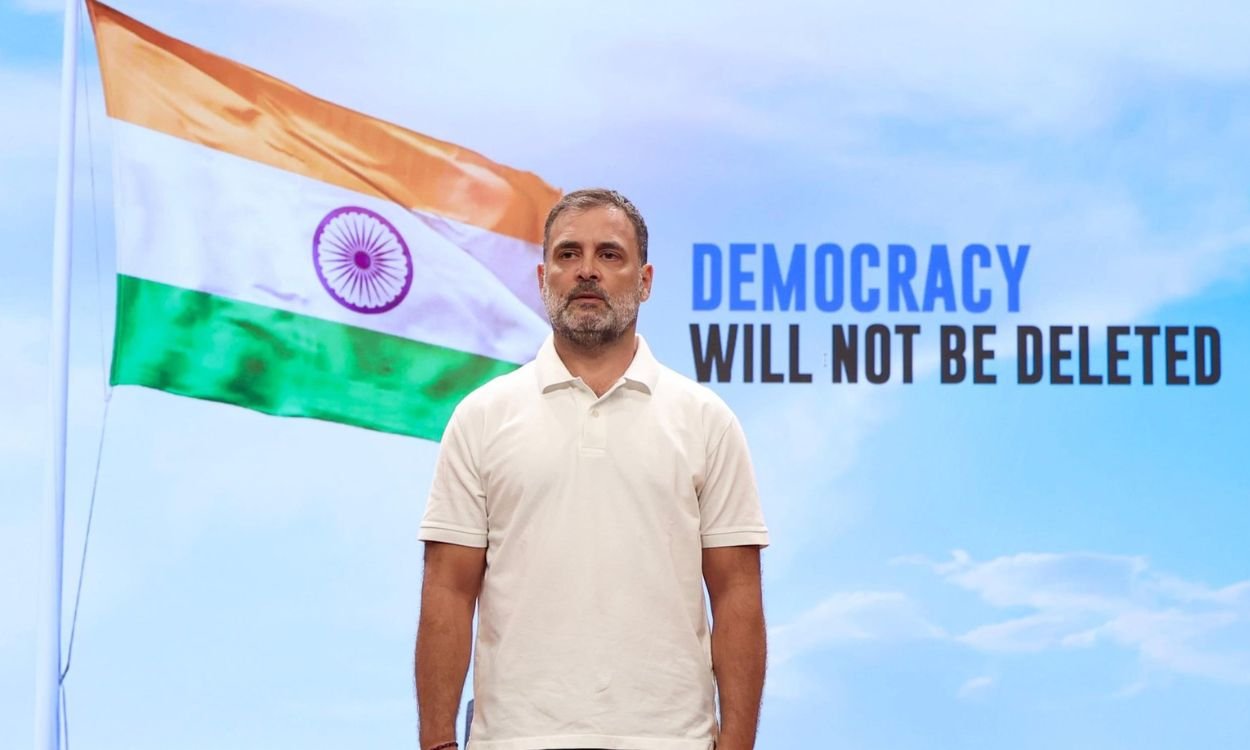

NEW DELHI: Rahul Gandhi has arrived at another crucial juncture requiring him to provide decisive proof of his political efficacy—this time, in the upcoming Bihar Assembly elections. While the Congress party recovered a degree of confidence after the 2024 Lok Sabha polls, the constituent parties within the INDIA alliance remain deeply embroiled in disputes over seat sharing, a factor that highlights the perceived limited negotiation power of Gandhi compared to other alliance leaders.
The era when Congress naturally commanded the lead in North India, characteristic of the times of Indira and Rajiv Gandhi, is definitively over. However, the current Congress party’s persistent “big brother” attitude in negotiations is not being received favorably by its alliance partners, creating friction at a critical time.

The Urban Persona vs. Rural Pulse
Gandhi has dedicated significant effort to reinventing his personal brand—from the ‘Bharat Jodo Nyay Yatra’ to traveling on motorcycles and walking among the populace. This attempt to turn politics into a human relationship is evident, yet his public persona continues to exhibit a distinct “urban” flavor. Unlike his grandmother, Indira Gandhi, he has yet to master the ability to effectively tap into the rural pulse, which remains vital for electoral success in Hindi heartland states.
The ongoing uncertainty surrounding seat division in Bihar sharply underscores his current political standing. Discussions between the Rashtriya Janata Dal (RJD), Congress, and the Left parties are far from finalized. The emergence of “alliance-within-alliance fights”—where two partner parties claim the same constituencies—shows the structural fragility of the coalition. The failure to conclude negotiations even before the nomination deadline speaks volumes about the alliance’s inherent weaknesses.
Congress’s demand for all seats they won or came in second in the previous election was reportedly viewed by the RJD as excessive, consequently constraining Gandhi’s negotiating authority.
The Organisational Challenge
While Gandhi consistently projects an image of stability and human connection over grand political rhetoric, the critical issue remains the lack of commensurate organizational strength within his own party. Although he catalyzed a revival during the Lok Sabha elections, sustaining that momentum at the state level has proven challenging.
Past incidents, such as a 2019 Gulf News report noting that opposition parties lost several Bihar constituencies following his rallies, illustrate that his personal popularity does not always translate into spontaneous organizational support.
Rahul Gandhi’s central dilemma appears to be his inability to project the “royal ruralism” with strength, as Indira Gandhi did. He possesses the soft, urban sensibilities of Rajiv Gandhi, but this refinement hinders his connection with the deeply rooted masses. His allies respect him within the INDIA coalition, but they do not obey him without question.
Bihar is thus his proving ground: a test of whether he can translate his personal resolve into tangible organizational reality. A victory will solidify the self-respect Congress regained after 2024. A defeat, however, might just become another memory. Like Bruce, he will undoubtedly try again, but the real question is whether the electorate will afford him another chance.