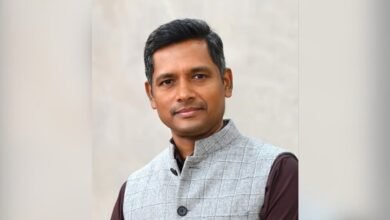

THIRUVANANTHAPURAM: In the wake of the raging controversy and alleged irregularities surrounding the gold plates at the Sabarimala Sree Dharma Sastha Temple, IAS officer Prasanth Nair has strongly advocated for the introduction of a professional administrative system, modelled on the lines of the Tirumala Tirupati Devasthanam (TTD) and Vaishno Devi shrine.
Nair contends that the inherent administrative weaknesses of the current Travancore Devaswom Board (TDB) management are the root cause of serious lapses like the gold theft scandal. He has proposed the immediate formation of a specialised body named ‘SABARI’ (Sabarimala Amenities and Biodiversity Area Regional Authority) to handle the complex affairs of the temple.
Missing Gold and Mounting Legal Trouble
The current controversy stems from a reported discrepancy of approximately 4.54 kg of gold following the replating of the idol in 2019.
- The High Court-appointed Special Investigation Team (SIT) has made arrests, and the Enforcement Directorate (ED) has joined the probe.
- The TDB has been named as the eighth accused, with former 2019 TDB members and staff also being charged and suspended.
- Prasanth Nair points out that the court interventions have unearthed evidence of an alleged deep-rooted antiquities trade mafia and groups exploiting the temple for years under the guise of devotion.
A System Failure: The ‘Amateur’ Administration
Nair highlights that an enterprise managing crores in revenue and millions of pilgrims is currently run by what he terms an ‘amateur improvisation’ system. Sabarimala, which experiences a seasonal ‘tidal surge’ of pilgrims, is treated merely as one of the 1,248 temples under the three-member TDB body.
- The TDB structure, heavily dependent on political nominations, lacks full-time experts in crucial areas like finance, audit, crowd management, ecology, and digital systems.
- He emphasizes that temporary, seasonal solutions can no longer sustain a national pilgrimage centre of this scale.
The Solution: The SABARI Authority
To overcome the administrative crisis, Nair insists on a shift to a professional approach, with permanent executive stewardship mirroring the successful TTD model, which is led by a senior IAS Executive Officer.
Key Proposals for ‘SABARI’:
- Full-Time Leadership: SABARI would be headed by a full-time IAS Chief Executive with a fixed tenure.
- Expert Board: The board would include independent professionals in public finance, audit, civil engineering, public health, disaster/crowd management, and ecology.
- Clear Mandate: SABARI would handle the administrative, financial, and safety aspects, while the ritualistic and devotional matters would remain with the Tantris and traditional custodians.
Nair concludes that starting with the missing gold must end with finding confidence in the administration. Only the creation of a professional body like SABARI can provide the ‘grown-up governance’ that this major national shrine deserves.