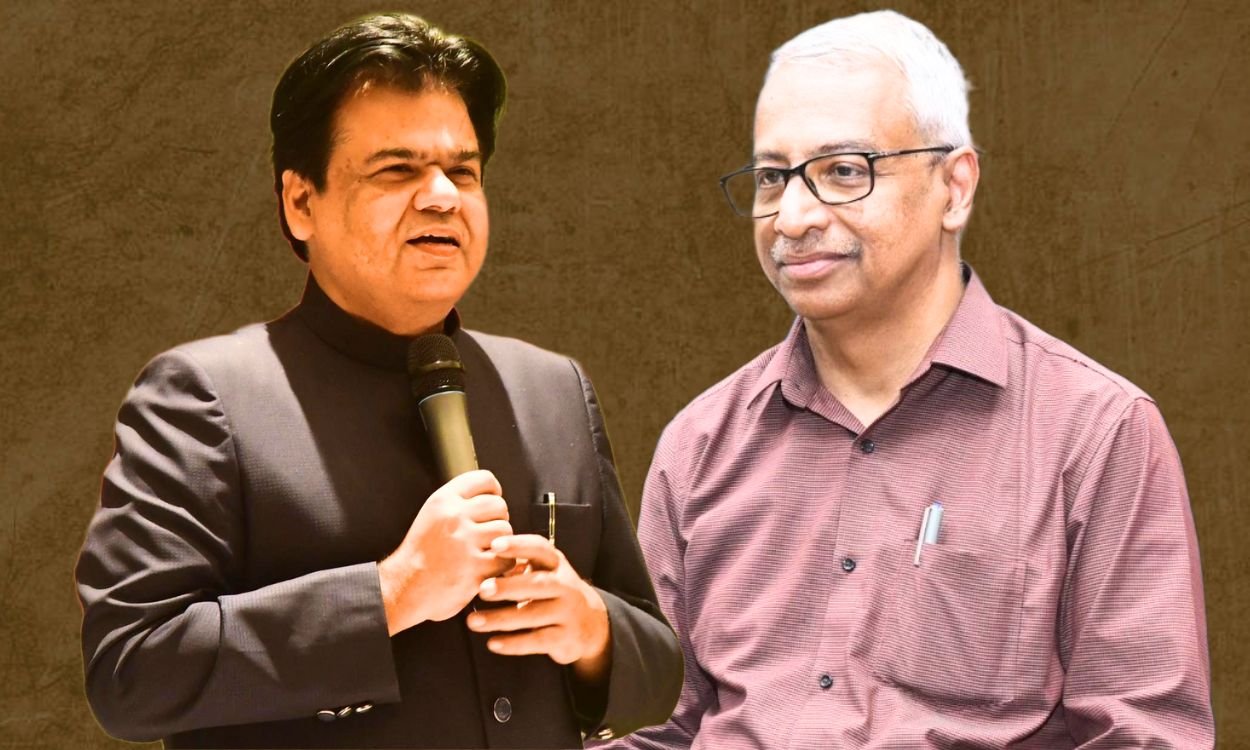

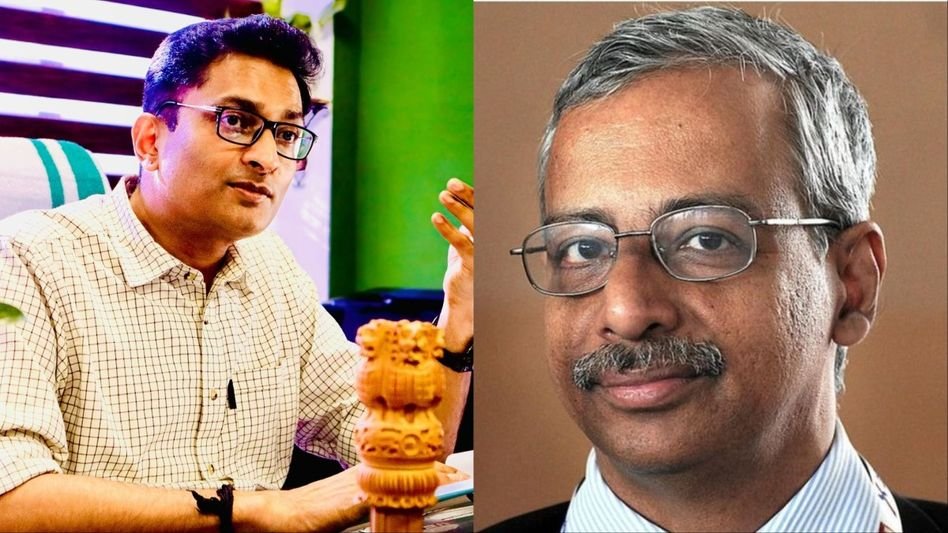

Thiruvananthapuram: A coordinated media spin from the Chief Secretary’s office has come under sharp criticism after selected news outlets reported that the Union Government had extended the suspension of IAS officer Prasanth N., even though the formal Government Order shows that the decision was taken — and signed — by the Chief Secretary himself.
Soon after G.O.(Rt) No. 4782/2025/GAD dated 04.11.2025 was issued extending Prasanth’s suspension for a further 180 days, some media platforms carried stories claiming that “the Centre” had prolonged the action against the officer. Senior bureaucrats point out that the order in question is a Kerala Government notification of the General Administration (AIS A) Department, issued by Chief Secretary Dr A. Jayathilak IAS.
Officials familiar with the sequence of events allege that this misleading narrative was deliberately planted through briefings from within the Secretariat to deflect public anger over the continued suspension of the whistle-blower officer, who has levelled a series of corruption and disproportionate-assets allegations against the same Chief Secretary. “If one reads the G.O. itself, there is no ambiguity at all. The State Government is the decision-maker, the Centre’s role is limited to statutory approval. Yet the spin given to the media suggests that Delhi acted on its own. That impression could only have come from within the top bureaucracy,” a senior officer said on condition of anonymity.
The Government Order records that Prasanth N. IAS (KL 2007) was placed under suspension through G.O.(Rt) No. 4979/2024/GAD dated 11.11.2024. The suspension was first extended by 120 days from 10.01.2025 via G.O.(Rt) No. 113/2025/GAD dated 09.01.2025, and later by another 180 days from 10.05.2025 under G.O.(Rt) No. 1981/2025/GAD, so that the then current spell was due to expire on 05.11.2025. The fresh order now prolongs the period of suspension from 06.11.2025 to 04.05.2026, taking the total beyond eighteen months.
In paragraph 2 of the order, the State Government records that the “Competent Authority,” after considering the recommendation of the Suspension Review Committee and the alleged continued violations of Conduct Rules by the officer, “has consulted the Government of India under Rule 3(1B) of the All India Services (Discipline and Appeal) Rules, 1969, for extension of his suspension beyond 05.11.2025.” The G.O. then cites State Government letter No. AIS-A1/279/2024-GAD dated 24.10.2025 addressed to the Department of Personnel and Training, Government of India, and Letter F No. C-35/4/2025-AVD-I(B) dated 04.11.2025 from DoPT conveying approval of the competent authority. On that basis, the Government of Kerala decides to extend the suspension from 06.11.2025 to 04.05.2026.
Legal experts point out that this sequence clearly shows that the initiative lies with the State Government, which recommended continuation of suspension and sought the Centre’s concurrence as required once the one-year mark is crossed. “Approval is not authorship. The order is a Kerala G.O., issued under the State’s letterhead, numbered in the State series and signed by the Chief Secretary. To publicly suggest that the Centre is responsible is, at best, a half-truth,” a former All India Service officer observed. The suspension based on the existing disciplinary proceedings alone cannot legally be continued beyond one year under the All India Services (Discipline and Appeal) Rules, 1969 and the Government of India’s instructions governing prolonged suspension of AIS officers. In the absence of any charge memo served on Prasanth or any properly instituted inquiry on the earlier allegations, there was no lawful basis to justify another spell of suspension after 11.11.2025. It is to circumvent this statutory limitation that a brand-new Disciplinary Action is understood to have been hastily “invented” in the Secretariat and secretly forwarded to the Central Government, without even placing the draft charges before the officer concerned or inviting his comments, so that a fresh proceeding could be cited on paper to keep the suspension alive beyond the one-year ceiling.
Even as the spin battle plays out in the public domain, more disturbing issues are emerging from within the Secretariat. It is reliably learnt that a fresh disciplinary action against Prasanth has been secretly drafted and forwarded to the Centre without even showing the draft memorandum to the officer or offering him an opportunity to submit his comments. Senior civil servants describe such a move as “totally unheard of” in All India Service disciplinary practice.
Normally, when charges are proposed, the articles of charges are first served on the officer, who is allowed 30 days to submit a written statement and request inspection of relevant records. Only after this process are the papers placed before the competent authorities and, where required, forwarded to the Government of India. In this case, sources say, the Secretariat has short-circuited the procedure by sending an undisclosed documents straight to New Delhi, virtually creating “a new law” inside the Secretariat corridors.
Those close to Prasanth allege that dubious and possibly fabricated documents have been relied upon while assembling the fresh proceedings, and that the material on record does not tally with official government files, property registers and earlier submissions. They claim that these discrepancies — if established — could themselves amount to serious misconduct on the part of those driving the case. These claims are yet to be tested judicially, but they have already added a new layer of controversy to an already explosive confrontation.
The backdrop is a long-running battle between Prasanth and Chief Secretary Dr A. Jayathilak. Prasanth had accused Dr Jayathilak of massive corruption and he was immediately placed under suspension. Allegations of disproportionate assets and false Immovable Property Returns and allegations that several properties and income streams were either under-reported or entirely concealed have also surfaced against Dr. Jayathilak. Prasanth has demanded action under the All India Services (Conduct) Rules and the Prevention of Corruption Act, and has called for an independent investigation by central agencies. Supporters of the suspended officer argue that, instead of ordering a transparent inquiry into these allegations, the system has targeted the whistleblower through a series of disciplinary actions and now a prolonged suspension.
That the latest extension order is itself authenticated by Dr Jayathilak, as Chief Secretary, while his name figures centrally in the complaints made by the suspended officer, is being cited by critics as a classic case of conflict of interest. “The officer against whom serious corruption allegations have been made is signing the orders that keep the complainant out of service. At the same time, his office appears to be briefing the media in a way that shifts blame to the Centre. This is a dangerous signal to honest officers,” a retired bureaucrat commented.
Civil service associations and transparency activists warn that the combination of rolling suspensions, secret charge-sheets and selective media leaks could have a chilling effect on whistle-blowing within the system. They note that once the narrative that “Delhi has done it” takes root, public attention is diverted from the accountability of those at the State level who actually initiate such measures.
Prasanth is expected to challenge the latest extension and the alleged back-door disciplinary action before appropriate legal fora, including by demanding disclosure of all material sent to the Centre in his name. For now, G.O.(Rt) No. 4782/2025/GAD stands as an official record of the State’s decision, even as the attempt to re-write the story in the media — shifting responsibility to New Delhi — has become the central talking point in the power struggle inside Kerala’s bureaucracy.