
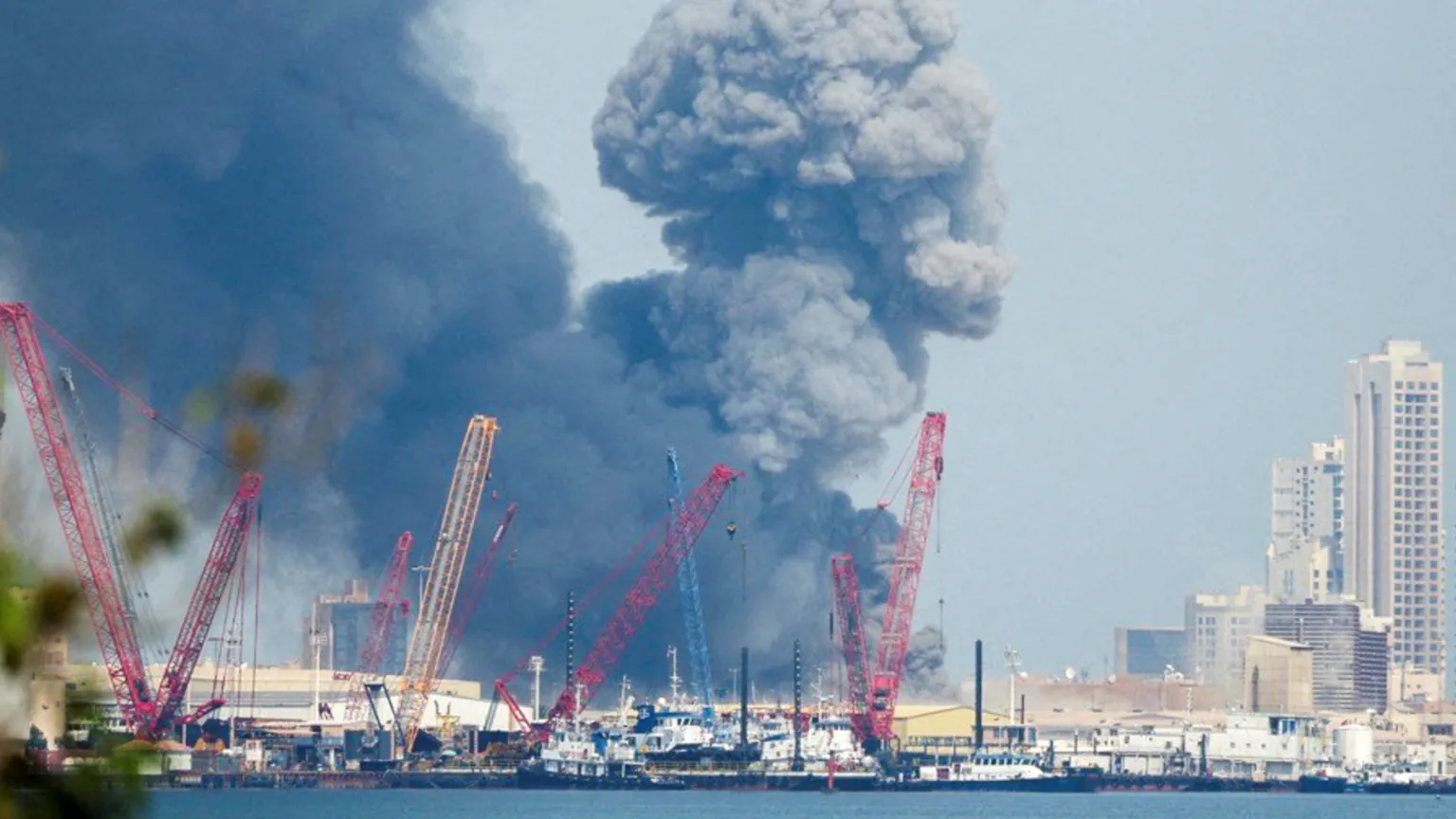

TEHRAN/TEL AVIV/WASHINGTON – The geopolitical landscape of the Middle East has entered its most volatile chapter in decades. As of February 28, 2026, the long-simmering “shadow war” between Israel and Iran has transitioned into a direct, high-intensity conflict, drawing the United States into a military engagement that threatens to reshape the global order.
The Spark of 2026
The current escalation follows a series of unprecedented military exchanges that began earlier this year. Following the collapse of previous diplomatic channels and a surge in advanced nuclear enrichment activities reported by international monitors, Israel launched a series of “surgical strikes” aimed at neutralizing Tehran’s underground facilities.
In retaliation, Iran launched a massive drone and ballistic missile offensive, bypassing traditional proxy warfare and striking directly at Israeli urban centers. The involvement of the United States became inevitable following a drone attack on a major US naval asset in the Persian Gulf, which Washington attributed directly to the Islamic Revolutionary Guard Corps (IRGC).
Current Military Situation
Reports from the ground indicate that the conflict has expanded across multiple fronts:
- The Northern Front: Hezbollah has intensified its rocket fire from Southern Lebanon, forcing the Israeli Defense Forces (IDF) to commit significant ground troops to a buffer zone operation.
- The Gulf Theater: The US Navy’s Fifth Fleet has moved into a “high-readiness” posture, engaging in several skirmishes to keep the Strait of Hormuz open—a vital artery for 20% of the world’s oil supply.
- Cyber Warfare: Beyond the kinetic battlefield, a massive “silent war” is being waged. Major infrastructure in all three nations, including power grids and financial institutions, has faced sophisticated cyberattacks, leading to localized blackouts in Tehran and Tel Aviv.
The US Position: A Reluctant Participant?
Presidential statements from the White House emphasize a “defensive posture,” yet the deployment of two additional Carrier Strike Groups to the Eastern Mediterranean suggests a readiness for a prolonged campaign. Critics in Washington are divided, with some calling for a total “regime-change” strategy, while others warn of a “forever war” that could drain American resources and focus away from the Indo-Pacific.
Global Economic Fallout
The world economy is already feeling the tremors. Crude oil prices have surged past $140 per barrel, sparking fears of a global recession. Stock markets in New York, London, and Tokyo have seen sharp declines as investors flee to “safe-haven” assets like gold.
Humanitarian Concerns
The United Nations has issued an urgent plea for a ceasefire, citing a burgeoning humanitarian crisis. With civilian airports closed across the Levant and Western Asia, tens of thousands of foreign nationals are stranded, and displacement within Lebanon and Israel is reaching critical levels.
What Lies Ahead?
Analysts suggest that the next 72 hours are crucial. If diplomatic backchannels—reportedly mediated by Oman and Qatar—fail to produce a de-escalation agreement, the world may witness the first full-scale regional war of the mid-21st century.