Sunday, September 20, 2026
Home Blog Page 2

Travis Head Blasts Century as Australia Beat Zimbabwe by 84 Runs and Seal ODI Series

0

Harare: Travis Head produced a sensational century as Australia defeated Zimbabwe by 84 runs in the second ODI in Harare on Friday. The victory gave Australia an unassailable 2–0 lead in the three-match series. Australia posted a commanding 356/6 in 50 overs before Zimbabwe were bowled out for 272 in 48.3 overs.

Head returns to form in style
Travis Head was the star of Australia’s innings, smashing 112 from just 84 deliveries. His explosive knock included 15 fours and three sixes, with the left-hander reaching his century from only 75 balls.
It was Head’s first ODI century since the Ashes and his eighth hundred in the format. His aggressive innings helped Australia record their highest-ever ODI total against Zimbabwe.

Captain Mitchell Marsh provided excellent support at the top of the order, scoring 53 from 63 balls. Head and Marsh put together a 130-run opening partnership that laid the foundation for Australia’s huge total.

Cooper Connolly continued his impressive white-ball form with 78 from 69 balls, while young all-rounder Ollie Peake finished strongly with an unbeaten 41 from just 18 deliveries. Peake hit three sixes in the final over as Australia reached 356/6.

Zimbabwe fall short in the chase
Zimbabwe needed 357 to keep the series alive but struggled to maintain the required run rate. The hosts showed periods of resistance through their middle order, but Australia’s bowlers kept taking wickets at crucial moments.

Zimbabwe were eventually dismissed for 272 in 48.3 overs, handing Australia an emphatic 84-run victory.
Australia had already won the opening ODI by 59 runs, and Friday’s result means the visitors have secured the series with one match still remaining.

Match Result
Australia: 356/6 (50 overs)
Zimbabwe: 272 all out (48.3 overs)
Australia won by 84 runs.
The third and final ODI of the series is scheduled for September 20 in Harare.

Head Hits First Ton Since Ashes as Australia Storm to 356/6

0

Travis Head produced a sensational batting display to register his first century since the Ashes, powering Australia to a commanding 356 for six against Zimbabwe.

The left-hander once again showcased his trademark aggressive style, taking the attack to the bowlers and scoring rapidly throughout his innings. His century provided Australia with the momentum needed to post a huge total after the team had lost wickets during the innings.

Head’s return to three figures is particularly significant as the Australian opener had been searching for a major score since the Ashes. His latest knock will come as a major confidence boost and underlines his importance to Australia’s batting lineup.

Australia’s innings gathered pace as Head took advantage of scoring opportunities and consistently found the boundary. His aggressive strokeplay put pressure on the opposition bowlers and helped Australia maintain a strong scoring rate.

After Head’s century laid the foundation, Australia’s middle and lower order continued the attack. The team eventually crossed the 350-run mark, finishing on 356/6, leaving the opposition with a formidable target to chase or a strong platform to build on, depending on the match format.

Head’s return to form

Head’s century was the highlight of Australia’s innings. Known for his fearless approach, the Australian star once again showed why he is regarded as one of the most dangerous top-order batters in world cricket.

The century is also an important psychological boost for Head following the Ashes. After a period without a three-figure score, his ability to dominate the bowling attack and convert his start into a major innings will be welcomed by Australia.

With 356 runs on the board for the loss of six wickets, Australia have put themselves in a powerful position. The opposition now faces a difficult task, while Head’s return to form could prove crucial for Australia’s campaign going forward.

Two Eras of Anto Augustine: From Power to Arrest

0

KOCHI: A visual collage contrasting two distinct phases in the life of Reporter TV Managing Director Anto Augustine has gone viral across social media platforms.

The top frame captures an earlier period where Anto Augustine is seen confidently gesturing and issuing instructions in the presence of senior police officers. The bottom frame presents a sharp contrast, depicting him being led away by Excise officials following his arrest.

The arrest came in the wake of SIT searches linked to financial fraud allegations regarding a proposed Lionel Messi event in Kerala. During the multi-location raids, Excise authorities seized illicit quantities of foreign liquor and wine from his ancestral residence in Wayanad, leading to charges under the Abkari Act. The side-by-side comparison has sparked wide political commentary and discussions on social media regarding political patronage and changing fortunes.

₹5 Lakh Monthly Saving for State Treasury? Ajit Patil Takes Charge as KIIFB CEO

0

Thiruvananthapuram: The appointment of 2007-batch IAS officer Ajit Patil as the Chief Executive Officer of the Kerala Infrastructure Investment Fund Board (KIIFB) with additional charge is being viewed as a move that could save the state treasury around ₹5 lakh every month.

Patil, who serves as the Finance Resources Secretary, has been entrusted with the additional responsibility of KIIFB CEO. Since the post is being handled as an additional charge by an existing senior government officer, the government can avoid the separate package associated with appointing a full-time CEO from outside the existing administrative structure.

Previous CEO drew ₹5 lakh monthly salary
Former KIIFB CEO K.M. Abraham was paid a monthly salary of ₹5 lakh. It has also been pointed out that Abraham was receiving pension benefits associated with his former position as Chief Secretary in addition to the KIIFB remuneration.

Against this backdrop, the decision to entrust the CEO responsibility to a serving IAS officer has financial implications for the state government. Based on the monthly remuneration of the previous CEO, the move could translate into savings of approximately ₹5 lakh a month.

Disproportionate Assets Case: Former Top Cop Tomin Thachankary Sentenced to 4 Years in Prison, Fined ₹30 Lakh

0

KOTTAYAM: In a major setback to senior bureaucratic circles, former Director General of Police (DGP) Tomin J. Thachankary has been sentenced to four years of rigorous imprisonment and slapped with a fine of ₹30 lakh in a disproportionate assets case. The verdict was delivered by the Kottayam Vigilance Court on Thursday. Failure to pay the fine will result in an additional year of imprisonment.

The case pertains to the period between January 2003 and July 2007, during which the Vigilance and Anti-Corruption Bureau (VACB) established that Thachankary accumulated assets worth ₹64.70 lakh, disproportionate to his known sources of income. Following a detailed investigation, the probe team filed the formal charge sheet in 2013.

The proceedings were expedited in accordance with a High Court directive calling for a time-bound trial. After a decade-long legal battle, the court found him guilty under relevant sections of the Prevention of Corruption Act.

Kerala Govt Sanctions ₹9.96 Crore for BPL Families of COVID Victims

0

Thiruvananthapuram: The Kerala government has sanctioned ₹9,96,45,000 from the Chief Minister’s Distress Relief Fund for the continued distribution of financial assistance to BPL families dependent on persons who died due to COVID-19.

The decision was issued through Government Order No. 1806/2026/RD of the Revenue Department, dated September 14, 2026.

₹9.96 crore allocated to three districts

The newly sanctioned amount will be distributed among Kozhikode, Ernakulam and Pathanamthitta districts.

The allocation is:

Kozhikode: ₹5,15,90,000
Ernakulam: ₹3,41,40,000
Pathanamthitta: ₹1,39,15,000

The combined allocation for the three districts comes to ₹9,96,45,000. The respective District Collectors had submitted recommendations for the funds required for further distribution under the scheme.

₹5,000 monthly assistance for three years

Under the scheme, BPL families dependent on a person who died due to COVID-19 are eligible for ₹5,000 per month for a period of three years, or 36 months.

The assistance is provided through Direct Benefit Transfer (DBT), with the three-year period calculated from the month in which the beneficiary first receives the relief assistance. The government had earlier fixed March 15, 2026 as the cut-off date for the scheme.

Funds to be released without delay

The newly sanctioned ₹9.96 crore will be released from the T.P. 80 account held in the name of the Additional Chief Secretary of the Finance Department, who serves as the Treasurer of the Chief Minister’s Distress Relief Fund.

The government has directed the concerned District Collectors to distribute the sanctioned amount without delay and report the distribution details to the government.

Financial support for families affected by COVID deaths

The scheme is aimed at providing continued financial assistance to economically vulnerable BPL families that lost their primary support due to COVID-19 deaths.

With the latest allocation, Kozhikode, Ernakulam and Pathanamthitta will receive additional funds required for the ongoing distribution of the monthly assistance.

Government Order: G.O.(Rt) No. 1806/2026/RD
Date: September 14, 2026
Total allocation: ₹9,96,45,000
Monthly assistance: ₹5,000
Duration: 36 months
Districts covered in this order: Kozhikode, Ernakulam and Pathanamthitta

Anto Augustine Arrested: Reporter TV MD Seized in Illegal Liquor Case

0

KOCHI/WAYANAD: In a major development, Anto Augustine, Managing Director and authorized signatory of Reporter Broadcasting Company (Reporter TV), was arrested by the Excise Department following the recovery of a massive unauthorized liquor stash from his residence.

Dramatics at the Media Headquarters
The Kalpetta Excise team, led by Assistant Commissioner Baiju, took Anto Augustine into custody from the Reporter TV headquarters in Kalamassery, Kochi. High drama unfolded for hours as Augustine initially refused to cooperate, insisting on being presented with a physical hard copy of the FIR rather than a digital version. He surrendered after officials delivered the physical copy. He was subsequently taken to the Aluva District Hospital for medical examination before being produced before the Bathery Judicial First Class Magistrate Court.

Uncovered During Fraud Probes
The illegal stash was discovered when a Special Investigation Team (SIT) raided Augustine’s home at Vazhavatta in Wayanad. The police were conducting searches linked to a multi-crore financial fraud case surrounding a proposed Argentina national team and Lionel Messi visit to Kerala. During the search, officers recovered over 67 liters of alcohol, including 43 liters of foreign liquor and substantial quantities of wine—far exceeding the permissible limit allowed for personal possession under the Kerala Abkari Act.

Augustine has been charged under non-bailable Sections 55(a), 55(i), and 58 of the Kerala Abkari Act, which cover illegal transport/possession, illicit storage, and possession of untaxed liquor.

Messi Fraud Probe Escalates: 50 Litres of Illicit Alcohol Seized from Anto Augustine’s Wayanad Residence

0

Kochi/Wayanad: In a major development surrounding the investigation into the multi-crore Lionel Messi Kerala visit fraud case, police and Excise officials raided the Wayanad residence of Reporter TV Managing Director Anto Augustine on Wednesday morning. The simultaneous raids—conducted across five locations including the Reporter Channel headquarters in Kalamassery, Kochi—led to the recovery of a massive liquor stash from his home in Vazhavatta, Wayanad.

During the search operation, officials seized 43 litres of foreign liquor and 7 litres of wine stored well beyond legally permissible individual limits. Following the discovery by police personnel, a team from the Kalpetta Excise Circle, led by Inspector Sharafudheen, arrived at the premises to take over the seizure process. Excise officials indicated that a separate case under the Abkari Act will be registered against Augustine. Under Kerala law, individuals are permitted to keep a maximum of 3 litres of Indian-Made Foreign Liquor (IMFL) and 3.5 litres of wine for personal use.

The Special Investigation Team (SIT) led by ADGP P. Vijayan launched the crackdowns following an FIR filed at Kalamassery police station. Anto Augustine has been named as the primary accused in the FIR, which alleges financial deception, forging contracts with the Argentine Football Association (AFA), and misrepresenting sponsorships to scam both the state government and investors. Investigations are ongoing to determine whether the confiscated alcohol was illegally imported or procured through unauthorized channels.

UPI MDR Returns: Will the New Charge Hurt Consumers and India’s Digital Economy?

0

New Delhi: India’s Unified Payments Interface (UPI) ecosystem is entering a new phase with the introduction of a limited Merchant Discount Rate (MDR) framework for certain high-value merchant transactions. However, the Centre has made it clear that ordinary consumers will not be directly charged for using UPI.

Under the new framework, a nominal 0.4% MDR will apply to specified Person-to-Merchant (P2M) transactions above ₹2,000. The government says around 96% of merchant transactions will continue to remain unaffected.

What exactly is MDR?
Merchant Discount Rate is a fee associated with processing digital merchant payments. It helps compensate participants in the payment ecosystem, including banks, payment service providers and UPI application providers.
Importantly, MDR is not a government tax and is not supposed to be directly collected from the customer.

What changes under the new framework?
The key provisions are:
P2P UPI transactions remain completely free, regardless of transaction value.
Merchant payments up to ₹2,000 remain MDR-free.
Small merchants receiving up to ₹1 lakh per month through UPI QR codes under the specified category will continue to enjoy zero MDR.
A 0.4% MDR applies to specified merchant transactions above ₹2,000.
For transactions of ₹75,000 and above, MDR is capped at ₹300 per transaction.
Certain essential sectors such as railways, telecom, insurance, fuel and agricultural inputs will face a flat ₹5 MDR for qualifying transactions above ₹2,000.
Capital-market transactions such as mutual funds and securities will attract 0.02% MDR, capped at ₹300.

Will consumers have to pay more?
According to the government, no.
MDR is intended to be a merchant-side charge. Banks have been advised to ensure that merchants do not pass the MDR on to customers, while UPI applications have been prohibited from imposing platform fees or hidden charges under the framework.

So if a customer makes a ₹5,000 UPI payment to a merchant, the customer should still pay ₹5,000—not ₹5,000 plus MDR.

But merchants could feel the impact
This is where the debate becomes important.
At 0.4%:
₹10,000 transaction → ₹40 MDR
₹50,000 transaction → ₹200 MDR
₹75,000 transaction → ₹300, subject to the cap
For large retailers and businesses handling high-value UPI payments, this represents a new operating cost.
Some businesses may absorb the cost, while others could potentially attempt to compensate through pricing. Therefore, although the MDR is not supposed to be directly charged to consumers, its indirect economic impact needs to be monitored.

Why is the government introducing MDR now?
The central argument is sustainability.
UPI has grown into a massive digital payment infrastructure, but banks, fintech companies and payment service providers still incur substantial costs for technology, cybersecurity, connectivity and transaction processing.
The government has previously used incentive schemes to support the ecosystem. In 2025, the Union Cabinet approved a ₹1,500-crore incentive scheme for low-value BHIM-UPI transactions for FY 2024-25.

The new MDR framework is therefore aimed at creating a more sustainable revenue mechanism for parts of the UPI ecosystem.

Could MDR damage the digital economy?
There are arguments on both sides.
Potential benefits:
A sustainable revenue model could help banks and fintech companies invest in payment infrastructure, cybersecurity, reliability and expansion into rural and semi-urban markets.

Potential risks:
UPI’s biggest attraction has been its simplicity and low cost. If merchants begin viewing UPI as an expensive payment channel for large transactions, some could encourage customers to use cash, bank transfers or other payment methods.
This could be particularly relevant for businesses operating on very thin margins.

Will UPI growth slow down?
It is too early to say.
UPI processed 2,366 crore transactions worth ₹29.9 lakh crore in July 2026 alone, according to the Ministry of Finance.
That scale demonstrates how deeply UPI has become embedded in India’s economy.
The impact of MDR will depend on whether merchants absorb the cost, whether the cost is indirectly reflected in prices, and whether the additional revenue is effectively reinvested in strengthening India’s digital payment infrastructure.

The bigger economic question
The debate is not simply about whether UPI should have an MDR.
It is about who should ultimately pay for India’s enormous digital payment infrastructure.
For years, the zero-MDR model helped UPI achieve extraordinary adoption. But as transaction volumes have exploded, maintaining a secure, reliable and scalable payment network also carries significant costs.
The government’s approach attempts to strike a balance: keep UPI free for consumers and small merchants while generating revenue from a limited segment of larger merchant transactions.
The success of the model will ultimately depend on whether it can generate sustainable revenue without weakening the low-cost, high-adoption character that made UPI one of India’s biggest digital success stories.


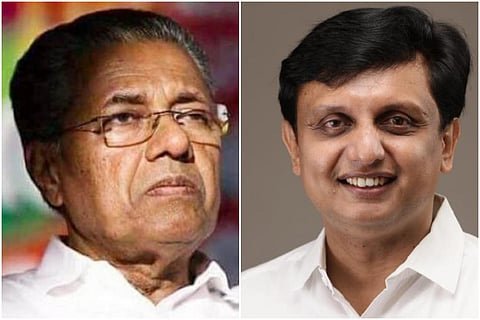
CPM Extended State Committee Passes Resolution Against ED to Shield Pinarayi and Riyas Amid Rectification Drive

0

KOZHIKODE: The extended Kerala CPIM State Committee meeting, convened primarily to discuss internal course correction and rectification measures following the party’s severe setback in the Assembly elections, concluded by unanimously adopting a resolution strongly condemning the Enforcement Directorate (ED).

The resolution, moved by CPM State Committee member P.K. Biju, termed the ED’s actions against senior leader and former Chief Minister Pinarayi Vijayan and MLA P.A. Mohamed Riyas as purely politically motivated. The party declared that it would legally and politically resist central agency probes, which it alleges are structured to tarnish party leadership through selective leaks in financial and hawala-related cases.

However, the political play has raised serious concerns among the public and Critics. They point out that instead of addressing ground-level failures, organizational flaws, and public discontent that led to the election defeat, the leadership opted for a defensive stance by blaming central agencies.

Unanimous Resolution: Proposed by P.K. Biju, the extended committee gave full backing to defend Pinarayi Vijayan and P.A. Mohamed Riyas.
​Allegation: CPM labeled the ongoing ED actions in the CMRL-Exalogic probe as a targeted campaign against top leaders.
​Public Reaction: The shift from genuine intra-party rectification to an anti-ED campaign has sparked strong debate over the party’s willingness to fix its core political errors.