Wednesday, September 23, 2026
Home Blog Page 43

Ronaldo Nazário: The Legacy of Brazil’s Ultimate World Cup Goal King

While many legends have donned the iconic yellow jersey of the Seleção, few have left a footprint as deep as Ronaldo Luís Nazário de Lima. Known globally as “O Fenômeno” (The Phenomenon), Ronaldo remains Brazil’s all-time leading scorer in FIFA World Cup history, a testament to a career defined by explosive speed, surgical finishing, and an uncanny ability to perform under the brightest lights.

Between 1998 and 2006, Ronaldo terrorized defenses across the globe, netting a staggering 15 goals in 19 matches. For eight years, he sat alone at the top of the world as the greatest goalscorer in the history of the tournament until the record was surpassed in 2014.

By The Numbers: A Tournament BreakdownRonaldo’s World Cup journey is a story of redemption and dominance. While he was a teenage squad member during Brazil’s 1994 triumph, his active contribution began four years later.

Tournament,Matches,Goals,Achievement

1994 USA 0 0 Winner (Squad Member)

1998 France 7 4 Golden Ball (Best Player)

2002 South Korea/Japan 7 8 Winner & Golden Boot

2006 Germany 5 3 Broke the All-Time Record

Total 19 15 Brazil’s All-Time Leader

2002: The Ultimate Redemption

The pinnacle of Ronaldo’s career came in 2002. After suffering a career-threatening knee injury and the heartbreak of the 1998 final, Ronaldo arrived in Asia with a point to prove. He didn’t just play; he dominated.

He scored in every match except the quarter-final against England, culminating in a legendary performance in the final against Germany. Facing the formidable Oliver Kahn, Ronaldo found the net twice, securing Brazil’s fifth world title and cementing his status as a national hero.

The Elite Company: Brazil’s Top Scorers

Ronaldo’s tally of 15 goals puts him clear of the greatest names to ever play the game. Even the “King of Football,” Pelé, sits three goals behind him in the World Cup standings.

Ronaldo: 15 Goals

Pelé: 12 Goals

Ademir / Vavá / Jairzinho: 9 Goals (Tie)

"He was the best striker I've ever seen. He was so fast he could score from nothing, and he could shoot the ball better than anyone." — Zinedine Zidane

A Lasting Impact

Ronaldo was more than just a poacher; he was a cultural shift in football. His blend of power and technical skill influenced a generation of modern strikers. Today, as fans look back at the history of the World Cup, the image of Ronaldo—arms outstretched, celebrating another clinical finish—remains the definitive symbol of Brazilian excellence on the world stage.

The Neymar Legacy: Breaking Down the 8 World Cup Goals That Defined an Era

SANTOS, BRAZIL – As the footballing world looks toward the 2026 FIFA World Cup, the shadow of Neymar Jr. remains cast over the Seleção. With 8 goals in 13 appearances across three tournaments, Neymar has not only cemented his status as a modern icon but has statistically surpassed some of the most sacred names in Brazilian football history.

While his career has often been a whirlwind of flair and controversy, his efficiency on the world’s biggest stage is undeniable. Currently back in Brazil playing for Santos and fighting for a spot in Carlo Ancelotti’s 2026 squad, Neymar’s World Cup resume remains his strongest argument for one final dance.

The Statistical Climb: Surpassing the Legends

With his eighth goal scored in Qatar 2022, Neymar moved ahead of a “Who’s Who” of Brazilian greats. His tally officially puts him clear of:

Romário (5 goals)

Bebeto (6 goals)  

Rivellino (6 goals)  

Garrincha (5 goals)

Neymar now sits level with Rivaldo and is chasing the upper echelon of Pelé (12) and Ronaldo Nazário (15).

Tournament Breakdown: The Road to Eight

Neymar’s World Cup story is one of immense pressure and clinical finishing. Here is how his 8 goals were distributed:
2014 Brazil: The Hometown Hero (4 Goals)

Under the weight of a nation, a young Neymar delivered immediately.

Croatia: A brace in the opening match to spark the "Hexa" dream.

Cameroon: Another two goals in the group stage, showcasing his predatory instincts.

Note: His tournament was infamously cut short by a back injury in the quarter-final against Colombia.  

2018 Russia: The Resilient Return (2 Goals)

Returning from injury, Neymar provided the spark in key moments.

Costa Rica: A late stoppage-time goal to secure a vital win.

Mexico: A crucial clinical finish in the Round of 16 to send Brazil through.

2022 Qatar: The Record-Equalizer (2 Goals)

Despite further injury setbacks in the group stage, Neymar rose for the knockout rounds.

South Korea: A coolly converted penalty in the 4-1 rout.

Croatia: A sensational solo effort in extra time of the quarter-final—a goal that saw him equal Pelé as Brazil's all-time leading scorer (77 goals at the time).  

Is There a Final Chapter in 2026?

As of April 2026, Neymar is currently the captain of Santos and has shown flashes of his vintage self with 12 goal contributions in his last 10 domestic matches. However, Brazil manager Carlo Ancelotti has been clear: only those at 100% fitness will make the plane to North America.

If Neymar secures a spot, he has the chance to become the first Brazilian in history to score in four different World Cup tournaments, a feat that would arguably silence his remaining critics and solidify his place in the pantheon of the gods.

Judicial Integrity Shaken: Thrissur Magistrate Suspended Over Fake Medical Bill Scam

0

Thrissur: In a significant move to uphold judicial accountability, the Kerala High Court has suspended a Judicial First Class Magistrate in Thrissur for allegedly attempting to defraud the government using forged medical documents. Tiara Rosemary, the Judicial Third Class Magistrate of Thrissur, was placed under suspension after an internal probe uncovered a calculated attempt to misappropriate funds.

The Cosmetics Scam

The investigation revealed that the magistrate attempted to claim a reimbursement of approximately ₹30,000 for personal expenses. According to reports, the bills submitted were originally for the purchase of cosmetic products, which do not qualify for government medical reimbursement.

The magistrate initially approached the District Medical Officer (DMO) to get the bills approved. However, the DMO refused to authorize the claims, noting that they violated medical reimbursement rules.

Forgery and Deception

Undeterred by the DMO’s refusal, the magistrate allegedly resorted to criminal measures. She reportedly created a fake seal and forged the signature of the District Medical Officer on the documents. These falsified bills were then forwarded to the High Court for final approval and disbursement of funds.

The scam came to light when the concerned department at the High Court noticed discrepancies in the submitted documents. A subsequent verification confirmed that the DMO’s signature was forged and the seal was counterfeit.
Action and History of Misconduct

Taking a stern view of the ethical breach, the Registrar (District Judiciary) issued the suspension order for a period of six months, pending a detailed departmental inquiry.

This is notably not the first time Tiara Rosemary has courted controversy. During her previous tenure as a Magistrate in Neyyattinkara, she faced disciplinary action for allegedly using abusive language and behaving inappropriately toward an Assistant Sub-Inspector (ASI) on duty.

‘Lone Wolf’ Terror: Trump Releases Dramatic Footage of White House Dinner Shooter Breaching Security

WASHINGTON D.C. – In a move that has sent shockwaves through the capital, President Donald Trump has released dramatic CCTV footage and images of the gunman who opened fire during the high-profile White House Correspondents’ Dinner on Saturday night.

The suspect, identified by law enforcement as 31-year-old Cole Allen Thomas of Torrance, California, was labeled a “lone wolf” and a “whack job” by the President during a press briefing following the chaotic event.

The Security Breach
​The released footage, shared by the President on Truth Social, shows Thomas dashing past security perimeters at the Washington Hilton. In the video, Thomas is seen sprinting toward the subterranean ballroom where the President, First Lady Melania Trump, and hundreds of journalists were gathered.

Law enforcement officials confirmed that Thomas was armed with multiple weapons. He reportedly attempted to bypass a primary magnetometer screening area and fired several shots—estimated between five to eight—at a Secret Service agent from close range.

​Heroic Protection

The Secret Service confirmed that one officer was struck during the encounter. However, President Trump noted that the officer’s bulletproof vest saved his life. “He was shot from a very close distance with a very powerful gun, and the vest did the job,” Trump stated, praising the quick response of the security detail.

​Evacuation and Cancellation
​As shots rang out, the Secret Service immediately rushed the President and First Lady to safety. Guests inside the ballroom were seen diving for cover under tables as the “lone wolf” was apprehended by tactical teams. While there were initial hopes to resume the gala, organizers eventually scrapped the event for the night, citing the severity of the security breach.

Ongoing Investigation
​The suspect is currently in custody and has been taken to an undisclosed “offsite” location for interrogation. While the motive remains unclear, President Trump dismissed any immediate links to the ongoing geopolitical tensions with Iran, suggesting instead that the act was the work of a solitary, disturbed individual.

The U.S. Secret Service, in coordination with the Metropolitan Police Department, is conducting a full-scale investigation into how Thomas managed to get so close to the secure zone with multiple firearms.

NEET UG 2026 Admit Card Releasing Today: NTA to Activate Download Link; Check Exam Day Guidelines and Pattern

New Delhi: The National Testing Agency (NTA) is scheduled to release the admit cards for the National Eligibility cum Entrance Test (NEET) Undergraduate 2026 today, April 26, 2026. Thousands of medical aspirants across the country can now prepare to download their hall tickets from the official portal at neet.nta.nic.in.

​The hall ticket is a mandatory document for entry into the examination hall. Candidates are advised to keep their application numbers and dates of birth/passwords ready to access the login portal as soon as the link goes live.

How to Download NEET UG 2026 Admit Card
​Candidates can follow these simple steps to secure their hall tickets:
​Visit the Official Website: Go to neet.nta.nic.in.
​Find the Link: Click on the “NEET UG 2026 Admit Card” link under the Candidate Activity section.
​Login: Enter your Application Number and Password/Date of Birth.
​Submit and Verify: Your admit card will appear on the screen. Verify all details including your name, photo, and exam center.
​Download: Save the PDF and take a clear color printout for the exam day.

NEET UG 2026 Exam Pattern & Marking Scheme
​The NEET UG 2026 examination is scheduled for May 3, 2026. The test will be conducted in a single shift of 180 minutes (3 hours).
​Total Marks: 720
​Subject Breakdown: * Biology (Botany & Zoology): 90 questions (360 marks)
​Physics: 45 questions (180 marks)
​Chemistry: 45 questions (180 marks)
​Marking Policy: Candidates receive +4 for every correct answer, while -1 mark is deducted for every incorrect response. Unattempted questions result in zero marks.

Important Exam Day Instructions
​The NTA has emphasized that candidates must carry a valid photo ID (Aadhar Card, Voter ID, or Passport) along with the printed admit card. Prohibited items include electronic gadgets, calculators, jewelry, and specific clothing items as per the NTA dress code. Candidates are advised to reach the center at the “Reporting Time” mentioned on their tickets to avoid last-minute hassles.

KL Rahul Unleashes ‘Vishwaroopam’: Record-Shattering 152* Stuns Punjab Kings in IPL 2026

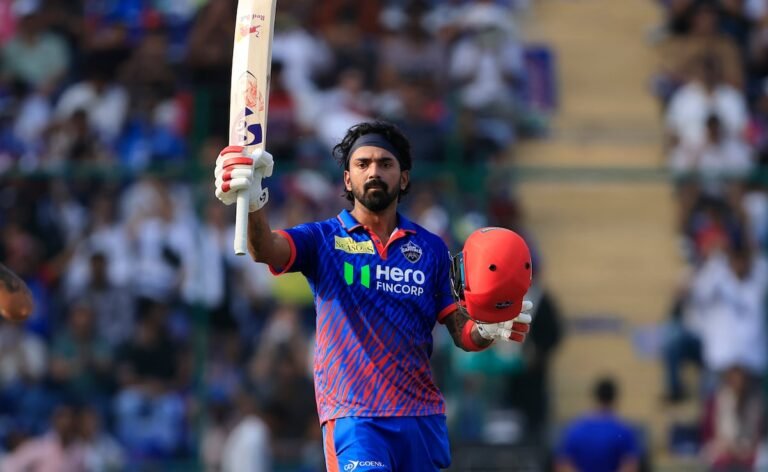
NEW DELHI: In a breathtaking display of power-hitting and precision, KL Rahul silenced his critics by playing one of the greatest innings in T20 history. Representing the Delhi Capitals against his former franchise Punjab Kings in IPL 2026, Rahul rewrote the record books with a monumental unbeaten 152 off just 67 deliveries.

With this sensational knock at the Arun Jaitley Stadium, Rahul etched his name in history as the first-ever Indian cricketer to score 150 runs in an IPL innings, leading Delhi to a massive total and a dominant position.
A Record-Breaking Avalanche

Rahul’s innings was a masterclass in controlled aggression. Braving the sweltering Delhi heat, he dismantled the Punjab bowling attack with 16 boundaries and 9 towering sixes.

Key milestones achieved during this innings include:

Highest Score by an Indian: Rahul surpassed Abhishek Sharma’s previous record of 141 runs to become the highest individual scorer among Indians in the IPL.

Blazing Century: He reached his 6th IPL century in just 47 balls, showcasing a strike rate that left the opposition searching for answers.

Three-Franchise Centurion: Rahul became the first player in IPL history to score multiple centuries for three different franchises—Punjab Kings, Lucknow Super Giants, and now Delhi Capitals.

All-Time IPL Rankings: His 152* is now the third-highest individual score in IPL history, trailing only Chris Gayle (175*) and Brendon McCullum (158).

The Rahul-Rana Show

After the early departure of Pathum Nissanka, Rahul found a perfect partner in Nitish Rana. The duo put on a clinical exhibition of batting, stitching together a 220-run partnership for the second wicket—the highest for Delhi Capitals and the second-highest in IPL history.

Rana played a stellar supporting role with a quickfire 91, allowing Rahul to anchor and then explode at the death. Their partnership powered Delhi Capitals to a mammoth 264/2 in their allotted 20 over.

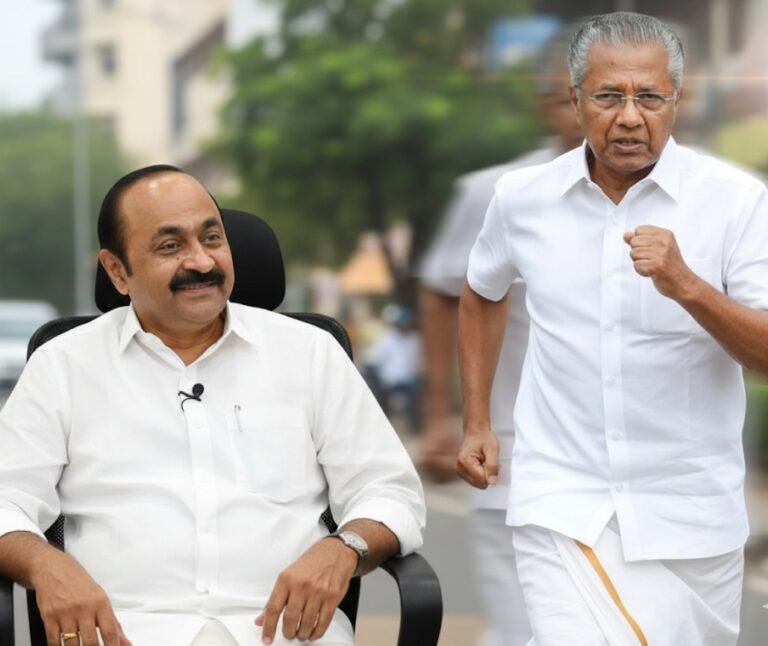
The Hidden Toll: How V.D. Satheesan Unmasked Kerala’s COVID-19 Death Data Discrepancy

0

THIRUVANANTHAPURAM — It was supposed to be a honeymoon period for the second Pinarayi Vijayan-led LDF government. Having secured a historic consecutive term, the administration was riding high on the global acclaim of the “Kerala Model” of pandemic management. However, on June 2, 2021—less than a month after being sworn in—the government’s credibility faced a devastating blow on the floor of the Kerala Legislative Assembly.
The Adjournment Motion that Shook the Treasury Benches

The Opposition, led by the then-newly appointed Leader of the Opposition (LoP) V.D. Satheesan, moved an adjournment motion regarding the alleged underreporting of COVID-19 deaths. What started as a standard legislative procedure quickly escalated into a clinical dismantling of the government’s PR-driven narrative.

Satheesan did not rely on mere political rhetoric. Instead, he brandished a weapon from the government’s own arsenal: data from the Information Kerala Mission (IKM).
The IKM Revelation: Data vs. Narrative

The Information Kerala Mission is the agency responsible for digitizing and coordinating data across local self-government bodies. Through Right to Information (RTI) queries, the Opposition accessed the actual number of deaths registered at the local level.

The Discrepancy:

The Gap: Satheesan revealed a staggering difference of 7,500 deaths between the official health department bulletins and the IKM records.

The Total Fallout: Subsequent investigations and audits sparked by this revelation suggested that nearly 28,000 COVID-19 deaths had been excluded from the official state list.

"This isn't just about numbers; it's about the families denied compensation and the truth denied to the public," Satheesan argued during the heated session.

The Collapse of the ‘Kerala Model’ Image

The government, which had frequently showcased its low Fatality Rate (CFR) as a gold standard of pandemic handling, found itself without a defense. Since the data originated from a government-controlled agency (IKM), the Health Ministry could not summarily dismiss the figures as “fabricated.”

The fallout was immediate:

Media Storm: National and local media outlets picked up the "missing deaths" story, tarnishing the global image the government had carefully cultivated.

Policy Shift: Following the outcry, the government was eventually forced to streamline its death reporting process and include thousands of previously "rejected" cases in the official tally to ensure families received Supreme Court-mandated ex-gratia payments.

A Defining Moment for the Opposition

For V.D. Satheesan, this was a “baptism by fire” that established his reputation as a research-oriented leader. By hitting the government where it was most confident—its data—the Opposition managed to puncture the aura of invincibility surrounding the Pinarayi 2.0 cabinet within its first 30 days.

The ‘Speaker Trap’: Is Pinarayi Vijayan Systematically Silencing Potential Challengers?

0

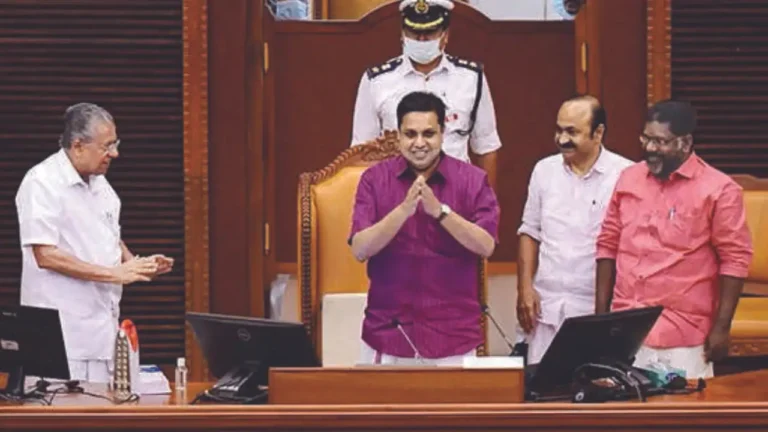
THIRUVANANTHAPURAM: A storm is brewing within the political corridors of Kerala as allegations intensify against Chief Minister Pinarayi Vijayan’s strategic handling of senior party colleagues. Critics and political observers are increasingly pointing toward a pattern they call the “Speaker’s Trap”—a tactical move where powerful CPM leaders are “honored” with the Speaker’s chair, only to have their active political careers systematically dismantled afterward.

The latest casualty of this purported strategy is A.N. Shamseer, the firebrand leader from Kannur and the current Speaker of the Kerala Legislative Assembly. As the CPM released its candidate list for the 2026 Assembly elections, Shamseer’s name was notably absent, sparking a wave of “political betrayal” narratives.
The ‘Sickle’ Strike: A Pattern of Omission

The theory suggests that Pinarayi Vijayan uses the Speaker’s post to neutralize leaders who possess the charisma or regional influence to eventually challenge his authority. Once elevated to the non-partisan role of Speaker, these leaders are distanced from day-to-day party activities and public agitations, effectively “silencing” their political voice.

P. Sreeramakrishnan: The precedent was set with the Speaker of the first Pinarayi ministry. Despite being a prominent face, Sreeramakrishnan was denied a seat in the 2021 elections and has since remained on the sidelines of active mainstream politics.

A.N. Shamseer: Known as a fierce orator who could unsettle the opposition, Shamseer was moved to the Speaker's chair mid-term. His exclusion from the 2026 list is seen as the final blow in a calculated move to "clump" his rising political graph.

The ‘M.B. Rajesh’ Exception

The case of M.B. Rajesh further fuels this theory. In the early days of the second Pinarayi government, Rajesh was appointed Speaker. Observers believe he was headed for the same fate as Sreeramakrishnan. However, a shift in the party hierarchy—necessitated by M.V. Govindan becoming the Party Secretary—opened a cabinet slot.

Rajesh was moved from the Speaker’s chair to a ministerial position. According to analysts, it is only this “prison break” from the Speaker’s office to the Cabinet that allowed Rajesh to secure a seat in the 2026 elections.

"Had M.B. Rajesh remained the Speaker, he likely would have shared the same fate as Shamseer and Sreeramakrishnan," says a veteran political commentator.

West Asia Aviation Crisis: Ramesh Chennithala Urges Union Minister to Rescue Stranded Indian Expats

0

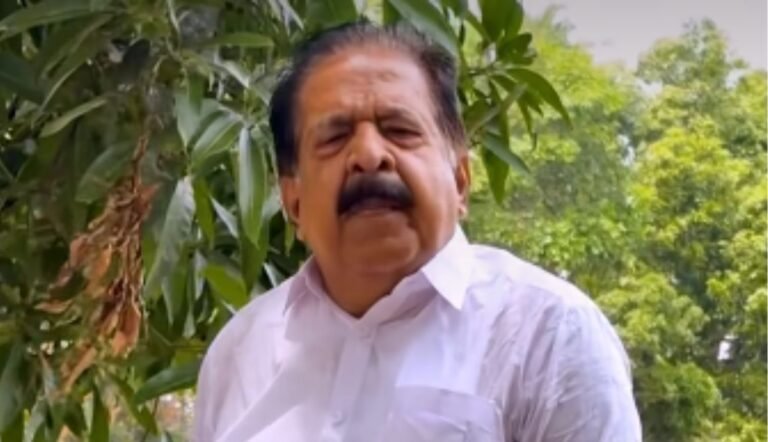
THIRUVANANTHAPURAM – Amidst the escalating tensions in West Asia, Congress Campaign Committee Chairman Ramesh Chennithala has formally requested the intervention of the Union Government to address the severe aviation crisis affecting thousands of Indian expatriates.

In a detailed letter addressed to Union Civil Aviation Minister Kinjarapu Rammohan Naidu, Chennithala highlighted the plight of Gulf-bound passengers, particularly those from Kerala, who are facing flight cancellations and skyrocketing ticket prices.

The Growing Crisis

The regional conflict has forced significant changes in air travel logistics. Several Indian carriers have been forced to scale back operations due to restrictions imposed by Gulf nations, including Dubai, through May 31. The impact is substantial:

  • Air India has reportedly canceled nearly 690 services.
  • IndiGo has seen a reduction of operations by almost 90%.
  • Airspace restrictions across West Asia have added further operational challenges for all airlines.

Exploitative Pricing Concerns

Chennithala pointed out that while domestic carriers are struggling, foreign airlines like Emirates and flydubai are allegedly capitalizing on the shortage of seats. This has led to an “unbearable” hike in airfares, leaving many expatriates stranded or financially drained.

“The Union Government and the Ministry of Civil Aviation must intervene at a diplomatic level with Gulf nations to facilitate more Indian flights and regulate these predatory ticket prices,” Chennithala stated.

Proposed Solutions

The senior leader urged the Central Government to:

  1. Initiate diplomatic dialogues with Gulf authorities to ease service restrictions.
  2. Implement price caps to prevent the exploitation of travelers.
  3. Operate special flights at subsidized rates for Indians needing urgent travel during this crisis.

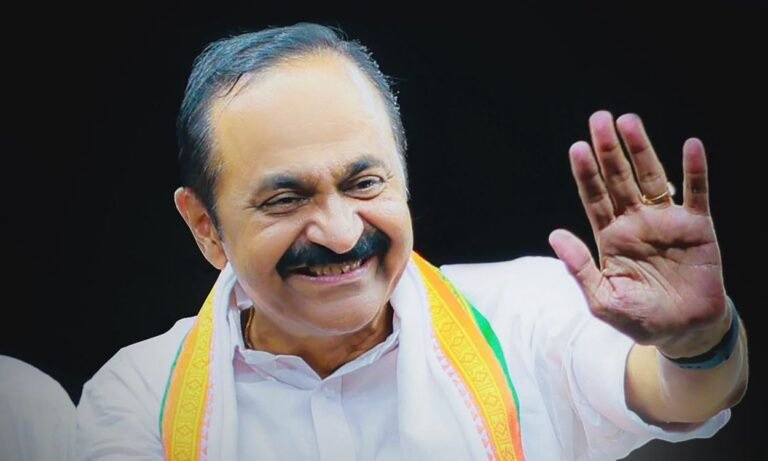
Beyond “Development”: Why the Leadership Question in Congress Points Back to V D Satheesan

0

In recent years—particularly during election cycles—the word “development” has been stretched to its limits in Kerala’s political discourse. Competing narratives from both the ruling front and the opposition have largely reduced governance to visible, physical infrastructure—roads, buildings, and projects—often sidelining a more foundational question: the protection of individual freedoms and the quality of democratic engagement.

Over the past decade of Pinarayi Vijayan’s rule, concerns over the erosion of individual freedoms have repeatedly surfaced. Instances of dissent being met with stringent legal action have added to this perception. The controversy around the proposed amendment to the Kerala Police Act, 2011—specifically Section 118A, which sought to criminalise expressions causing “injury to mind”—became a defining example. The provision was widely criticised as excessive and open to misuse, drawing objections not just from opposition parties but also from sections within the Left ecosystem itself. Though it was eventually withdrawn, the very attempt—and similar such efforts during the period—left a lingering sense of how expansively the law could be used to curtail individual freedom. The apprehension it generated ran deep, gradually settling into public consciousness. Over time, a significant section of society appeared to internalise these constraints as a new normal, growing accustomed to them even as the idea of individual freedom receded from everyday political expectation.

This narrowing of public expectation is not incidental. It reflects a broader shift where governance is increasingly evaluated through deliverables that are tangible, immediate, and politically marketable. The deeper constitutional guarantees—freedom of expression, institutional accountability, and space for dissent—have consequently taken a backseat.

It is precisely in this context that a leader with demonstrable legislative sharpness and a consistent record of contesting executive overreach—such as V D Satheesan—assumes significance, as the restoration of broader constitutional guarantees depends as much on institutional vigilance as on electoral change.

Any transition of power, therefore, is not merely administrative; it carries the burden of resetting this framework. And it is within this context that the leadership question within the Congress-led United Democratic Front (UDF) assumes significance.

The Question of Natural Leadership

Three names are often mentioned in discussions around chief ministerial prospects: V D Satheesan, Ramesh Chennithala, and K C Venugopal.

At a basic level, the debate itself appears somewhat misplaced. In parliamentary democracies, leadership continuity is not merely a matter of preference but convention. The individual who has led the opposition through a full legislative term typically emerges as the natural claimant to executive leadership if the electoral mandate shifts. By that metric alone, Satheesan’s position is structurally stronger. But beyond convention, the distinction becomes clearer when performance, political method, and institutional engagement are examined.

Satheesan’s tenure as Leader of the Opposition has been marked by a particular style of legislative intervention—one that relies less on rhetoric and more on procedural precision.

A case in point is his consistent use of Rule 50 (Adjournment Motions) in the Legislative Assembly. These motions are designed to interrupt scheduled business to discuss urgent public matters. While the government has often highlighted the number of such discussions permitted as evidence of its democratic openness, the internal dynamics tell a more complex story.

Traditionally, the structure of an adjournment motion gives the opposition a strategic final word—especially through the walkout speech delivered by the Opposition Leader. Satheesan has repeatedly used this moment to present tightly argued critiques, often backed by detailed subject study, leaving the government with limited scope for rebuttal.

The subsequent shift by the treasury benches towards converting more of these into full discussions—where ministers regain the last word—can be read less as an expansion of democratic space and more as a tactical recalibration to manage this disadvantage. This is not a stylistic observation; it reflects a deeper legislative competence—an understanding of procedure, timing, and argumentative framing that distinguishes a parliamentarian from a conventional political speaker.

The Intellectual Dimension of Leadership

Modern governance increasingly demands cognitive bandwidth beyond political instinct. Policy complexity, real-time information flows, and public scrutiny require leaders who can process, interpret, and respond with depth.

Satheesan’s reputation within political circles rests significantly on this dimension. His well-known reading habits—annotating texts, revisiting them, and integrating ideas into political argument—are not incidental traits but part of a broader intellectual discipline.

This has also shaped his ability to engage across communities. At a time when sections of minority groups, particularly within Christian denominations, had shown signs of drifting from the Congress, his interventions—grounded in familiarity with religious texts and cultural contexts—helped reopen lines of engagement. His invitations to speak across denominational platforms reflect not just political outreach but a degree of intellectual preparation uncommon in routine political mobilization.

Political Clarity Over Electoral Convenience

Another dimension where V D Satheesan has drawn clear distinction is in his positioning on politically sensitive alignments—particularly with organisations like the Social Democratic Party of India and influential community bodies such as the SNDP Yogam and the Nair Service Society.

In a political environment where electoral arithmetic often dictates cautious ambiguity, Satheesan adopted a markedly different approach. Ahead of the elections, he stated unequivocally that the Congress did not require the votes of the Social Democratic Party of India, distancing the party from any perception of indirect alignment.

More significantly, his stance extended beyond one organisation. He openly articulated that community organisations should not intervene in electoral politics—an argument that runs counter to a long-standing practice in Kerala, where political parties across the spectrum have, to varying degrees, engaged in calibrated appeasement of such bodies.

This position was not without consequence. Both the NSS and the SNDP responded with direct criticism, including personal attacks, signalling the political cost of such a stance. Yet, Satheesan did not recalibrate or dilute his position.

The importance of this lies less in the immediate electoral impact and more in what it signals about political method. At a time when most leadership figures tend to negotiate with, accommodate, or tactically align with pressure groups, this approach reflects a willingness to prioritise institutional clarity over electoral convenience.

If the UDF were to secure a favourable mandate despite such positioning, it would carry a larger implication: that electoral success need not necessarily be contingent on negotiated alignments with community power structures. In that scenario, the question of leadership would become less about internal deliberation and more about recognising the political line that secured public endorsement.

Why the Alternatives Appear Less Convincing

The comparison with the other two contenders highlights the contrast more sharply.

Ramesh Chennithala brings administrative experience and organizational familiarity. However, his tenure as Opposition Leader coincided with an electoral defeat for the UDF. While electoral outcomes are collective, leadership is inevitably judged by them. The argument that he “missed his chance” does not sufficiently address the more substantive question of whether his leadership model demonstrated the adaptability or sharpness required in the current political environment.

In practical terms, projecting him again risks appearing retrospective rather than forward-looking.

K C Venugopal, on the other hand, still appears anchored to a more traditional style of politics—one that depends on building support among power centres, often through mutual accommodation, and drawing on the Congress high command when required. But operating from a position where the game is already tilted in one’s favour is not the same as demonstrating the ability to lead and win it on one’s own terms.

A more decisive approach—firmly backing V D Satheesan and shutting down attempts to trigger a leadership contest—might have strengthened both his own standing and that of the Congress. It would also have allowed the Congress party to maintain a sharper, more focused political offensive rather than dissipating energy on internal speculation.

Also, since he operates primarily within the national organizational structure of the Congress, his strengths lie in coordination, high-command interface, and electoral management at a macro level. The state leadership—particularly in a politically literate and debate-driven space like Kerala—demands sustained legislative visibility and direct engagement with state-specific issues. The absence of that continuous, ground-level legislative presence places him at a relative disadvantage in a chief ministerial context.

What emerges from this comparison is not merely a preference for one individual over others, but a broader distinction between types of political leadership- One rooted in procedural mastery and legislative engagement, another in organizational continuity and past experience, and the third in centralized political management.

In the current context, where the critique of governance increasingly revolves around institutional functioning, civil liberties, and democratic practice, the first model appears more aligned with the demands of the moment.

The Larger Implication

The leadership debate within the Congress is, in many ways, a reflection of a larger tension in Kerala’s politics—between visible development and invisible democratic depth.

If the electorate is indeed seeking not just a change in government but a recalibration of governance priorities, then leadership becomes a signal. It indicates whether the shift will be merely administrative or substantively political.

Within that framework, Satheesan’s candidacy appears less like an internal preference and more like a continuation of a political method that has already been tested in opposition—and could, if extended, redefine how governance itself is argued and practiced. It is also, from a public standpoint, the more logical progression if the UDF secures a mandate. In that sense, if voters have endorsed this leadership, reopening the question after the result would risk undermining that verdict rather than respecting it. And the price to pay would be too heavy.