

Tuesday, September 22, 2026
Home Blog Page 62

IAS officer raises question of 12 years of disobeying the Supreme Court judgement: TSR Subramanian case

0

Thiruvananthapuram: Twelve years after the Supreme Court issued a landmark verdict to shield civil servants nationwide from political interference and verbal directives, the state of Kerala continues to neglect its implementation, leaving millions of ordinary government employees completely vulnerable.
IAS officer N. Prasanth, in a scathing Facebook post, highlighted that the non-implementation of the T.S.R. Subramanian vs. Union of India judgment—delivered in 2013 by a bench headed by Justice K.S. Radhakrishnan—denies essential security to lakhs of government employees across the state. This amounts to a continuing contempt of Court.

Protection Only for the Elite?

Mr. Prasanth pointed out that while the IAS and IFS associations successfully leveraged the verdict in 2014 to secure Civil Service Boards (CSBs) for their own cadres, the vast majority of state government workers remain unprotected. This disparity means IAS officers can often get unfair transfers overturned by courts, as seen in the case of Dr. B. Ashok IAS.

“The fact is that 12 years after the Supreme Court verdict, the vast majority of employees in the state still do not have a protective shield,” Prasanth wrote.

He stressed that for lakhs of ordinary employees, transfers and disciplinary actions are still dictated by the corrupt nexus of political recommendations, party offices, union/community leaders, and monetary influence. This environment allows the threat of unjust transfers to be used as a weapon, intimidating and punishing those who attempt to work strictly by the book—a trend he notes has persisted in Kerala for decades.

The Mandate for ‘Rule of Law’

The 2013 judgment was an attempt to provide a “spine of steel, the Rule of Law” to the “disorganised system,” Prasanth noted. The Supreme Court’s order, which is binding on all state governments under Article 141 of the Constitution, explicitly directed the formation of Civil Service Boards to advise on all service matters, including postings, transfers, and disciplinary actions.

Crucially, the verdict mandated fixed minimum tenure for each post. While the political leadership or superior officers retain the final say, any decision overriding the CSB’s recommendation or prematurely transferring an officer must be recorded in writing with reasons. Prasanth explained that documenting reasons makes officials accountable and liable for potential court action, including personal financial compensation, thereby deterring arbitrary and illegal interventions.

Micro-Management and Mental Toll

Prashanth argued that this non-implementation is a difficult choice, as the verdict would effectively shut down the “transfer business” that has flourished in Kerala for decades.

He also warned of the severe consequences of rampant political micro-management, where leaders focus on individual transfers instead of policy-making. This environment forces employees to choose between following the law and obeying verbal, often illegal, directives from political or senior leadership.
“The threat of repeated transfers is a terrifying weapon for ordinary people living with families and responsibilities,” he wrote, drawing attention to how this workplace harassment and victimisation impacts an employee’s right to life and mental health (Article 21).

Prasanth concluded his post by urging the implementation of the CSB model at the departmental and district levels—not just the state level—to ensure a minimum tenure (e.g., three years) for all staff, from teachers and nurses to clerical and last-grade employees.

N. Prasanth’s book, “System Out Complete,” is suggested for readers interested in understanding how to “lock the system, both from inside and out.”

Kerala Civil Service Board, N Prasanth IAS, TSR Subramanian Case, Political Transfers Kerala, SC Verdict Implementation, Bureaucracy Reform, Article 141, Administrative Tribunal


Oranje Dominate: Netherlands Clinch 2026 World Cup Spot with 4-0 Thrashing of Lithuania; Poland Head to Play-Offs

Amsterdam, Netherlands – The Netherlands secured their place in the 2026 FIFA World Cup with a commanding performance on Monday, dismantling Lithuania 4-0 at the Johan Cruyff Arena. The emphatic victory saw Ronald Koeman’s side finish top of Group G, earning a direct ticket to the tournament in North America.

​The three-time finalists—1974, 1978, and 2010—were in rampant form, delivering a high-tempo display for the 50,000 spectators. The breakthrough came early, 15 minutes in, when Tijani Reijnders finished a move brilliantly set up by Frenkie De Jong.

​Despite the score remaining 1-0 at halftime thanks to a resilient Lithuanian defense and an outstanding performance by goalkeeper Edvinas Gertmonas, the floodgates opened after the break.

​Cody Gakpo doubled the lead shortly before the hour mark, converting a penalty awarded for handball. The goals then came in rapid succession: Xavi Simons fired home from close range two minutes later to make it 3-0, and Doneyll Malen sealed the 4-0 victory just moments after.

​The win sees the Oranje qualify for their 12th World Cup appearance.

Poland’s Play-Off Fate

​While the Netherlands celebrated, Group G runners-up Poland cemented their path to the play-offs. Poland secured a 3-2 victory against Malta but finished behind the Dutch, who had a vastly superior goal difference coming into the final matchday. Poland will now have to navigate the play-off stage next March for a chance to join the Netherlands at the 2026 tournament.

​The closing stages of the Amsterdam fixture also saw a special moment for the home crowd, as 22-year-old Feyenoord attacking midfielder Luciano Valente made his senior national team debut for the final ten minutes, greeted by a huge ovation.

SpiceJet Targets Balance Sheet Overhaul and Fleet Doubling by March FY26

0

MUMBAI: Low-cost carrier SpiceJet is setting the stage for a major turnaround, aiming to restructure a significant portion of its liabilities in the second half of the current fiscal year (H2FY26) and double its operating fleet during the winter schedule. The strategy is part of an aggressive push to strengthen the balance sheet and move towards profitability, despite reporting a widened net loss for the second quarter.

In its latest investor presentation, the airline confirmed that liability restructuring is an “ongoing process” with a substantial portion expected to be completed in Q3 and Q4 of FY26. This effort, coupled with recent settlements of dues, improved credit ratings, and new aircraft leases, is intended to provide a solid foundation for financial recovery.

Fleet Expansion to Drive Turnaround

The key operational highlight of the plan is the expected expansion of the active fleet. The airline’s current operating fleet stood at a flat 19 aircraft in the September quarter, which contributed to a dip in domestic market share to 1.9 per cent from 3.2 per cent in January.

However, SpiceJet has signed fresh aircraft leases and is working to bring grounded Boeing aircraft back into service, projecting that the operating fleet will double during the current winter schedule.

  • Impact: This increase in capacity and better aircraft utilisation are expected to materially improve unit costs and lift overall profitability by driving significant revenue growth.
  • CMD’s View: SpiceJet Chairman Ajay Singh stated that the investments in fleet revival will start “yielding results from the third quarter onwards.” He added, “SpiceJet is now on a clear trajectory towards stronger operational and positive financial performance the second half of the year.”

Q2 Loss Widens Amid Operational Headwinds

Despite the optimistic outlook, the airline reported a 42 per cent year-on-year widening of its net loss to ₹635 crore in Q2FY26. Revenue from operations also fell by 14 per cent during the same period.

The company attributed the widened loss and dip in revenue primarily to:

  • Adverse forex impact (rupee depreciation).
  • Costs related to aircraft grounding and re-induction.
  • Impact of Pakistan airspace closure on operating costs.

The company expects growth in passenger traffic in the coming months, aligning with the festive and holiday season demand.

German Machine Destroys Slovakia 6-0 to Secure 2026 FIFA World Cup Berth

FRANKFURT: Germany booked its spot at the next FIFA World Cup in spectacular fashion on Monday, crushing Slovakia 6-0 in its final qualifier and pummeling the visitors into submission with four relentless goals in the first half. The victory sends Slovakia, which finished second in the group, into a playoff in March.

​The four-time world champion, seeking to restore its dented reputation after crashing out in the first round of the last two World Cup editions, finished top of its group with 15 points, three ahead of the Slovaks on 12.

​Needing only a draw or a win to secure top spot, the Germans left nothing to chance and exploded out of the blocks, taking control early.

​⚽ First Half Blitz

​Unmarked Nick Woltemade headed in the opening goal in the 18th minute, marking his fourth consecutive goal in the last three matches for Germany.

​While Serge Gnabry missed a chance to double the lead moments later, he quickly made amends. In the 29th minute, Gnabry latched onto a perfect pass from Leon Goretzka to make it 2-0.

​The host nation’s blistering pace continued. An equally quick transition saw Florian Wirtz set up Leroy Sane in the 36th minute, who curled his shot past Slovakia keeper Martin Dubravka. Wirtz then delivered another assist for Sane to bag his second goal of the evening five minutes later, effectively putting the game to bed before halftime. Slovakia, which had managed to beat Germany in Bratislava in September, had no answer to the host’s relentless attacking pressure.

​⭐ Debut Goal for Ouedraogo

​The pace dropped slightly after the break, but substitutes ensured the scoring did not stop. Ridle Baku added a goal, before teenager Assan Ouedraogo found the net. The 19-year-old Ouedraogo became the youngest player to score for Germany on his debut, capping a dominant performance.

​“We played a really good game tonight. From the first to the last second, we did not allow anything at the back and were creative,” said striker Woltemade. “I hope it was fun to watch us tonight. It is great to play for Germany. We have now qualified for the World Cup.”

​The Germans, who have now qualified for the World Cup for the 21st time (second only to Brazil’s 23), have openly set their sights on winning the FIFA World Cup 2026, co-hosted by Mexico, the United States, and Canada, as they aim to return to the global football elite after not reaching a final in any major international tournament since their 2014 World Cup victory in Brazil.

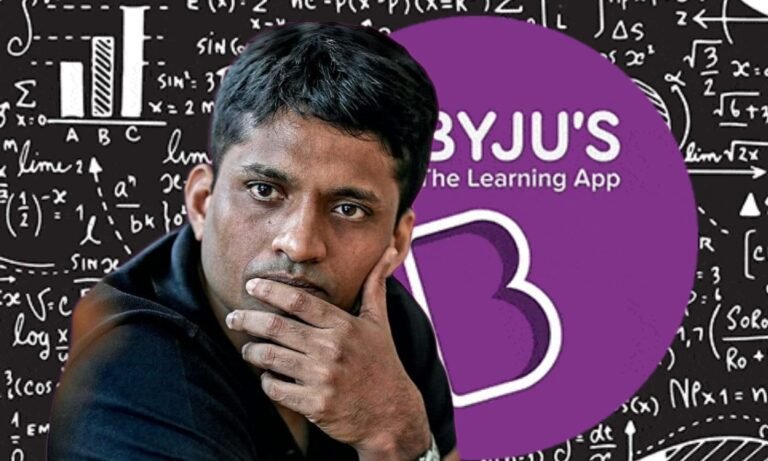
$533 Million ‘Round-Tripped’ to Byju Raveendran, US Court Filing Claims; Edtech Founders Deny Allegations

0

A new, explosive filing in a Delaware Bankruptcy Court has claimed that the missing $533 million from Byju’s US-based unit, Byju’s Alpha, was secretly “round-tripped right back to Byju Raveendran and his affiliates,” directly contradicting the edtech founder’s previous sworn statements. The founders of Think & Learn Private Limited (TLPL), the parent company, have vehemently rejected the allegations.

The latest claim emerged from a filing by Byju’s Alpha seeking approval for a settlement with OCI Limited, a UK-based procurement company that handled most of the disputed money. As part of this process, OCI’s founder, Oliver Chapman, submitted a sworn declaration detailing the flow of the funds.

Funds Allegedly Routed to Raveendran’s Singapore Entity

Chapman’s declaration alleges that the $533 million was clandestinely removed with the “intention that the vast majority of that money be moved (via a series of opaque transfers) to a corporate vehicle in Singapore—Byju’s Global—that Raveendran individually owned.

  • Of the $505.9 million OCI received between May and July 2022, approximately $479.6 million was allegedly transferred to Revere Master SPV LLC, a special purpose vehicle intended to route the funds to Byju’s Global in Singapore.
  • An additional $13.1 million went to companies like Google and Sony India for procurement, while the remainder went to Rupin Banker.

This narrative sharply conflicts with Raveendran’s October 2024 sworn declaration, where he stated the funds were used for “legitimate commercial purposes” to procure “IT equipment, such as electronic tablets, and advertising.”

Byju’s Founders Call Testimony ‘Full of Conjectures’

In a statement released on Monday, Byju’s founders strongly denied the claims, calling Chapman’s testimony “full of conjectures and selective insinuations” that “does not substantiate any claim of wrongdoing.”

“The facts remain unchanged: No portion of the $533 million in question has been used by founders directly or indirectly. The said amount has been used in its entirety for the benefit of Think and Learn as evidenced in documents and bank statements,” the Byju’s statement asserted.

They further accused Glas Trust and the Resolution Professional (RP) of presenting “only partial/selective extracts, stripped of context” despite having “full access to the complete financial records.” They promised their forthcoming filing would provide evidence to rebut the assertions.

Separately, Raveendran’s legal team announced its intent to file claims against Glas Trust, seeking damages exceeding $2.5 billion for alleged violations, including racketeering and obstruction of justice.

The Downfall of a Former Edtech Giant

Byju’s troubles stem from raising a $1.2 billion Term Loan B in November 2021. By mid-2023, lenders alleged the $533 million was missing, leading them to attempt to take control of its special purpose vehicle, Byju’s Alpha. The US unit filed for Chapter 11 bankruptcy in Delaware in February 2024.

In India, the BCCI filed an insolvency petition in June 2024 over unpaid dues of Rs 158 crore, triggering corporate insolvency proceedings. The company, once valued at $22 billion, is now undergoing insolvency in both jurisdictions. Reports suggest that rivals like Ronnie Screwvala’s UpGrad and Ranjan Pai’s Manipal Group have submitted expressions of interest for TLPL.

Ancelotti Eyes Long-Term Brazil Stay: ‘Possible’ to Coach Seleção Until 2030

Rio de Janeiro – Brazil’s National Team head coach, Carlo Ancelotti, has opened the door to a potentially historic, long-term tenure with the Seleção. The decorated Italian manager, who took the reins earlier this year, suggested that extending his commitment with the Brazilian Football Confederation (CBF) until the 2030 FIFA World Cup is a genuine possibility.

​Speaking to the press, Ancelotti affirmed his current comfort and dedication to the national project, stating, “We haven’t talked, but it’s POSSIBLE, yes. I feel very good here, and I don’t have any other plans besides the current project with Brazil.”

​Ancelotti’s arrival marked a major coup for the CBF, with the former Real Madrid and AC Milan mastermind tasked with revitalizing the five-time world champions. His remarks indicate a strong personal interest in building a lasting legacy in Brazil, going beyond the immediate tournament cycles.

​However, the seasoned coach was quick to emphasize that any extension would require mutual agreement and shared ambition. “For it to continue,” he added, “both the CBF and I need to want the same thing.”

​The statement fuels speculation and excitement among Brazilian fans, who hope Ancelotti can bring his winning pedigree to the international stage and end their over two-decade wait for a sixth World Cup title.

UK Slams Door Shut: Visa Bans Imposed on Countries Refusing to Accept Deported Citizens

0

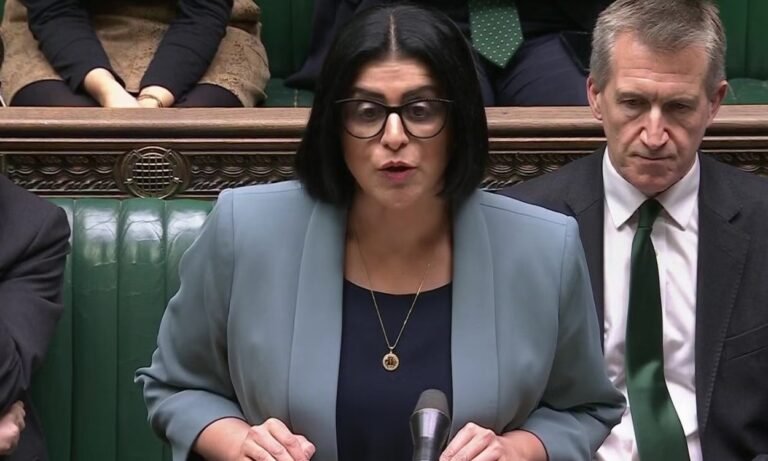
London: In a major escalation of the UK’s effort to curb illegal migration, Home Secretary Shabana Mahmood announced sweeping reforms on Monday, including the imposition of visa bans on nations that fail to cooperate by taking back their deported criminals and illegal immigrants.

The first countries to face these new “Trump-style” sanctions are Angola, Namibia, and the Democratic Republic of Congo (DRC). Nationals from these three countries will no longer be granted UK visas unless their respective governments demonstrate a rapid improvement in cooperating with the removals process.

Non-Cooperation and Penalties

The Home Office accused the targeted nations of “unacceptably low co-operation and obstructive returns processes,” noting that thousands of illegal migrants and foreign criminals from these countries are currently in the UK. Non-cooperation often involves embassies failing to process necessary removals paperwork in a timely manner, sometimes even requiring individuals to sign their own documentation—a loophole allowing them to obstruct their own deportation.

The new policy serves as a direct warning, with Home Secretary Mahmood stating, “My message to foreign governments today is clear: accept the return of your nationals or you will lose the privilege of being able to enter our country.”

India Under Scrutiny

The Times (UK) reported that India is considered one of several other countries highly resistant to taking back illegal migrants and could be added to the sanctions list in the coming year if cooperation does not improve.

Official data shows that in the year ending June 2025:

  • A total of 5,475 Indian nationals claimed asylum in the UK, making them the sixth-largest nationality.
  • Only 20 Indians were granted asylum, while 2,691 had their claims refused, highlighting the scale of potential deportations that require cooperation.

Human Rights Laws Overhaul to Fast-Track Removals

In parallel with the visa ban threat, the UK government plans to introduce new legislation to overhaul the application of human rights laws to prevent migrants from “gaming the system” and delaying deportation:

  • Article 8 Reform (Right to Family Life): The government will legislate to redefine how Article 8 is interpreted, restricting the definition of a family connection to immediate family (such as a parent or child) to block people from using “dubious connections” to stay in the UK.
  • Article 3 Scrutiny (Inhuman or Degrading Treatment): The UK will work with the Council of Europe to address the “over-expansive application” of Article 3, which prohibits torture and inhuman treatment, often used by migrants to block their removal.
  • Streamlined Appeals: Migrants will be restricted to arguing all legal grounds within a single appeal, and if they lose, they will face mandatory removal.

The Home Secretary’s reforms are touted as the most significant overhaul of the UK’s migration system in modern times, including the creation of new, capped work and study routes for genuine refugees, in part to end the reliance on costly asylum hotels.

Air India Relaunches China Corridor: Delhi-Shanghai Flights Back After Six-Year Hiatus

0

New Delhi: Indian airlines are aggressively expanding their footprint in the lucrative Chinese market following diplomatic agreements that restored direct air links, which had been suspended for nearly six years.

Leading the charge is Air India, which announced it will restart its non-stop service between Delhi and Shanghai (PVG) from February 1, 2026. This marks a significant return for the Tata Group-owned airline to mainland China.

Reconnecting a Vital Air Corridor

Air India’s move follows the revival of direct services initiated by IndiGo, which launched flights between Kolkata and Guangzhou in October 2025. Chinese carrier China Eastern has also resumed flights connecting Shanghai and Delhi.

  • Service Details: Air India will operate the Delhi-Shanghai route four times a week using its twin-aisle Boeing 787-8 aircraft, which offers 18 flat beds in Business Class and 238 seats in Economy Class.
  • Expansion Plans: Subject to regulatory approvals, Air India also intends to introduce non-stop flights between Mumbai and Shanghai later in 2026. Shanghai will be the airline’s 48th international destination.

Campbell Wilson, CEO & MD of Air India, emphasized the importance of the route: “The resumption of our Delhi-Shanghai services is more than a route launch. It is a bridge between two great, ancient civilisations and modern economic powerhouses.” He added that the service will enable travelers to pursue opportunities in business, trade, education, and culture.

The reinstatement of direct flights is expected to significantly ease travel and boost exchanges in sectors like pharmaceuticals, technology, and trade, which had been constrained by the need to rely on connecting hubs in Southeast Asia. Prior to the 2020 suspension, India and China had 539 scheduled direct flights per month.

Alliance on the Rocks: JMM Threatens to Review Ties with Congress, RJD After Bihar Poll Snub

0

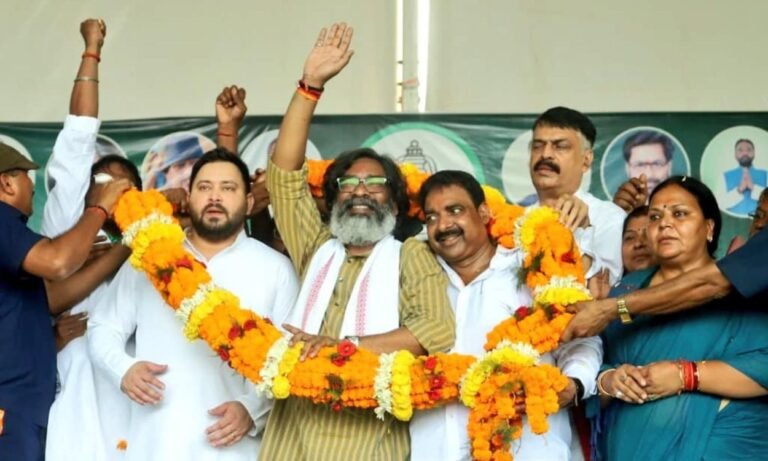
Ranchi: The rout of the Mahagathbandhan (Grand Alliance) in the recent Bihar Assembly polls has sent shockwaves across the border into Jharkhand, prompting the Jharkhand Mukti Morcha (JMM) to publicly mull a review of its ruling alliance with the Congress and the Rashtriya Janata Dal (RJD).

JMM General Secretary Vinod Pandey openly voiced the party’s deep frustration, stating that the RJD and Congress “did not coordinate with the JMM during the Bihar Assembly elections; both parties underestimated it.”

The immediate trigger for the rift was the complete snub faced by the JMM in Bihar. Despite being a key coalition partner, the RJD refused to concede a single seat to the JMM, a move the Congress remained silent on. The JMM was initially willing to contest on 16 seats, which it later reduced to 12, and then finally to six seats—all of which were ultimately denied by its allies. The party was consequently forced to withdraw from the election, citing a “political conspiracy.”

The Jharkhand Political Calculus

The move to review the alliance could potentially destabilize the government in Jharkhand, though the ruling coalition still commands a comfortable majority.

  • The 81-member Jharkhand Assembly requires 41 seats for a majority.
  • The current ruling coalition includes JMM (34 seats), Congress (16 seats), RJD (4 seats), and CPI(M-L) (2 seats), totaling 56 seats.

The JMM-led government currently includes Chief Minister Hemant Soren and four other JMM ministers. Congress has four ministers, and RJD has one minister, Sanjay Prasad Yadav. While the government would remain comfortably above the majority mark even if the four RJD seats were withdrawn (retaining 52 seats), any fracture with the larger Congress party could trigger significant political instability. The JMM’s win in the recent Ghatshila by-poll has seemingly bolstered the party’s confidence in its independent strength.

Hasina Extradition Showdown: Political Offence Clause Puts India in Legal Spotlight

0

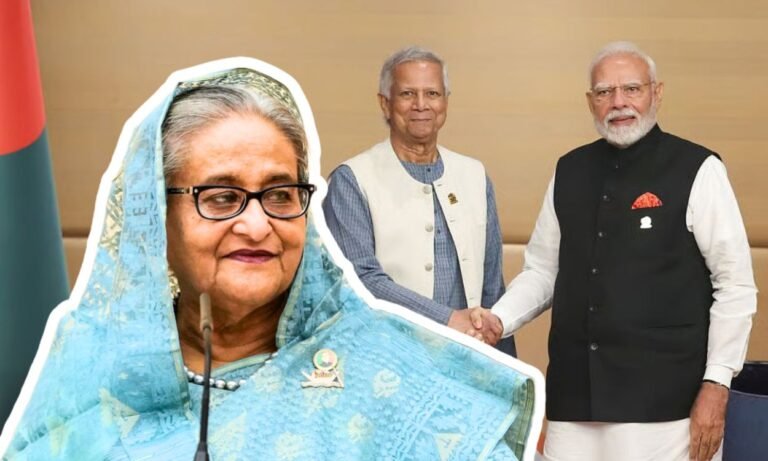
New Delhi: The political and legal crisis in Bangladesh has landed squarely on India’s doorstep, with the interim government in Dhaka formally requesting the extradition of former Prime Minister Sheikh Hasina. The request cites the 2013 India-Bangladesh Extradition Treaty following an arrest warrant issued by Bangladesh’s International Crimes Tribunal (ICT) against Hasina for “crimes against humanity.”

India’s decision will now hinge on intricate legal provisions within the bilateral treaty and its own domestic laws, with multiple clauses offering New Delhi grounds to refuse the demand.

The Extradition Hurdles for Dhaka

While the ICT’s arrest warrant legally satisfies the minimum procedural condition for an extradition request, India has two significant legal barriers it can invoke:

  • 1. The Dual Criminality Test: Articles 1 and 2 of the treaty require that the alleged offence must be punishable under the domestic laws of both countries. While “crimes against humanity” is recognized under Bangladesh’s war-crimes framework, India typically interprets such charges within the context of international tribunals, not domestic political events. This divergence offers India a legal basis to argue that the charge does not meet the definition required for extradition under the Indian legal system.
  • 2. The Political Offence Exception: The most significant defense for Hasina lies in Article 6(1) of the treaty, which explicitly states that extradition may be refused if the alleged offence is considered an “offence of a political character.” Given that Hasina was ousted by a political uprising and the current administration is her political adversary, India can categorize the accusations, trial, and verdict as inherently political. Furthermore, Article 8(3) allows India to deny extradition if the request is not made in good faith or in the interests of justice, a clause that may be cited considering the ongoing political turbulence in Bangladesh.

The Role of India’s Domestic Law

India’s own Extradition Act (1962) provides additional legal grounds for refusal:

  • Section 31 prohibits the surrender of a fugitive if the alleged offence is of a political character, reinforcing the treaty’s exception.
  • Section 29 allows India to reject an extradition request if it appears not to be made in good faith or is politically motivated.

Bangladesh may attempt to invoke Article 6(2), which provides exceptions to the political-offence bar, but for this to succeed, Dhaka would need to convincingly demonstrate the charges were brought in good faith—a difficult task given the context of a political upheaval.