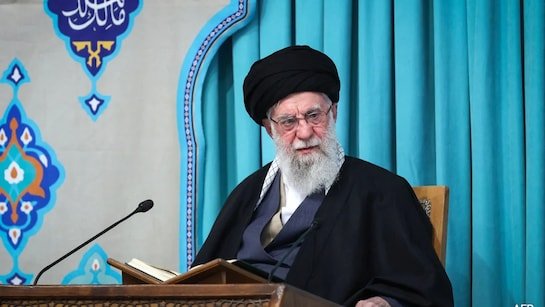
TEHRAN / WASHINGTON — In a seismic shift for Middle Eastern politics, Iranian state television confirmed early Sunday that Supreme Leader Ayatollah Ali Khamenei has been killed. The announcement follows a massive joint military operation by the United States and Israel that targeted several high-profile military and governmental sites across Iran.
The official confirmation from Tehran came hours after U.S. President Donald Trump took to social media to announce the death of the 86-year-old leader. In a statement, Trump described the strike as a “precision operation” and claimed it offers the Iranian people their “greatest chance” to reclaim their sovereignty from decades of clerical rule.
The Strike and Its Toll

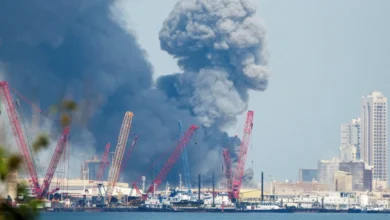
The aerial bombardment, which began on Saturday, reportedly targeted Khamenei’s compound in downtown Tehran. Satellite imagery confirmed heavy damage to the site. Iranian media reports indicate that the Supreme Leader was not the only casualty; his daughter, son-in-law, and granddaughter were also reportedly killed in the strikes, along with high-ranking officials including Iran’s Defence Minister and top IRGC commanders.
While initial reports from some Iranian agencies like Tasnim and Mehr suggested the Leader remained “firm in commanding the field,” the state broadcaster eventually pivoted to announce 40 days of national mourning and seven days of public holidays.
Regional Escalation
The assassination has immediately triggered a regional firestorm. Iran responded to the initial waves of the attack by launching a barrage of drones and missiles toward Israel and U.S. military bases in the Middle East. Reports also emerged of strikes hitting international transit hubs, including Dubai International Airport, as the conflict threatened to engulf neighboring Gulf states.
A Leadership Vacuum
Having led the Islamic Republic since 1989, Khamenei was the ultimate authority on all matters of state, from nuclear policy to foreign intervention. His death creates an unprecedented leadership vacuum in Tehran. While the CIA had previously assessed that the IRGC might attempt a swift transition to a hardline successor, the scale of the strikes—which eliminated several potential “Plan B” leaders—has left the path forward uncertain.
Israeli Prime Minister Benjamin Netanyahu hailed the operation, stating there were “many signs” the “tyrant” was gone, and urged the Iranian public to move toward a future free of the current regime.
As the world watches the fallout, the Strait of Hormuz has reportedly been closed to merchant shipping, sending shockwaves through global energy markets. The Pentagon has stated that “major combat operations” will continue as long as necessary to eliminate “imminent threats.”