

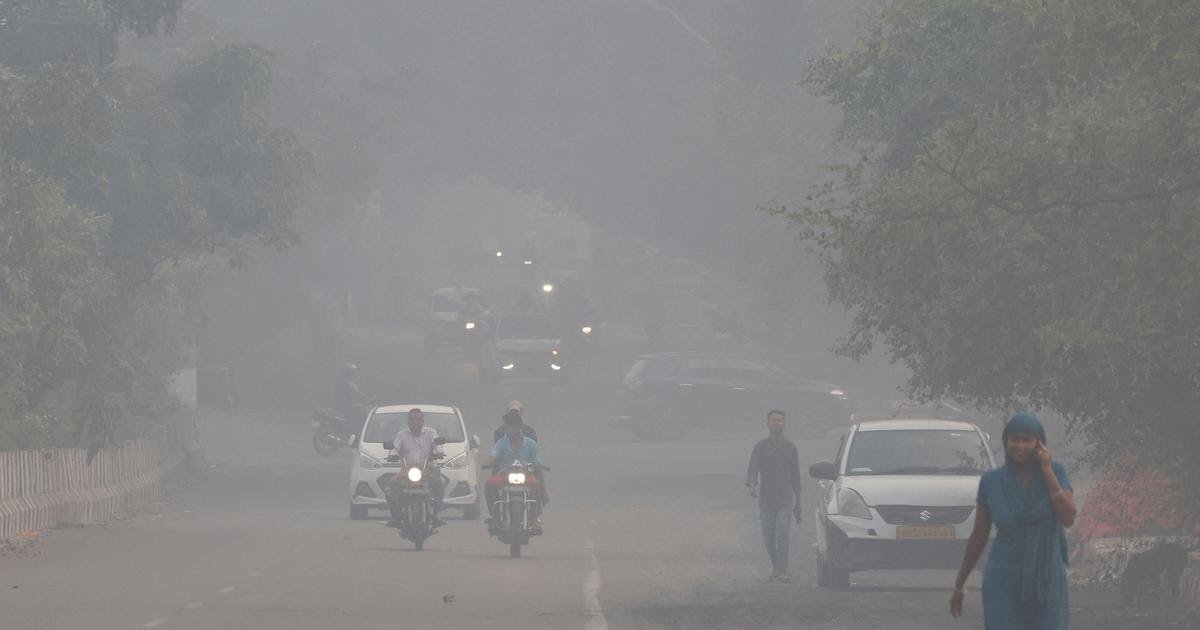

NEW DELHI: The national capital woke up blanketed in a heavy layer of smog, with air quality deteriorating sharply into the ‘Very Poor’ category, despite this year’s experiment allowing the use of less-polluting ‘green crackers.’
The Air Quality Index (AQI) in Delhi was recorded at \text{350} at 8:00 am, just hours after Diwali celebrations concluded. The readings were even higher at pollution hotspots, with the Anand Vihar station clocking an alarming AQI of \text{360}. This immediate post-festival surge confirms a distressing trend that court-mandated restrictions and ‘green’ alternatives have been largely ineffective in combating the capital’s annual air pollution crisis.
Data Shows Familiar Pattern
The Supreme Court had permitted the use of ‘green crackers,’ which claim to produce 30 per cent less pollution, aiming to strike a balance between tradition and public health. However, an analysis of air quality data reveals that the air quality remains consistently poor or severe in the days following Diwali, regardless of firecracker bans or relaxations.
For comparison, the day after Diwali in previous years recorded:
- 2024: AQI soared to 359 (Very Poor).
- 2023: After a blanket ban was defied, the AQI spiked to 438 (Severe).
- 2021: The AQI reached a dangerous 454 (Severe) category.
‘Less Poison is Meaningless,’ Says Activist
The recurrence of hazardous air quality has drawn sharp criticism from environmentalists. Speaking on the efficacy of ‘green crackers,’ clean air activist Bhavreen Kandhari dismissed the marginal reduction in pollution as insignificant, stating, “We are talking about public health. 30 per cent less pollution is meaningless. Are you saying less poison? Do you want to feed your children less poison?”
The crisis is exacerbated by stubble burning and vehicular emissions, making the impact of firecrackers cumulative. The pollution levels prompted authorities to invoke anti-pollution measures under the second stage of the Graded Response Action Plan (GRAP-2) even before the festival, including restrictions on the use of coal, firewood, and diesel generator sets across Delhi and the National Capital Region (NCR).
The persistent failure of firecracker regulations to deliver clean air underscores the urgent need for comprehensive, year-round action to address the root causes of pollution in the capital.