
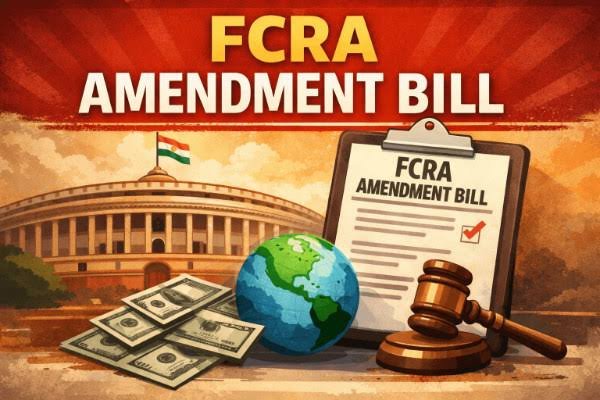

NEW DELHI: The Catholic Bishops’ Conference of India (CBCI) has formally raised serious concerns regarding the Foreign Contribution (Regulation) Amendment Bill, 2026, recently introduced by the Central Government. In a detailed memorandum submitted to Members of Parliament, the CBCI warned that the proposed changes could cripple civil society and jeopardize decades of charitable work across the nation.
The apex body of the Catholic Church in India argued that the bill’s provisions are not merely regulatory but infringe upon fundamental rights guaranteed by the Constitution.
Key Concerns Raised by CBCI

Draconian Asset Seizure: The most contentious provision involves the government’s power to seize foreign funds and assets created using those funds if an organization’s FCRA registration expires, is not renewed, or is cancelled. The CBCI termed this "extremely alarming."

Violation of Property Rights: The memorandum highlights that seizing assets without a proper judicial inquiry violates Article 300A of the Indian Constitution, which protects the right to property. They argued that such summary takeovers bypass the principles of natural justice.

Threat to Religious Freedom: The Church contends that the amendment undermines Articles 25 and 26, which grant religious denominations the right to manage their own affairs and institutions. The CBCI pointed out a discriminatory gap: while places of worship receive certain protections, educational and charitable institutions run by the same bodies are left vulnerable.

Presumption of Guilt: The Bill proposes a shift where office-bearers of NGOs are presumed guilty of violations until proven innocent. The CBCI fears this "guilty-until-proven-innocent" approach will deter individuals from entering the field of social service and voluntary work.
Impact on the Marginalized
Archbishop Anil J.T. Couto, Secretary General of the CBCI, emphasized that the fallout would be felt most by the poor.
"Thousands of institutions working in education, healthcare, and the welfare of Dalit and Tribal communities face an existential crisis. Losing assets built legally over decades due to administrative technicalities will ultimately hurt the underprivileged beneficiaries," the Archbishop stated.The CBCI’s Demands
To prevent a “chilling effect” on the social sector, the CBCI has urged the government to:
Refer the Bill to a Parliamentary Standing Committee for deeper scrutiny.

Remove harsh measures like asset seizure for mere administrative lapses.

Establish an Independent Appellate Authority to address grievances and disputes.

Implement a regulatory framework that ensures transparency without stifling the spirit of service.