

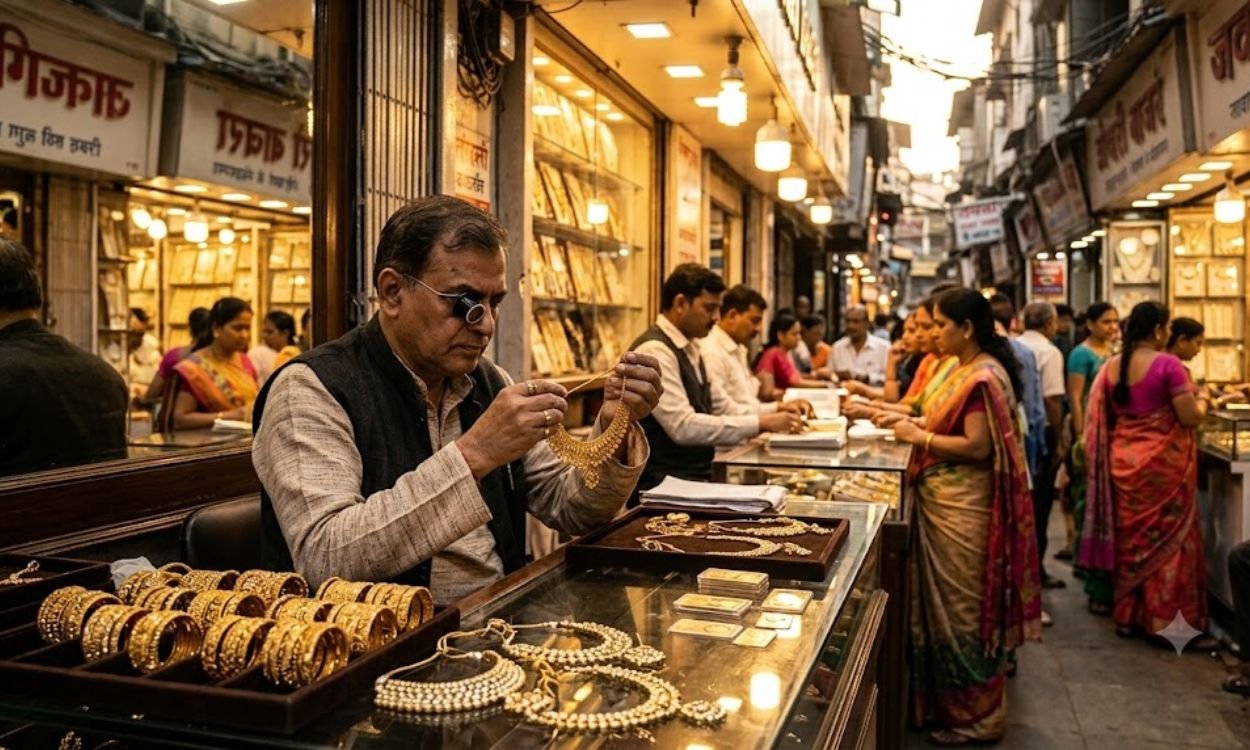

India’s aggressive fiscal policies surrounding precious metals have come under sharp scrutiny from global experts. The World Gold Council (WGC) has publicly criticized the country’s combined tax structure on gold, labeling the total 18% levy—comprising a 15% import duty and a 3% Goods and Services Tax (GST)—as exceptionally high and damaging to the formal economy.
The international authority warned that while the tax hike was intended to curb foreign exchange outflows and stabilize the Indian Rupee, its primary side effect has been a booming parallel market. Legal gold imports and consumer demand have plummeted, while illicit smuggling channels are experiencing rapid growth as syndicates capitalize on lucrative price margins.
The 18% Tax Threshold: How Fiscal Tightening Backfired
The current tax predicament traces back to May 13, when the Central Government hiked import duties on gold from 6% to 15%. Designed to rein in the widening current account deficit, stabilize foreign exchange reserves, and defend the Indian Rupee against macroeconomic volatility, the move drastically shifted domestic market dynamics.
When paired with the existing 3% GST, official gold purchases in India now carry an effective tax burden of 18%. Sachin Jain, Chief Executive Officer of WGC’s Indian operations, highlighted that such a massive arbitrage gap virtually guarantees the expansion of illicit trade. “The arbitrage is so huge,” Jain noted. “With a 15% duty and 3% GST, there’s an 18% price differential. That almost spurs an entire shadow industry.”
Organized jewellers across the country, who strictly comply with tax standards, are facing shrinking customer footfalls and unfair competition from grey-market dealers offering un-taxed bullion.
Official Imports and Jewellery Demand Suffer Sharp Decline
The impact of the duty hike was immediately visible in official economic indicators for the April–June quarter. Total gold imports fell by 6% year-on-year to 131.4 tonnes, down from 139.7 tonnes recorded during the same period in 2025. Net gold imports witnessed an even steeper contraction of 23%, dropping to 98.1 tonnes—the lowest quarterly level observed since the height of the COVID-19 pandemic in late 2020.
However, despite falling volume, the financial cost of gold imports spiked dramatically. Owing to record-high global bullion prices, India’s gold import bill ballooned from ₹1.32 lakh crore to ₹1.98 lakh crore.
Retail jewellery demand suffered a heavy blow, plunging 15% to 75.1 tonnes during the June quarter. Market analysts attribute this decline not only to soaring retail prices but also to Prime Minister Narendra Modi’s public appeal advising citizens to avoid discretionary gold purchases to help safeguard national forex reserves.
Smuggling Metrics Point to a Rebounding Shadow Economy
The most alarming aspect of the WGC’s report is the rapid resurgence of gold smuggling. Following tax rationalization in previous years, illegal gold flows into India had dropped significantly—falling from 156.1 metric tons in 2023 to 69.2 tons in 2024, and further contracting to just 20.4 tons in 2025.
However, enforcement data reveals that the trend reversed sharply as soon as duties were restored to 15%. Indian federal agencies seized 160.91 kilograms of smuggled gold between May 13 and June 30 alone, compared to 86.16 kilograms seized between April 1 and May 12—representing a near-100% surge in contraband interdictions post-tax hike.
The World Gold Council estimates that if current market conditions persist, illicit gold inflows could easily cross 100 tonnes in 2026, depriving the national exchequer of thousands of crores in tax revenue while bankrolling underground syndicates.
Outlook: Can Festive Demand Revive the Legal Market?
Despite short-term headwinds, industry observers remain cautiously optimistic about the second half of 2026. As global prices show signs of stabilization, retail jewellers report early upticks in customer inquiries and advance bookings.
With India’s peak festive and wedding seasons approaching, traditional demand is expected to offer a buffer. Nevertheless, trade bodies continue to urge New Delhi to review the 18% tax structure, warning that without tax rationalization, the grey market will continue to erode legal trade and undermine fiscal goals.
People Also Ask)
Q1: What is the current total tax on gold imports in India?
A: India currently imposes an effective total tax of 18% on gold imports. This includes a 15% import duty (comprising basic customs duty and infrastructure cess) plus a 3% Goods and Services Tax (GST).
Q2: Why did India increase the import duty on gold to 15%?
A: The Indian government raised the import duty to curb excessive foreign gold purchases, reduce the widening trade and current account deficits, and protect foreign exchange reserves to stabilize the Indian Rupee.
Q3: How has the high gold tax affected gold smuggling in India?
A: According to the World Gold Council, the 18% price gap created by high taxes has made illegal trade highly lucrative. Gold seizures by enforcement agencies nearly doubled following the duty hike, with annual smuggling projected to cross 100 tonnes in 2026.
Q4: Did gold jewellery demand fall in India after the duty hike?
A: Yes, gold jewellery demand in India fell by 15% to 75.1 tonnes in the June quarter due to higher retail prices, increased tax burdens, and reduced discretionary buying.