
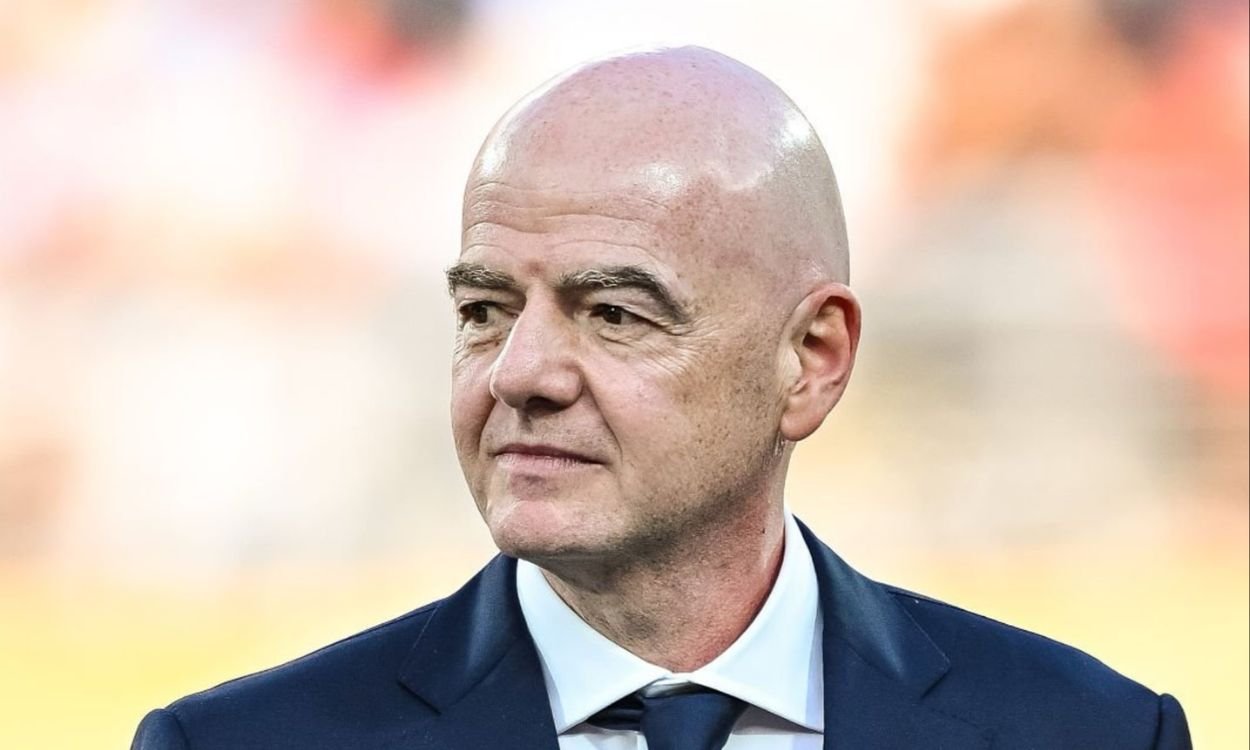

In an unprecedented turn of events that has sent shockwaves across world sports, FIFA President Gianni Infantino has officially withdrawn his deeply controversial proposal to spin off and sell a stake in the commercial operations of the FIFA World Cup. The plan, which sought to create a new commercial vehicle valued at $20 billion, collapsed late Friday after meeting a wall of fierce resistance from continental governing bodies, political leaders, and internal FIFA leadership.
The sudden retreat marks one of the most severe political setbacks of Infantino’s ten-year presidency, exposing deep fractures within football’s global hierarchy.
Inside FIFA Forward Enterprise: The $20 Billion Commercial Gamble
Unveiled earlier this week, the ambitious proposal centered on creating FIFA Forward Enterprise (FFE), a commercial subsidiary designed to house all television, sponsorship, and event operations for FIFA’s marquee competitions, including both the men’s and women’s World Cups as well as the expanded FIFA Club World Cup.
Working in partnership with investment banking giant JPMorgan, FIFA intended to sell up to a 20% non-controlling stake to private investors, raising an estimated $4.2 billion. To entice global buy-in, Infantino offered each of FIFA’s 211 member associations a immediate cash windfall of $40 million if they ratified the proposal prior to a September 19 deadline.
However, reports that an investor consortium led by New York investment firm Thrive Eternal—founded by Joshua Kushner—was slated as the anchor investor ignited severe scrutiny over political influence and financial transparency. Critics quickly pointed out the potential conflict of interest given the close ties between the Kushner family and former U.S. President Donald Trump, whom Infantino had aggressively courted in the lead-up to the 2026 World Cup in North America.
How UEFA and Continental Allies Forced FIFA’s Hand
The turning point came when European football’s governing body, UEFA, launched an aggressive counter-offensive. Representing 55 member associations, UEFA took the historic step of unanimously threatening a full boycott of all FIFA competitions—including the World Cup—should the private equity plan move forward.
“Some things are simply too important to sell,” UEFA declared in a stinging public statement. “The FIFA World Cup belongs to football. It always will. So long as Europe has a voice, it will never be for sale.”
UEFA’s decisive stand quickly galvanized opposition worldwide. Shortly thereafter, CONCACAF (representing North and Central America) and the Asian Football Confederation (AFC) formally joined the resistance. Together, the three confederations control 143 of FIFA’s 211 voting members, effectively blocking any path to procedural approval.
Internal rebellion within FIFA further dismantled Infantino’s position. Senior FIFA adviser Carlos Cordeiro resigned in protest, publicly asserting, “I cannot stand by while FIFA considers selling a stake in the World Cup.” Hours later, FIFA Chief Operating Officer Kevin Lamour publicly accused Infantino of deceiving staff and operating without transparency, calling FFE “a project of one person” that had to be stopped.
Infantino Speaks Out: Unity Over Division
Faced with an untenable rebellion and an unprecedented threat to the World Cup’s structural existence, Infantino released a formal FIFA statement backing down from the proposal.
“Having listened carefully to all the views, it has become clear that the project has created divisions of a nature that, regardless of the level of support, are no longer in the interest of the objective set out in the first place,” Infantino conceded. “Our purpose has always been—and will always be—to unite and improve. As a result, this proposal will not proceed.”
Infantino added that his focus over the coming weeks will shift to bringing all global stakeholders back together to find alternative, non-divisive strategies to finance football development in underfunded regions.
What Happens Next for FIFA Leadership and Football Governance?
While the immediate crisis has been averted, the fallout from the failed proposal leaves Gianni Infantino in his most vulnerable political position since taking office in 2016. With the next FIFA presidential election slated to take place in Rabat, Morocco, and the deadline for candidate nominations approaching on November 18, rival administrators are weighing potential challenges to his tenure.
| Key FIFA Milestone / Metric | Status & Details |
| Proposed Private Capital Raised | $4.2 Billion (Cancelled) |
| Promised Payout per Member | $40 Million (Withdrawn) |
| Opposing Confederations | UEFA, CONCACAF, AFC (143/211 Votes) |
| Next Presidential Election Site | Rabat, Morocco |
| Candidate Nomination Deadline | November 18 |
The collapse of FIFA Forward Enterprise underscores a clear boundary drawn by the global football ecosystem: while commercial expansion remains a priority, selling equity in the game’s crown jewel to private capital remains an unacceptable line.
What was FIFA Forward Enterprise (FFE)?
FIFA Forward Enterprise (FFE) was a proposed $20 billion commercial subsidiary designed by FIFA to manage all commercial, broadcasting, and event operations for competitions like the FIFA World Cup, allowing private equity investors to buy up to a 20% stake.
Why did Gianni Infantino withdraw the World Cup sale proposal?
Infantino withdrew the proposal due to overwhelming global backlash, including a tournament boycott threat from UEFA, opposition from CONCACAF and the AFC, high-profile internal FIFA resignations, and widespread concerns over private equity control.
How much money were FIFA member nations offered to approve the deal?
FIFA offered each of its 211 member associations a one-off payment of $40 million if they voted to approve the commercial restructuring before September 19.
Which investment firms were linked to the FIFA World Cup stake proposal?
The investment proposal was managed in consultation with JPMorgan, with Thrive Eternal—a firm founded by Joshua Kushner—expected to lead the private equity investor group.