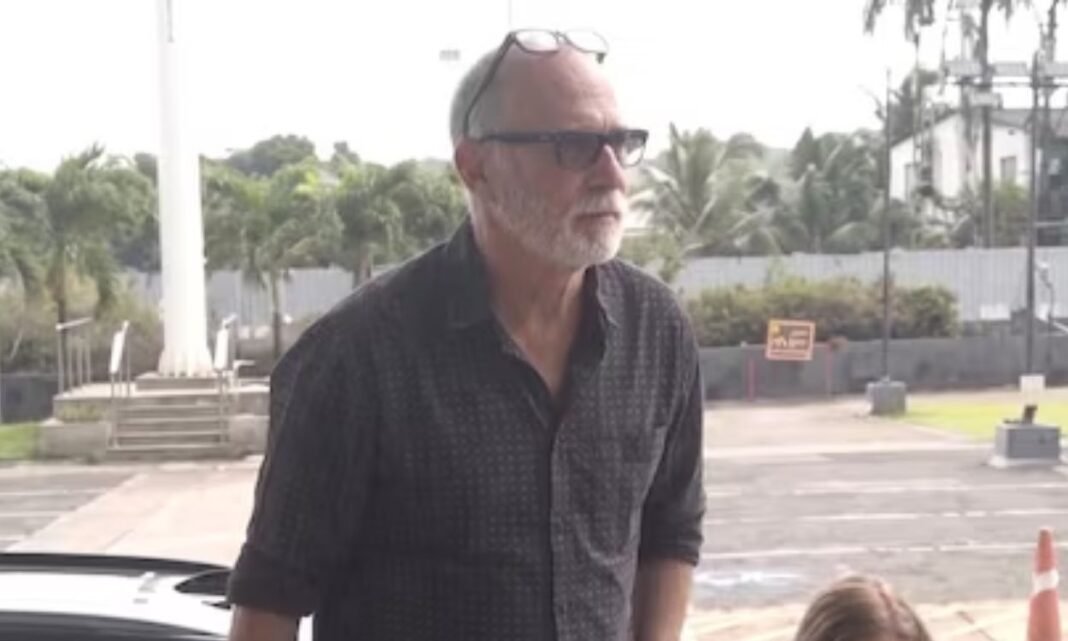



Bombay High Court Reverses Trial Court Verdict
In a dramatic legal milestone for India’s anti-sexual harassment jurisprudence, the Goa bench of the Bombay High Court on Thursday, August 6, 2026, convicted former Tehelka magazine editor-in-chief Tarun Tejpal for sexually assaulting a junior female colleague in 2013. Setting aside the May 2021 trial court judgment that acquitted Tejpal of all charges, the High Court allowed the appeal filed by the State of Goa.
Delivering the historic verdict, a division bench comprising Justice Neela Gokhale and Justice Amit Jamsandekar held Tejpal guilty under key provisions of the Indian Penal Code (IPC), including Section 376(2)(f) (rape by a person in a position of trust or authority), Section 354A (sexual harassment), and Section 354B (assault with intent to disrobe).
The conviction under Section 376(2)(f) carries a mandatory minimum sentence of 10 years’ imprisonment, extending up to life imprisonment under statutory norms.
“No Means No”: High Court Accepts Prosecution Arguments
The High Court’s reversal targets critical flaws in the original Mapusa Sessions Court ruling, which had drawn severe public backlash for putting the victim’s post-assault behavior on trial.
Arguing for the State of Goa, Solicitor General Tushar Mehta emphasized before the bench that the lower court had committed a grave error by relying on barred and irrelevant assumptions regarding the survivor’s lifestyle, WhatsApp chats, and general demeanor following the incident. SG Mehta urged the court to impose maximum statutory penalties to project a firm judicial message.
“This court must give a clear message to society that when a girl says no, it means no. A no means a no,” Solicitor General Tushar Mehta argued before the High Court bench during arguments.
The High Court accepted the prosecution’s contention that Tejpal’s formal “apology email”—sent shortly after the November 2013 incident inside a luxury hotel elevator in Goa—constituted crucial, unrefuted admission of a breach of trust and physical violation.
Defense Arguments and Pleading for Leniency
Defending Tejpal, senior advocate Aabad Ponda argued that the lower court’s acquittal had been a well-reasoned evaluation based on electronic evidence, elevator mechanics, and CCTV logs that showed no visible signs of immediate trauma.
Addressing the court directly prior to sentencing arguments, Tejpal maintained his stance of complete denial, claiming political victimhood.
“All I can say is I am 62. I believe I am a political victim. I am a father of two daughters. I have a wife. All we can say is we will go up and appeal. My lawyer wants me to request you to be lenient,” Tejpal told the court.
A Decade-Long Battle and Next Legal Steps
The case dates back to November 2013, when a junior woman journalist accused Tejpal of sexually assaulting her inside an elevator at a five-star resort during Tehelka’s annual ‘ThinkFest’ event. Arrested in November 2013, Tejpal spent seven months in custody before being granted bail by the Supreme Court in July 2014.
Following the High Court’s guilty verdict, Tejpal faces immediate surrender and remand as the bench prepares to pronounce its formal sentencing order. The defense team confirmed plans to challenge the conviction before the Supreme Court of India.