

MYSURU, KARNATAKA: Mysuru Dasara, one of India’s most magnificent cultural and religious festivals, represents a spectacular celebration of royal heritage, spirituality, art and tradition.
Celebrated over ten days during Navaratri, the festival transforms the historic city of Mysuru into a vibrant destination filled with illuminated palaces, traditional performances, cultural exhibitions and ceremonial processions.
Known as Nada Habba, or Karnataka’s state festival, Mysuru Dasara attracts visitors from across India and around the world. The grand celebrations culminate on Vijayadashami with the famous Jumbo Savari procession, one of the most anticipated events of the festival.

A Royal Tradition Dating Back Centuries
The origins of Dasara celebrations in Karnataka can be traced to the Vijayanagara Empire.
The Wadiyar dynasty of Mysuru subsequently developed the festival into a major royal celebration.
Historical accounts indicate that Raja Wadiyar I began celebrating Dasara under the Mysuru royal dynasty in 1610.
Over the centuries, the festival evolved into a significant cultural event reflecting Karnataka’s traditions and royal history. Dasara symbolises the victory of good over evil and is closely associated with Goddess Chamundeshwari, the presiding deity of Mysuru.
According to Hindu mythology, Goddess Chamundeshwari defeated the demon Mahishasura, whose legend is deeply connected with the city’s identity.
Jumbo Savari: The Grand Highlight
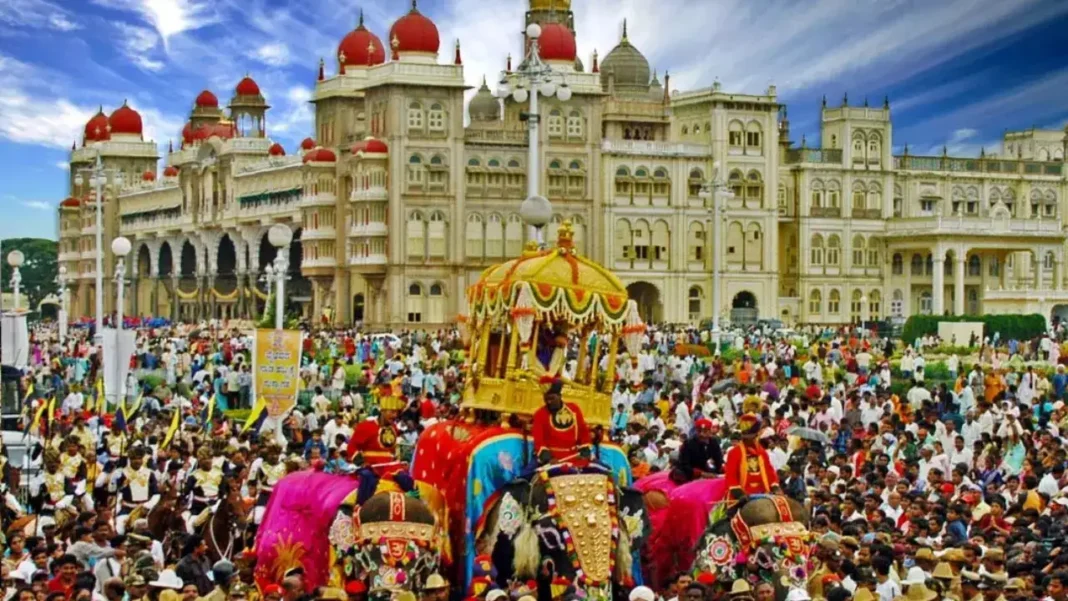
The spectacular Jumbo Savari procession marks the culmination of Mysuru Dasara celebrations.
During the traditional procession, an idol of Goddess Chamundeshwari is carried in a golden howdah mounted on a decorated elephant.
The golden howdah, weighing approximately 750 kilograms, is among the most recognisable symbols of Mysuru’s royal heritage.
The procession traditionally begins at Mysuru Palace and concludes at Bannimantap.
It features decorated elephants, traditional musicians, folk dancers, cultural troupes and colourful tableaux representing different regions of Karnataka.
The event offers visitors an opportunity to experience the state’s rich cultural diversity.
Mysuru Palace Glows with Nearly 100,000 Lights
One of the most breathtaking attractions of the Dasara celebrations is the illumination of Mysuru Palace.
The magnificent palace is traditionally illuminated with approximately 100,000 electric bulbs, creating an extraordinary visual spectacle.
Built in the Indo-Saracenic architectural style, Mysuru Palace remains one of India’s most celebrated historical landmarks.
During Dasara, the illuminated palace and surrounding areas become major attractions for tourists and photography enthusiasts.
Cultural Performances and Traditional Celebrations
Mysuru Dasara extends far beyond religious ceremonies.
The celebrations traditionally include classical music concerts, Bharatanatyam performances, folk dances, cultural programmes and traditional art exhibitions.
The Dasara Exhibition is another popular attraction, featuring commercial stalls, entertainment facilities and displays of regional products.
Flower shows, sporting competitions, youth festivals and food events add further excitement to the celebrations.
These activities highlight Karnataka’s artistic traditions while creating opportunities for local performers and businesses.
A Major Boost for Karnataka Tourism
Mysuru Dasara plays an important role in promoting tourism and supporting the regional economy.
Visitors travelling to Mysuru during the festival contribute to demand for accommodation, transportation, restaurants, shopping and other tourism-related services.
Local artisans and traders also benefit from increased interest in Mysuru silk sarees, sandalwood products and traditional handicrafts.
The festival has helped establish Mysuru as a prominent cultural tourism destination in southern India.
A Celebration of India’s Cultural Diversity
Mysuru Dasara continues to preserve centuries-old traditions while embracing modern tourism and cultural initiatives.
The combination of royal ceremonies, spiritual significance, artistic performances and public participation makes the festival one of India’s most distinctive celebrations.
More than a festival, Mysuru Dasara is a living expression of Karnataka’s royal legacy, cultural identity and enduring traditions.