

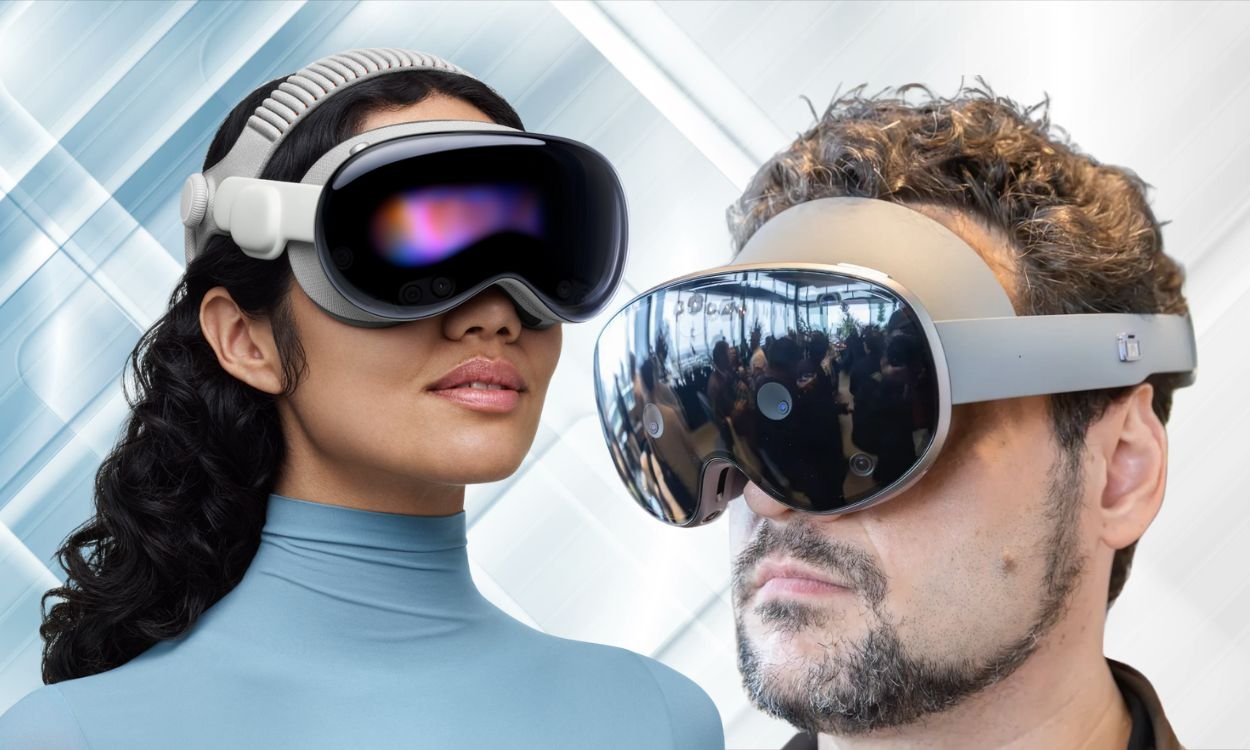

SAN FRANCISCO/SEOUL – The high-end Extended Reality (XR) market is witnessing a fierce rivalry with the entry of Samsung’s Galaxy XR, positioned as a direct and aggressive competitor to Apple’s Vision Pro. While both aim to revolutionize personal computing, their approaches—particularly in pricing and specifications—present distinct choices for early adopters.
The most striking difference is the price: the Galaxy XR enters the market at $1,799, roughly half the starting price of the Apple Vision Pro ($3,499).
Here is a detailed breakdown of how the two flagship headsets compare:
| Feature | Samsung Galaxy XR | Apple Vision Pro |
| Price | $1,799 | $3,499 |
| Operating System (OS) | Android XR (Integrated with Gemini AI) | visionOS (Integrated with Siri/Apple Intelligence) |
| Weight | Approx. 545 grams (Lighter) | 600-650 grams (Original); >750 grams (M5) |
| Display Resolution | Dual 4K Micro-OLED (Over 29 million pixels, 4,023 PPI) | Dual Micro-OLED (Approx. 23 million pixels, 3,386 PPI) |
| Refresh Rate | Up to 90Hz | Up to 120Hz (Smoother visuals) |
| Battery Life (External) | Up to 2.5 hours (video playback) | Up to 3 hours (video playback) |
| Key AI/Software Focus | Multimodal Gemini AI, Google Maps 3D, Android App Ecosystem | Spatial Computing, Seamless Apple Ecosystem Integration, Ray-tracing |
AI, Software, and Ecosystem
The Galaxy XR’s core strength lies in its Gemini AI integration, allowing for context-aware interactions, real-time coaching in games, and smart navigation in Google Maps. It also benefits from the massive existing Android application ecosystem.
In contrast, the Vision Pro’s visionOS offers tight integration with the Apple hardware ecosystem (Mac, iPhone), focusing heavily on spatial audio, productivity, and professional creative workflows.
Visuals and Design
While both offer superior Micro-OLED displays, the Galaxy XR boasts a higher pixel density (4,023 PPI) and a greater overall pixel count (29 million), suggesting sharper image quality. However, the Vision Pro offers a smoother visual experience with its higher 120Hz refresh rate.
Samsung prioritized comfort with the Galaxy XR, which is lighter than both the original and upgraded Vision Pro models. Both headsets utilize an external battery pack and rely on similar tracking technologies, including eye-tracking and secure iris scanning.
The launch of the Galaxy XR forces a fascinating competition, with Samsung banking on price accessibility and deep Google AI integration, while Apple relies on its superior ecosystem and refined user experience.