

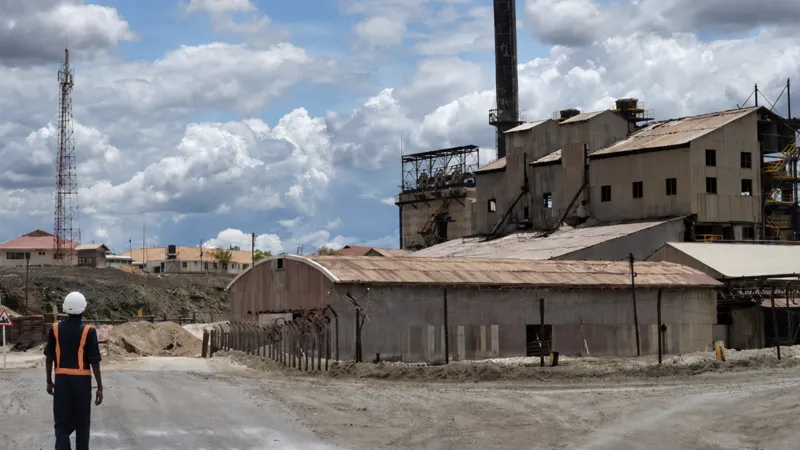

Nairobi: Kenya’s President William Ruto has ordered Tata Chemicals to end its operations in the country, accusing the Indian company of failing to generate sufficient economic and industrial benefits for Kenya despite its long association with the Lake Magadi soda ash industry.
Tata Chemicals Magadi operates one of Africa’s major natural soda ash production facilities at Lake Magadi in Kajiado County. President Ruto criticised the company for exporting soda ash rather than expanding local value addition through industries such as glass and chemical manufacturing.
According to Ruto, Kenya should receive greater benefits from its natural resources, including increased local investment, industrial development and employment opportunities. He said the government intends to bring in new investors to take over operations and develop manufacturing facilities in the region.

The Kenyan government is reportedly seeking companies that can establish major glass and chemical manufacturing operations locally, allowing the country’s mineral resources to generate more employment and industrial growth.
Soda ash, also known as sodium carbonate, is produced from naturally occurring trona found at Lake Magadi. It is widely used in glass manufacturing, detergents, chemicals, water treatment, textiles and paper production. Kenya remains an important global producer of natural soda ash.
Tata Chemicals acquired the Magadi operation in 2005, although commercial soda ash production in the region dates back to 1911. Reports indicate that the company’s Magadi business recorded approximately 245,000 tonnes of soda ash sales and turnover of around $78.7 million in 2024.
The company employs around 500 people and says its community programmes support approximately 30,000 people around Magadi through initiatives involving water, healthcare, education and infrastructure.
Tata Chemicals has responded by saying that it respects the authority of the Kenyan government and remains committed to constructive engagement through appropriate legal and regulatory channels. The company said it has submitted detailed information and documentation regarding its compliance with Kenyan regulatory requirements and is awaiting further direction from the authorities.
The dispute follows a suspension of the company’s operations earlier this year as Kenyan authorities reviewed regulatory and compliance issues. The future of Tata Chemicals’ long-standing business in Kenya will now depend on further government and regulatory decisions.
The development could have wider implications for employment, Kenya’s export earnings and foreign investment. It also highlights Kenya’s growing emphasis on ensuring that foreign companies operating in the country’s natural-resource sectors contribute more significantly to local industrialisation and economic development.