
Monday, September 21, 2026
Home Blog Page 83

Shocker in Indore: Australian Women’s World Cup Players Allegedly Molested; Suspect Arrested After Swift Police Action

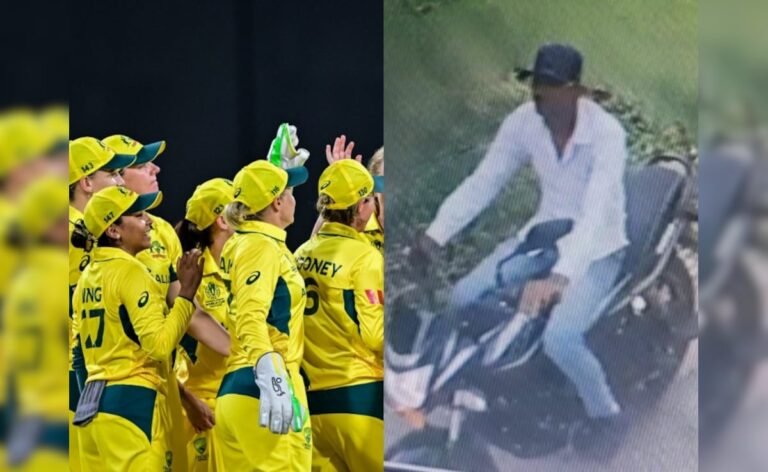
​Indore, India—A shocking incident marred the ongoing ICC Women’s World Cup 2025 in India after two Australian women cricketers were allegedly molested while walking on a road in Indore on Thursday. Authorities confirmed the swift arrest of the accused suspect later that day.

​The incident occurred when the two Australian players, who are in the city for the tournament, were reportedly walking from their team hotel, Radisson Blu, towards a nearby café. A man on a motorcycle allegedly began following them in the Khajrana Road area before touching them inappropriately and speeding off.

​The women cricketers immediately utilized an SOS notification system, alerting their team security. Danny Simmons, the Australian team’s security manager, quickly coordinated with local liaison officers and subsequently filed an official complaint with the police.

​Responding promptly to the complaint, Assistant Commissioner of Police Himani Mishra met with the players to record their statements. Police registered a First Information Report (FIR) under Sections 74 (use of criminal force to outrage a woman’s modesty) and 78 (stalking) of the Bharatiya Nyaya Sanhita (BNS).

​The breakthrough came quickly after a bystander noted the motorcycle number of the perpetrator. Based on this crucial information, police tracked down and apprehended the accused, identified as Aqeel Khan. Authorities also noted that Khan has prior criminal cases registered against him, and a thorough investigation is currently underway.

​The quick action by the Australian team’s security and the Indore police ensured a resolution, though the incident has raised concerns regarding the safety of international athletes participating in major events. The Australian contingent is part of the ongoing Women’s World Cup, which is being hosted across various venues in India.

‘A Kerala Boy Would Be Nice’: Bigg Boss Star Gizele Thakral Reveals Marriage Wish, Flaunts Avial & Sambar Skills

0

Kochi: International model and Bollywood actress Gizele Thakral, a fan favourite from Bigg Boss Malayalam Season 7, has captured the attention of her fans once again, this time with a candid revelation about her marriage preferences and a surprising display of her culinary skills.

The half-Malayali star, who won over Malayalam audiences with her charm and ‘broken Malayalam’ on the reality show, recently stated in an interview that she would love to marry a ‘Kerala boy.’ When asked by the interviewer if she would prefer to marry a Malayali, the model responded, “If I get one, that would be nice!”

Gizele, whose mother hails from Alappuzha, Kerala, and father is Punjabi, also spoke about her love for Malayalam culture and, particularly, its food. The star revealed that despite growing up in North India, she has strong roots in the regional cuisine.

“My mom taught me a little cooking when I was younger, but I didn’t practice much. Now, I know how to make Avial and Sambar,” Gizele disclosed. “I made everything in the Bigg Boss house, though I couldn’t make Avial. I made Sambar; I thought I would make it on the day we got tamarind,” she added, showing her connection to the traditional Kerala dishes.

Gizele Thakral has built a successful career spanning international modelling, Bollywood, and reality television. She started her career at age 14, winning the Miss Rajasthan title and later being featured in the prestigious 2011 Kingfisher Calendar. She has appeared in Bollywood films like Kyaa Kool Hain Hum 3 and Mastizaade.

Bigg Boss Malayalam Season 7 marked Gizele’s second stint in the famous reality franchise, having previously been a wild-card contestant in the Salman Khan-hosted Bigg Boss Hindi Season 9. Despite her unexpected eviction from the Malayalam show, Gizele has maintained a strong connection with her fans, boasting a massive following of 1.5 million on Instagram.

The star recently shared a stunning set of photos in a black dress that quickly went viral, with Bigg Boss viewers commenting in droves, expressing how much they “miss our Gundi” (Gundi being her nickname from the show). A model, actress, and entrepreneur, Gizele Thakral continues to remain in the spotlight, now eagerly watched by her fans for a glimpse of that “nice Kerala boy.”

Bollywood Mourns: Satish Shah, Beloved Sarabhai Vs Sarabhai Actor, Dies at 74

0

Mumbai: The world of Indian cinema and television is mourning the loss of veteran actor Satish Shah, who passed away today at the age of 74. The beloved star, famous for his impeccable comedic timing across four decades, succumbed to kidney-related complications.

​Filmmaker Ashoke Pandit confirmed the tragic news, stating that Shah had been battling kidney failure. The actor was rushed to Hinduja Hospital in Mumbai, where he breathed his last, marking a significant and irreparable loss to the entertainment industry.

​Shah’s career spanned over 200 films and numerous TV shows, but he is perhaps best remembered by modern audiences as the witty, perpetually sarcastic patriarch Indravadan Sarabhai in the iconic sitcom Sarabhai Vs Sarabhai. His chemistry with co-stars and his delivery of sharp one-liners made the show a cult classic.

​The veteran actor also left an indelible mark on cinematic history, most notably for his role as the deceased Municipal Commissioner D’Mello in Kundan Shah’s 1983 satirical masterpiece, Jaane Bhi Do Yaaro. Additionally, he was recognizable for memorable performances in blockbuster films such as Main Hoon Na, Kal Ho Naa Ho, and Om Shanti Om. The news of his demise has led to an outpouring of grief and tributes from colleagues and fans across the country.

​’Don’t Know If We’ll Be Back’: Rohit Sharma & Virat Kohli Drop Massive Hint on Final Australia Tour

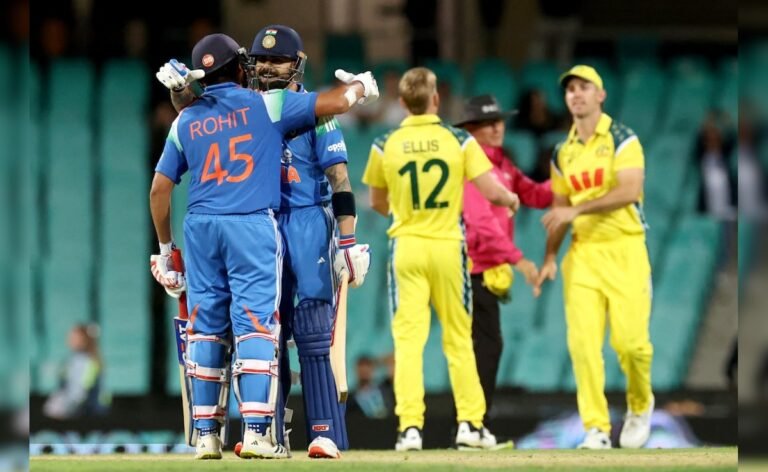
Sydney: In a moment that sent a wave of emotion through the cricketing world, Indian stalwarts Rohit Sharma and Virat Kohli hinted that their current tour might be their final appearance on Australian soil. The joint suggestion came after the duo anchored India’s spectacular nine-wicket victory over Australia in the third One-Day International at the Sydney Cricket Ground (SCG) on Saturday.

​The declaration from the Indian captain immediately fueled speculation regarding the future of two of the game’s greatest figures, both of whom are nearing the end of their illustrious careers. Rohit is set to turn 39 in six months, while Virat Kohli will turn 38 next month.

​Speaking after a match that saw the ‘Ro-Ko’ partnership in full flow, a reflective Rohit Sharma addressed his tenure Down Under.

​”Yeah, I’ve always loved coming here. I enjoy playing cricket here in Australia,” Rohit stated. He then delivered the telling line that has gripped fans and media: “I don’t know if we’ll be coming back to Australia, but it was fun all these years that we played here. You know, a lot of good memories, bad memories, but all in all, I’ll take the cricket that I played here.”

​The hint followed a vintage performance by the two legends. Chasing a modest 237, Rohit smashed his 33rd ODI century (121 not out off 125 balls), while Kohli, the ‘Chase Master,’ returned to form with a brilliant, unbeaten 74 off 81 deliveries. The pair stitched together a match-winning, unbroken 168-run partnership for the second wicket, sealing a consolation win for India after having already lost the three-match series 2-1.

​While the series ended in Australia’s favour, the final performance was a poignant reminder of the enduring brilliance of the legendary duo, leaving fans to ponder how many more times they will see the two greats in action together on the international stage.

Virat Kohli’s Unbeaten 74: A ‘Happy Ending’ to His Monumental Australian Cricket Legacy

​Sydney, Australia — The curtain may have fallen on one of the most remarkable chapters in Indian cricket history on Saturday, as batting maestro Virat Kohli crafted a magnificent, unbeaten 74 in what is likely his final One Day International innings on Australian soil. His masterclass at the Sydney Cricket Ground (SCG), coupled with a century from Rohit Sharma (121 not out), steered India to a dominant nine-wicket victory over Australia in the third ODI, salvaging pride and averting a 3-0 series whitewash.

​Under the grey skies of New South Wales, the atmosphere turned electric as the veteran batter walked out to the crease. Having registered two low scores earlier in the series, Kohli rose to the occasion with his characteristic stubbornness and brilliance, smashing 74 runs off 81 balls to provide the anchor for India’s successful chase. Fittingly, it was Kohli’s boundary that sealed the nine-wicket victory.

​While the series was already decided in Australia’s favour (2-1), this final match served as a poignant conclusion to Kohli’s phenomenal record Down Under. At 36, Kohli leaves behind a statistical legacy that few international players can rival.

​Across all formats on Australian pitches, the former captain has been a force of nature:

  • ​ODIs: 1,401 runs in 32 matches at an average of 50.03, including five centuries.
  • ​Tests: 1,542 runs in 18 matches at an average of 46.72, featuring seven centuries.
  • ​T20Is: 747 runs in 17 matches, highlighted by an unbeaten 90 in Adelaide in 2016.

​From his maiden Test century in Adelaide in 2012 to defining knocks in Melbourne and Perth, Australia has been the stage for some of Kohli’s most unforgettable performances. His final walk off the SCG, bathed in the applause of the crowd, marks a ‘happy ending’ to a beautiful and fiercely competitive story, cementing his place not just as an Indian great, but a legend of the global game whose records in Australia will endure for generations.

Kerala’s Education System: From Pride to Pity

0

THIRUVANANTHAPURAM, October 25, 2025 — Once globally recognized as a success story for literacy and intellectual vibrancy, Kerala’s educational system is reportedly teetering on the brink of institutional failure. A critical assessment suggests that the state’s academic structure is now a hollow shell, maintained only by misleading statistics and systematic political compromises. The celebrated “Kerala Model” of education is accused of rapidly decaying from a source of pride into an object of pity.

​The foundation of this rot is allegedly traced to nine years of consistent political interference by the ruling party. According to critics, party-affiliated unions, particularly those linked to the CPI(M), have commandeered key academic bodies such as SCERT, DIET, and Scole. These institutions, meant to be centers of academic excellence, are now described as safe havens for loyalists, where appointments are frequently made based on political allegiance rather than professional merit.

​This practice, critics argue, has resulted in teachers from lower primary (LP) and upper primary (UP) sections, often holding minimal academic qualifications, being parachuted into high-level advisory and training roles, making a mockery of professionalism and meritocracy.

​The consequence is most acutely felt in the classroom. In many government and aided schools, particularly in the LP and UP sections, teaching is said to have become a mere formality. Students are promoted year after year without achieving even basic proficiency. A shocking disconnect has emerged: a vast number of students entering higher secondary now possess the highest SSLC grades (A+), yet they are functionally unable to read fluently, write coherent sentences, or grasp fundamental concepts across Science, Social Science, Mathematics, and English. The pass percentages sparkle, but the true measure of learning is dim.

​Highly qualified and committed higher secondary teachers are consequently burdened with the near-impossible task of educating students who are systemic victims of this institutional neglect. The result is a predictable fall in academic standards, widespread frustration, and the quiet dissolution of Kerala’s meticulously nurtured academic culture.

​Further fears are mounting over the potential impact of the proposed Khader Committee recommendations. Critics warn that merging different school sections and allowing underqualified LP/UP teachers to handle higher classes will only accelerate the systemic degradation, extending the rot upward into higher education. If implemented without addressing the core issues of merit and accountability, the state’s educational legacy is feared to vanish within a decade.

​For a state that was once the benchmark for India’s literacy achievements, the journey from enlightenment to ignorance has been swift and silently masked by glossy government propaganda. Disillusioned youth, recognizing the value erosion behind their certificates, are increasingly migrating abroad for both learning and livelihood, signaling a deep lack of faith in the system that was once Kerala’s greatest triumph.

Sabarimala Gold Scam: Investigators Recover Stolen Gold Bars from Ballari Jeweler

0

Thiruvananthapuram: The Special Investigation Team (SIT) probing the Sabarimala gold scam has successfully recovered gold allegedly pilfered from the temple. The gold was found at the jewelry store of Goverdhan in Ballari, Karnataka, to whom the accused Unnikrishnan Potti confessed to selling it.

The SIT operation in Ballari yielded several gold bars. Goverdhan, the gold merchant, provided a statement to the SIT claiming that Unnikrishnan Potti handed over 476 grams of gold to him. It remains unclear if the entire quantity has been recovered.

The recovery follows an extensive search operation conducted yesterday across Bengaluru and Ballari. The SIT acted on information that the stolen gold, sold by Potti, was in Goverdhan’s possession.

Charges to Intensify

Both Unnikrishnan Potti and Goverdhan had earlier admitted to the transaction to SP Sasidharan, paving the way for the seizure of the contraband.

With the recovery of the stolen property, the SIT is now set to intensify the charges. Besides conspiracy, charges will now include the theft and sale of public property. Furthermore, those involved in arranging the sale and officials who made the decision to pilfer the gold will be included as accused in the case.

The SIT plans to turn the Ballari merchant, Goverdhan, into a witness in the ongoing investigation.

Kerala’s PM-SHRI U-Turn ‘Betrays’ Stalin: Tamil Nadu CM ‘Disappointed’ as Pinarayi Govt Caves to Centre Pressure

0

THIRUVANANTHAPURAM, October 25, 2025 — The Kerala government has executed a significant policy U-turn by agreeing to implement the Central Government’s controversial PM Schools for Rising India (PM-SHRI) scheme, a decision that has reportedly left Tamil Nadu Chief Minister M.K. Stalin deeply disappointed.

​Kerala, alongside Tamil Nadu and West Bengal, was one of the few states that had staunchly opposed the PM-SHRI scheme, primarily over its links to the Central government’s National Education Policy (NEP). The three states had maintained a united front, but Kerala’s recent reversal is viewed as an “unconditional surrender” to the BJP-led central government.

​The disappointment is particularly acute for Stalin, who often refers to Kerala Chief Minister Pinarayi Vijayan as his ‘brother’ in the political sphere. The Tamil Nadu CM is reportedly “khinnan” (deeply saddened) that his political ally caved to the Central Government’s pressure, effectively breaking the solidarity of the opposing regional parties.

​In sharp contrast, Tamil Nadu, facing a similar non-release of a reported ₹2,152 crore in SSA funds, chose a path of legal resistance. The Stalin administration successfully pursued a legal battle, securing its share of the Samagra Shiksha funds through the Madras High Court and the Supreme Court. Furthermore, West Bengal Chief Minister Mamata Banerjee, the third leader who resisted the scheme, is reportedly “not surprised” by Kerala’s capitulation, suggesting a cynical view of the political move.

LDF Rift Deepens: ‘Big Brother’ CPI(M) Isolates CPI Over PM SHRI Deal, 2026 Seat Row Looms

0

Kozhikode: The internal discord within Kerala’s ruling Left Democratic Front (LDF) has intensified, with the Communist Party of India (Marxist) (CPI-M), the senior coalition partner, coming under sharp attack from the second-largest ally, the Communist Party of India (CPI), over the state’s unilateral decision to sign the PM SHRI scheme Memorandum of Understanding (MoU).

​The signing of the agreement to join the Central government’s PM SHRI (Prime Minister’s Schools for Rising India) scheme, reportedly done without consulting the CPI, has been widely perceived as a move by the CPI(M) to assert its dominance, leading to a public spat between the long-standing allies.

​CPI Secretary’s Blistering Attack

​CPI State Secretary Binoy Viswam has publicly criticised the CPI(M)-led government, with the core allegation being that the party was kept “in the dark” about the crucial decision. The criticism, however, extends beyond policy.

​Sources indicate a growing resentment within the CPI and other smaller LDF constituents over the perceived authoritarian style of Chief Minister Pinarayi Vijayan. Having secured a historic consecutive term, the Chief Minister is alleged to be behaving like a “complete autocrat” driven by the “arrogance of a second term.” The allegation is that not only are other LDF partners neglected, but even CPI(M) ministers are treated as mere “servants.” Furthermore, a culture of sycophancy is said to prevail, where ministers are reportedly forced to praise not just the Chief Minister, but also his son-in-law, Minister Mohammed Riyas.

​Quote: The general sentiment suggests CM Pinarayi Vijayan’s conduct resembles that of a ‘King of Kerala’ rather than a Chief Minister, with his son-in-law positioned as the ‘Crown Prince.’

​The ‘Test Dose’ and the 2026 Warning

​The controversy surrounding the PM SHRI scheme is being viewed as just a “test dose” of the CPI(M)’s disregard for its ally. The real battle, sources suggest, will be over seat-sharing ahead of the 2026 Assembly elections.

​In the 2021 elections, the CPI contested 23 seats and secured a victory in 17. However, the CPI(M) is reportedly planning to significantly cut the CPI’s allocation for the next polls. The current move is to restrict the CPI to only the 17 winning seats, completely dropping the 6 they lost. The CPI(M) internal assessment is that the CPI lacks significant grassroots strength and wins primarily due to the CPI(M)’s strong support base. The party is said to be eyeing the seats currently contested by the CPI as the next target for consolidation, which could further intensify the internal conflict in the LDF.

Kerala’s Education Rebranding: How Central Schemes Get a Local Name Makeover

0

New Delhi: In a fascinating display of India’s federal dynamics, educational reform has turned into a political relay race where central schemes are systematically stripped of their Delhi branding and given a distinct local identity upon entering Kerala. This creative rebranding, which critics label a ‘Credit Appropriation’ strategy, ensures the state’s political leadership receives the public praise for schemes primarily funded by the Centre.

​The trend has reached an art form, with every major central initiative undergoing a linguistic and aesthetic makeover.

  • ​Sarva Shiksha Abhiyan (SSA): The Centre’s flagship universal elementary education program has been successfully ‘Kerala-fied’ and now operates as Samagra Shiksha Kerala (SSK). The name changed, the logo adapted, but the financial allocation remained tied to central funds.
  • ​National Curriculum Framework (NCF): A key pillar of the National Education Policy (NEP), the NCF was transformed into the Kerala Curriculum Framework (KCF) after a state-level review. While Kerala has historically championed curriculum independence, the KCF effectively re-spiced the core content with local ‘inclusive and secular values,’ establishing an autonomous identity.
  • ​PM SHRI Scheme: The Pradhan Mantri Schools for Rising India (PM SHRI) initially faced an “Entry Restricted” board, with the state government arguing that its own ‘model schools’ were sufficient. However, following the Centre withholding essential education funds—reportedly around ₹1,500 crore under the Samagra Shiksha Abhiyan (SSK)—Kerala performed a diplomatic U-turn. Schools are now joining the PM SHRI scheme, but the accompanying local fanfare is often branded under the ‘Kerala’s Own Smart School Mission,’ strategically omitting the ‘PM’ initials.
  • ​Mid-Day Meal Scheme: The scheme, known nationally as PM-POSHAN, is locally referred to in Kerala as the State Noon Meal Programme. Same objective, same meal, different political label.

​The Underlying Conflict:

​This consistent ‘renaming ritual’ highlights a deeper ideological and financial tension. The Communist Party of India (Marxist)-led Kerala government fiercely opposes the NEP 2020, viewing it as an attempt to undermine state-specific educational autonomy and introduce a ‘saffronisation’ agenda. However, with states needing central funds for crucial infrastructure and teacher salaries, they are forced to participate in central schemes.

​This tug-of-war often leads to bureaucratic hurdles, delaying the release of funds and consequently impacting classroom activities, teacher grants, and school repairs—a true cost borne by the Indian taxpayer funding both ends of the branding spectrum.

​As the Centre maintains its fondness for prefixing every scheme with ‘PM’ initials to claim credit, the States retaliate by adding their own local labels, turning policy implementation into a high-stakes battle of logos and slogans.