
Monday, September 21, 2026
Home Blog Page 96

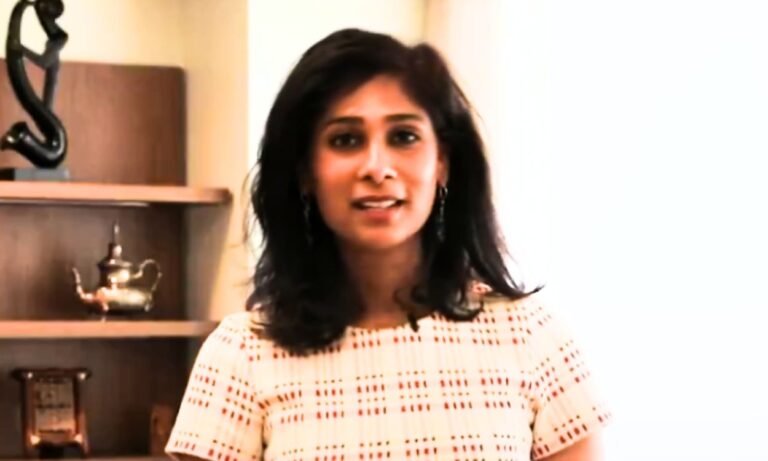
‘Worse Than Dot-Com Crash’: Gita Gopinath Warns of Global Fallout from a US Stock Market Correction

0

WASHINGTON: A major correction in the US stock market could trigger a global financial crisis more severe than the dot-com crash of 2000, former IMF chief economist Gita Gopinath has warned. Citing record-high global exposure to American equities, she cautioned that the world economy is “dangerously dependent” on Wall Street’s performance.

In an article for The Economist, the Harvard University professor argued that the current market rally, fueled by enthusiasm around artificial intelligence, mirrors the exuberance seen before the tech bubble burst. However, the scale of financial interconnectedness today means the consequences of a downturn would be far more devastating.

“The exposure of the world to US equities is at record levels,” Gopinath wrote. “A stock market correction would have more severe and global consequences as compared to what followed the dot-com crash.”

Gopinath pointed out that a market plunge on the scale of the early 2000s could erase over $20 trillion in wealth for American households, equivalent to 70% of the US GDP in 2024. Such a loss could slash consumption and deliver a two-percentage-point hit to overall GDP growth.

The impact would reverberate globally, with foreign institutional investors potentially facing losses exceeding $15 trillion—roughly 20% of the rest of the world’s GDP. This is double the proportional loss experienced during the dot-com era, which amounted to less than 10% of global output at the time.

Compounding the risk is a series of modern challenges that were not present a quarter-century ago. Gopinath noted that escalating tariff wars, high government debt limiting fiscal stimulus options, and waning confidence in the US dollar as a “flight to safety” asset leave policymakers with fewer tools to manage a crisis.

“The underlying problem is not ‘unbalanced trade’ but ‘unbalanced growth’,” she stated, arguing that strong returns have been too concentrated in the US. The solution, she proposed, lies in fostering higher growth in other regions to rebalance capital flows and place global markets on a more stable footing.

Gopinath concluded with a call for predictable policymaking, especially actions that protect the independence of central banks, calling it “critical to prevent a market collapse.”

Sharaf U Dheen’s ‘Pet Detective’ Revives Slapstick Comedy, But Falters on Story | Movie Review

0

KOCHI: Sharaf U Dheen’s latest film, “Pet Detective,” is lighting up theaters with collective laughter, aiming to revive the classic slapstick comedy genre once dominant in Malayalam cinema. The film, which draws comparisons to iconic Priyadarshan and Siddique-Lal movies, delivers a high dose of spontaneous humor but struggles with a weak and repetitive script.

“Pet Detective” follows a struggling detective’s desperate attempts to solve at least one case to prove his worth. The plot kicks into gear when a mysterious object falls into his hands, setting off a chaotic and comical chain of events involving multiple groups. The film culminates in a grand, confusing, and hilarious climax set in an amusement park.

While Sharaf U Dheen shines in his lead role, showcasing his signature comedic timing, the standout performance comes from Jomon Jyothir, whose impeccable counter-dialogues steal the show. The film also features strong supporting performances from veteran actors like Ranji Panicker and Vijayaraghavan.

However, the film is not without its flaws. The first half is criticized for its slow pace and repetitive plot points, which make the narrative feel tedious. According to the review, the screenplay has numerous loopholes and lacks a cohesive structure.

Despite its narrative weaknesses, the film’s relentless comedy largely succeeds in covering up the script’s shortcomings. Technically, the movie is well-crafted, with praise for Abhinav Sunder Nayak’s editing, Anand C. Chandran’s cinematography, and Rajesh Murugesan’s music.

The final verdict is that while “Pet Detective” fails to be a consistently brilliant entertainer due to its flawed script, it serves as a fun, one-time watch for audiences seeking a pure, laugh-out-loud comedy in an industry currently saturated with thrillers.

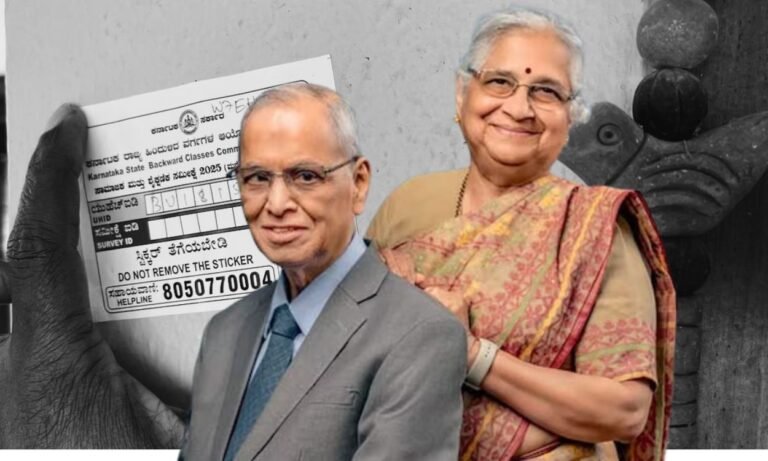
Sudha Murthy, Narayana Murthy Opt Out of Caste Survey; Minister Asks, ‘Will They Refuse When Centre Does It?’

0

BENGALURU: Infosys founder Narayana Murthy and his wife, Rajya Sabha MP and author Sudha Murthy, have formally declined to participate in the ongoing caste survey being conducted by the Karnataka government. The power couple reasoned that their participation would not be beneficial to the government as they do not belong to any backward class.

Their decision has drawn a sharp response from Karnataka’s Labour Minister, Santosh Lad, who questioned their stance.

In a signed letter explaining their refusal, the Murthys stated, “We do not belong to any backward class. Hence, participating in this survey will not be of any help to the government. Therefore, we decline to participate.”

Reacting to the development, Minister Santosh Lad clarified that participation in the survey is not mandatory. “This is not a compulsory survey. But I hope she can say the same when the BJP-led central government conducts its caste-based census next year,” he remarked.

When asked if the refusal by influential figures like the Murthys would impact the survey, Lad downplayed its significance. “Who is influential or not is subjective and highly debatable. I don’t think their decision would have any impact on society,” he added.

Deputy Chief Minister D.K. Shivakumar also commented on the matter, stating, “We cannot force anyone to participate in the survey; it has to be done voluntarily.”

The state government has maintained that the caste survey is crucial for promoting a more equitable society. It argues the data collected will aid in the better implementation of welfare schemes and more effectively empower deprived and vulnerable groups.

The Social and Educational Survey, conducted by the Karnataka State Commission for Backward Classes (KSCBC), began on September 22 and is scheduled to conclude on October 19. The extensive survey, which includes 60 questions, is expected to cost ₹420 crore. A final report is slated to be submitted to the state government by the end of the year.

One Warlord, Two Nations: How TTP Chief Noor Wali Mehsud Pushed Pakistan and Afghanistan to the Brink of War

0

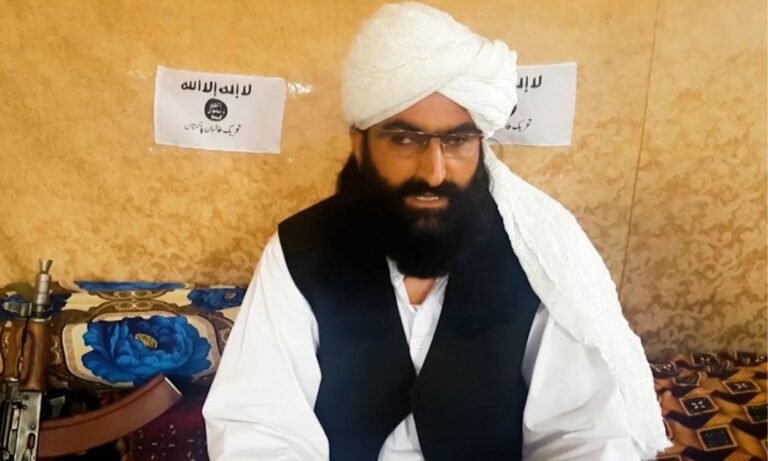
KABUL: An uneasy ceasefire has taken hold between Pakistan and Afghanistan after their most severe clashes in decades, but the dispute over a single militant leader who brought them to the verge of war continues to fester. Noor Wali Mehsud, the chief of Tehreek-e-Taliban Pakistan (TTP), is the central figure in a conflict Islamabad blames him for orchestrating through near-daily attacks on its soil.

The tensions peaked last week following an airstrike in Kabul that targeted an armored Land Cruiser believed to be carrying Mehsud. While Pakistani security officials and the militant group believe he survived—with the TTP releasing a purported audio message from him to prove it—the attack marked a significant escalation. It was the first major airstrike in the Afghan capital since the U.S. targeted Al-Qaeda leader Ayman al-Zawahiri in 2022, though Pakistan has not officially claimed responsibility.

The Afghan Taliban denies sheltering the TTP, firing back with accusations that Islamabad harbors the local branch of the Islamic State, their primary rival.

The Revival of the TTP Under Mehsud

A religious scholar by training, Noor Wali Mehsud took leadership of the TTP in 2018 after his three predecessors were killed in U.S. drone strikes. At the time, Pakistani military operations had severely weakened the group, forcing most of its fighters into Afghanistan.

However, Mehsud’s diplomatic skills revived the organization, uniting warring factions. The Taliban’s takeover of Afghanistan in 2021 provided the TTP with greater freedom of movement and access to weapons, leading to a surge in attacks within Pakistan, particularly in the northwestern region bordering Afghanistan.

Learning from the past, Mehsud shifted the group’s strategy. Recognizing that attacks on civilians, like the horrific 2014 Peshawar school massacre that killed over 130 children, had alienated the public, he directed his fighters to target only military and police personnel. In a video released earlier this year, he framed the Pakistani army as “anti-Islam” and accused its generals of “hijacking the people of Pakistan for 78 years.”

A Strategy of Ethnicity and Religion

Mehsud, the author of three books, including a 700-page treatise, attempts to fuse his group’s insurgency with Pashtun nationalism, tracing its origins to the struggle against British colonial rule. According to regional expert Abdul Sayed, Mehsud positions the TTP as an armed movement fighting for the rights of the Pashtun ethnic group, which resides on both sides of the Afghanistan-Pakistan border.

Despite these efforts, analysts assert that the TTP has negligible public support in Pakistan. In recent informal talks held through tribal intermediaries, the militants demanded the imposition of their brand of Islamic law in the border regions and the withdrawal of the Pakistani army. The authorities flatly rejected these demands, leaving the region on a knife’s edge.

Kerala’s ‘Digital Red Tape’: IAS Officer Prasanth Slams Government Offices as ‘Courier Services’ for Citizens

0

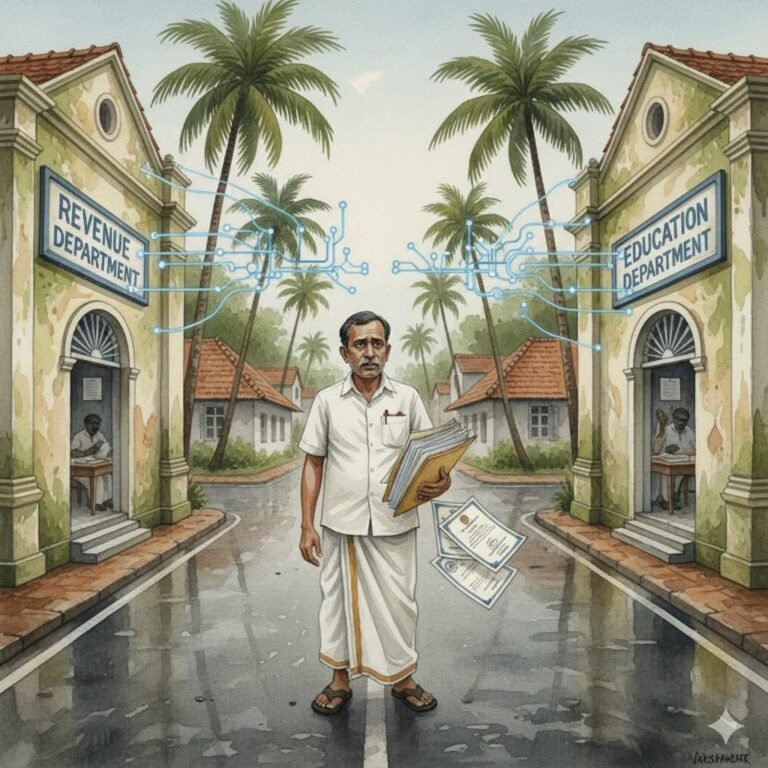
THIRUVANANTHAPURAM: A sharp critique of Kerala’s bureaucratic inefficiencies, despite its much-touted digital strides, has gone viral following a detailed Facebook post by IAS officer Prasanth. The post, titled “The ‘Courier Service’ between government offices,” exposes how citizens are burdened with transferring their own digital data between state departments, effectively acting as messengers for the government.

​The officer highlights the daily struggle of thousands applying for essential certificates like income, caste, and ownership through the Akshaya/e-District portals. While the application process is digital, the underlying bureaucratic logic, he argues, remains stubbornly analog.

​The ‘Purpose’ Trap and Inter-Departmental Mistrust

​One of the central absurdities pointed out is the mandatory “Purpose” field during the application process. Applicants must state why they need a certificate, and this purpose is often printed in bold on the final document.

​”Does my income or caste change based on the purpose for which I apply?” Prasanth questions. He asserts that this requirement is a reflection of an old, paper-file mindset that persists within the bureaucracy.

​The core issue, according to the post, is a profound lack of trust between government departments. “Revenue issues an income certificate, which is then checked by the Education Department, or a Welfare Department, or a university,” he writes. Despite being part of the same administration, these entities behave like “neighbours at a wedding—distrustful of each other.” The simple solution—for one department to verify a digital document directly from another’s system—is ignored.

​The Absurd 3-Step Process: Print, Scan, Upload

​The most damning part of the critique focuses on the ridiculous workflow citizens are forced into:

  1. ​Applying for the certificate online.
  2. ​Printing the received digital certificate.
  3. ​Taking the printout to the next office (e.g., a college or welfare office).
  4. ​The receiving office then scans the printout and uploads it to their system!

​”If digitisation has been implemented, why the three steps of print, scan, and upload?” the post asks, pointing out that this inefficiency is a burden of the government’s internal incompetence placed directly on the citizen.

​Embracing the ‘Once-Only Principle’

​Drawing parallels with international best practices, the IAS officer champions the ‘Once-Only Principle (OOP)’, which mandates that the government should never ask a citizen for data it already possesses.

​Countries like Estonia, with its X-Road system, and Singapore, using SingPass, allow secure data flow between agencies, eliminating the need for citizens to carry physical printouts. Prasanth notes that India already has a robust technical foundation through Aadhaar, DigiLocker, and API systems, making the shift highly feasible. The main villain is the inter-departmental skepticism—”I won’t trust what you gave.”

​Simple Reforms Suggested

​To move beyond “digital red tape,” the post suggests four immediate, tangible reforms:

  1. ​Remove the ‘Purpose’ Field: Eliminate the ‘Purpose’ requirement from applications and certificate templates entirely. A certificate should be valid for any legal purpose within its tenure.
  2. ​Shift Verification Burden: Receiving departments must authenticate documents directly via QR codes, APIs, or DigiLocker, without involving the citizen, and fully abolish the print-and-scan process.
  3. ​Enable System Communication: Ensure seamless and secure data sharing between major systems like e-District and the upcoming K-Smart to prevent citizens from being shuttled between offices.
  4. ​Audit Based on Repetition: Evaluate field offices based on how often they require citizens to submit repeated information.

​The officer concludes that the real administrative reform lies not just in digitising processes, but in reducing the discretionary power of officials. “Every unnecessary certification and every repeated certificate request opens the door to delays, frustration, and sometimes even corruption,” he writes.

​The call to action is clear: for Kerala to lead in good governance, it must ensure that “data is what moves between offices, not people.”

Nestle Announces 16,000 Job Cuts Worldwide

0

ZURICH, SWITZERLAND: Global food giant Nestle announced on Thursday its plan to cut 16,000 jobs worldwide over the next two years, a move described by its new chief executive as “hard but necessary.” The news of the major restructuring sent the company’s share price soaring.

The job cuts, which represent about six percent of Nestle’s total staff, include 12,000 white-collar positions. This part of the plan is expected to save the company one billion Swiss francs ($1.26 billion). An additional 4,000 job cuts are already in progress within its production and supply chain divisions.

“The world is changing, and Nestle needs to change faster,” CEO Philipp Navratil, who took over in early September, said in a statement. Following the announcement, the company’s shares jumped more than eight percent in morning trading.

The decision comes as the company, which owns over 2,000 brands including KitKat, Nespresso, and Maggi, reported a 1.9 percent drop in nine-month sales to 65.9 billion Swiss francs ($83 billion). Mr. Navratil stated that Nestle is now increasing its overall savings target to three billion Swiss francs by the end of 2027.

The move is seen by analysts as an “offensive” strategy by the new CEO to restore stability to the group, which has faced challenges since 2022. The company has experienced a turbulent period, including the dismissal of its previous CEO and the early departure of its chairman, alongside a scandal surrounding its bottled water brands in France.

Despite the drop in headline sales, partly due to currency fluctuations, Nestle reported a 3.3 percent organic sales growth, driven by price increases. The company noted that coffee and confectionery were major contributors to this growth.

Shots Fired at Kapil Sharma’s Canada Cafe for Third Time; Lawrence Bishnoi Gang Claims Responsibility | Video

0

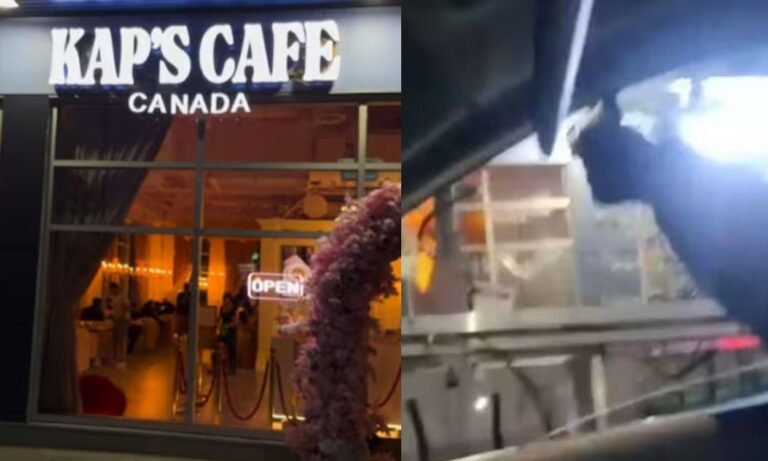
SURREY, CANADA: Comedian Kapil Sharma’s establishment, Kaps Cafe, in Surrey, Canada, was targeted by gunfire late Wednesday, marking the third such attack in the last four months. Gangsters Goldy Dhillon and Kuldeep Sidhu, both associated with mob boss Lawrence Bishnoi’s network, have claimed responsibility for the incident on social media.

A video of the attack, apparently filmed from inside a moving vehicle, has been circulated. The clip shows an unidentified individual extending their arm out of a car window and firing multiple rounds from a handgun at the cafe. At least six shots were fired, shattering a window. Fortunately, no casualties were reported.

Shortly after the attack, Dhillon and Sidhu posted a message taking credit for all three shootings at the cafe. “I, Kuldeep Sidhu, and Goldy Dhillon take responsibility for the three shootings that took place (at Kaps Caffe). We have no enmity with the general public,” the post read. It also contained a warning for others: “Those with whom we have a dispute should stay away from us. Those who engage in illegal work and do not pay people should also be prepared.”

The gangsters also issued a chilling threat to “those who speak against religion in Bollywood,” stating they should “be prepared… bullets can come from anywhere.”

This is the latest in a series of violent incidents targeting the cafe. The second attack occurred on August 8, when at least 25 shots were fired. A video from that incident included a voice warning, “If he still doesn’t hear the ring, the next action will be taken soon in Mumbai,” which led to increased security at Sharma’s Mumbai residence.

The first attack took place on July 10. While no one was injured, the cafe’s window was struck by at least 10 bullets. Responsibility for that initial shooting was claimed by Harjit Singh Laddi, a member of the terror group Babbar Khalsa International (BKI), which is recognized as a terrorist organization by the Canadian government. Laddi, who is on India’s NIA most-wanted list, stated the attack was a response to remarks made during one of the comedian’s shows that allegedly hurt the sentiments of the Sikh community.

Despite the repeated attacks, Kaps Cafe has issued a statement affirming it will “continue to stand against violence” and remain a symbol of “warmth and community” for its patrons.

Actress Archana Kavi Ties the Knot for the Second Time; Met Husband on a Dating App

0

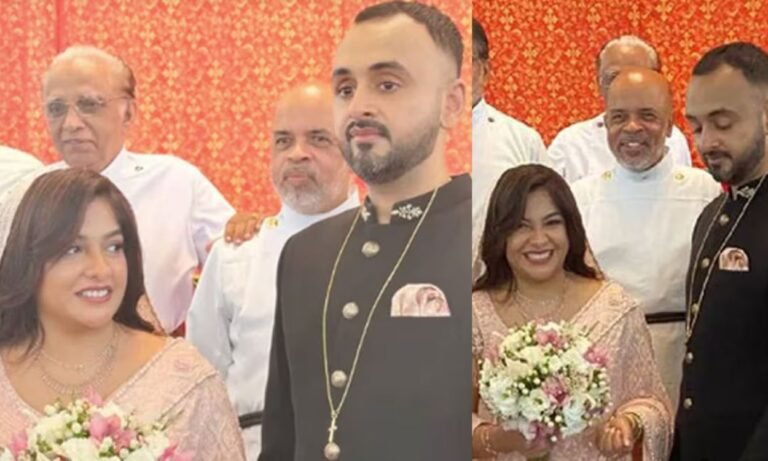
Kochi: Actress Archana Kavi, who captured hearts with her debut in the film ‘Neela Thamara’, has tied the knot for the second time. The actress married Rik Varghese in an intimate church ceremony attended by close family and friends. The news and photos from the wedding were first shared by anchor Dhanya Varma on her Instagram handle.

This is Archana’s second marriage. In a recent interview with Dhanya Varma, Archana opened up about her relationship and how it blossomed. She revealed that she met her now-husband, Rik, on a dating app. “My house was under construction at the time, and I was just browsing the dating app to pass the time,” Archana shared. “We started talking a lot. I shared everything with him, including my past traumas and all my flaws. He treats me so beautifully, just like my father does.”

Archana also recounted a special moment when Rik gave her a ‘promise ring’ before their engagement. “One side of it had a matte finish, and the other side was glossy,” she explained. “He was trying to say that both of our individual identities would remain intact in our relationship.” She added that Rik’s parents have also been incredibly loving and supportive.

Archana Kavi became a household name after starring in the remake of ‘Neela Thamara’, directed by Lal Jose. She went on to deliver memorable performances in several films, including ‘Mummy & Me’, ‘Best of Luck’, ‘Honey Bee’, and ‘Pattam Pole’.

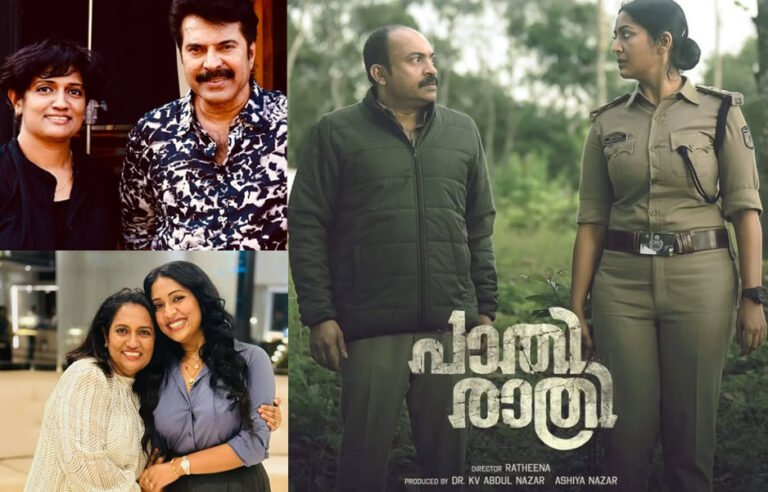
Navya Nair in a Police Role for the First Time: Ratheena’s ‘Pathirathri’ Hits Theaters Tomorrow!

0

Kochi: The highly anticipated crime thriller ‘Pathirathri’, starring Navya Nair and Soubin Shahir, is set to release in theaters tomorrow. The film is generating significant buzz as it features Navya Nair in the role of a police officer for the very first time.

‘Pathirathri’ is the second directorial venture from Ratheena, who received widespread critical acclaim for her debut film ‘Puzhu’, which starred Mammootty. Produced by Dr. K.V. Abdul Nasser and Ashia Nasser under the Bency Productions banner, the film will be distributed across Kerala by Dream Big Films.

The film, certified U/A, is a crime drama investigation thriller. Its trailer, which has already garnered over 4.4 million views on YouTube, hints at a compelling murder investigation. The narrative appears to weave together unexpected twists in the case with intricate family relationships, leaving audiences eager for the release. Navya Nair plays the character of Jancy, a police officer, with Soubin Shahir portraying her colleague, Hareesh.

The film boasts a strong supporting cast, with Sunny Wayne and Ann Augustine in crucial roles. Other prominent actors include Athmeeya Rajan, Sabareesh Varma, Harisree Ashokan, Achyuth Kumar, Indrans, and Tejas.

The music for ‘Pathirathri’ is composed by Jakes Bejoy, whose recent work has been featured in several hit films. The movie’s promotional song is already trending online.

The technical crew includes Shaji Marad as the scriptwriter and Shehnad Jalal as the cinematographer. With a talented cast and the creative team behind ‘Puzhu’, ‘Pathirathri’ is poised to be a gripping addition to Malayalam cinema.

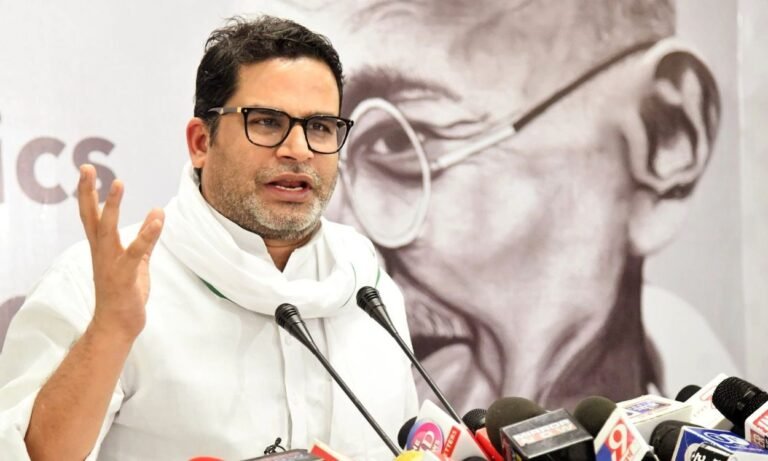
Prashant Kishor’s Bihar Bombshell: Predicts ‘Certain Defeat’ for NDA, Says Nitish Won’t Return

0

PATNA: Political strategist and Jan Suraaj leader Prashant Kishor has dropped a series of stunning predictions for the 2025 Bihar Assembly elections, forecasting a “certain defeat” for the ruling NDA coalition and asserting that Chief Minister Nitish Kumar will not return to power. While Kishor himself will not contest, he laid out a high-stakes, all-or-nothing scenario for his own party.

Kishor claimed the BJP-led NDA is on shaky ground, pointing to internal dissent over seat-sharing arrangements. He cited recent expressions of displeasure from allies like Upendra Kushwaha of the Rashtriya Lok Morcha and Jitan Ram Manjhi of the Hindustani Awam Morcha (Secular) as evidence that “nothing is well in NDA.”

The strategist, who previously worked closely with Nitish Kumar, delivered a particularly grim forecast for his former associate’s Janata Dal (United). Kishor predicted the JD(U) would “struggle to win even 25 seats” in the 243-member assembly.

However, Kishor’s critique was not limited to the ruling alliance. He described the opposition INDIA bloc as being in a similar state of disarray, highlighting the “never-ending tiff between RJD and the Congress.”

For his own Jan Suraaj outfit, Kishor set an audacious goal, stating the party will either achieve a resounding victory or face a complete rout. “I expect a tally of either fewer than 10 seats or more than 150 seats. There is no possibility of anything in between,” he told PTI, adding that securing anything less than 150 seats “shall be a personal defeat for me.”

The Bihar Assembly elections will be held in two phases on November 6 and November 11, with the counting of votes scheduled for November 14.