

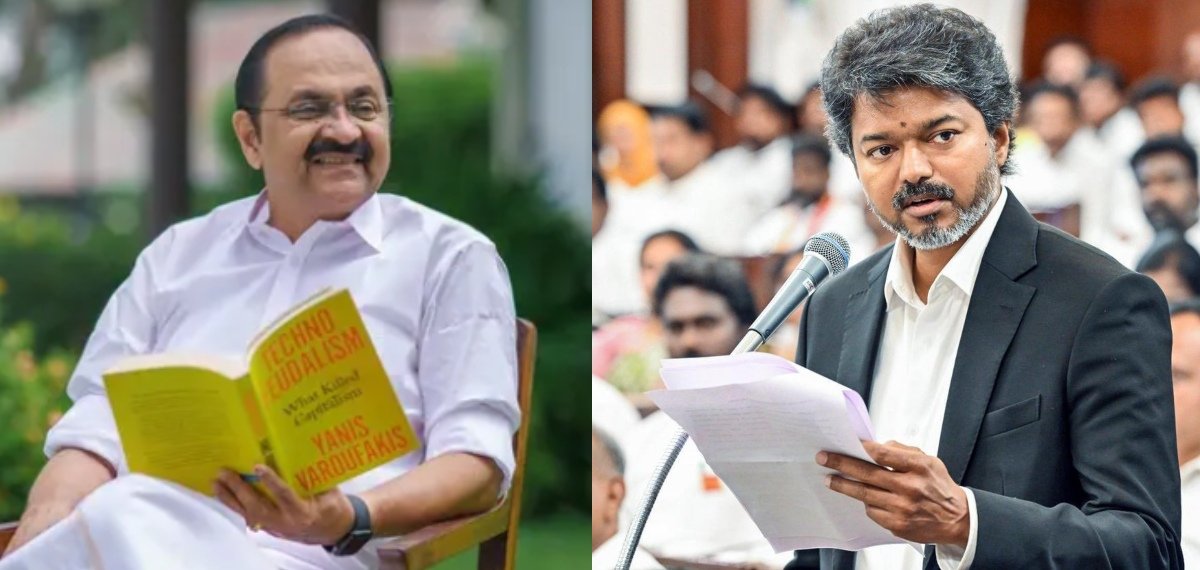

Thiruvananthapuram/Chennai: The assembly elections of May 2026 have ushered in monumental political shifts in both Kerala and its neighbor, Tamil Nadu. While the new administrations have only been in power for a few weeks, the distinct personalities, backgrounds, and strategies of the two Chief Ministers offer clear insights into the future of their respective states. Kerala is banking on the parliamentary experience of VD Satheesan, while Tamil Nadu is riding high on the charismatic wave of superstar-turned-politician Vijay.
VD Satheesan: The Experienced Parliamentarian
In Kerala, the UDF returned to power after a ten-year hiatus under the leadership of VD Satheesan. The Congress emerged as the single largest party with 63 seats, while the UDF coalition secured a comfortable majority with 102 seats. Satheesan, a veteran politician with legislative rules at his fingertips, brings a highly intellectual and fact-based approach to governance.

Facing a severe financial crisis, Satheesan’s primary focus is on fiscal discipline and enhancing administrative efficiency rather than chasing grand political symbolism. His communication style is direct, transparent, and factual, making him highly respected among Kerala’s politically conscious electorate. However, navigating the internal democracy of a national party and managing a diverse coalition remain his key challenges, alongside facing a formidable LDF opposition on the ground.
Vijay: The Charismatic Populist
Meanwhile, Tamil Nadu witnessed a historic disruption. Breaking the decades-old duopoly of the DMK and AIADMK, actor Vijay’s Tamilzhaga Vettri Kazhagam (TVK) stunned the nation by becoming the single largest party with 108 seats. Vijay’s governance draws its strength directly from the massive fan base and emotional connect he built during his cinematic career.
Unlike Satheesan’s media-centric approach, Vijay prefers direct communication with the masses through large-scale rallies and public interaction programs. His administration prioritizes job creation, industrial growth, attracting new investments, and ensuring corruption-free governance. With absolute control over his party and a currently fractured opposition, Vijay enjoys significant political freedom in his initial days.
The Financial Contrast and Ultimate Test
The two states stand on vastly different economic footings. Despite topping human development indices, Kerala’s treasury is strained, forcing the Satheesan government to rely on IT, tourism, and the knowledge economy to curb the fiscal deficit. On the other hand, Tamil Nadu’s robust manufacturing sector and strong export revenues grant Vijay the financial liberty to implement large-scale welfare and development projects.
The next five years will be a true litmus test for these contrasting models of governance. While Kerala tests a consensus-driven, institutional model under Satheesan, Tamil Nadu will see how far a charisma-led, centralized leadership under Vijay can transform the state. Ultimately, the success of both leaders will not be measured by the size of their electoral victories, but by the tangible improvement in the lives of their citizens.