

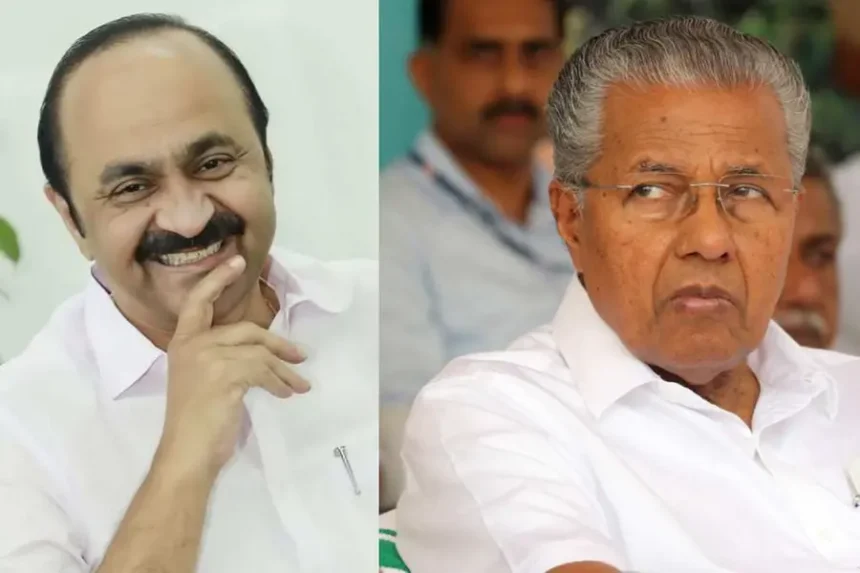

Thiruvananthapuram: The financial burden left behind by the previous Pinarayi Vijayan government has emerged as a major political issue, with figures cited from Accountant General records indicating that the present V.D. Satheesan government has paid ₹11,766.77 crore in interest between April and August of the current financial year.
The figures have triggered fresh criticism over the borrowing policies of the Pinarayi government, which was in power from 2016 to 2026. Critics allege that the previous administration relied heavily on borrowing to finance government expenditure creating a substantial debt burden for the state.
Borrowing Beyond Regular Limits
The criticism is not limited to Kerala’s conventional market borrowings. The previous government also relied on institutions and mechanisms such as KIIFB and the pension company to mobilise funds.
Critics argue that such borrowing added to Kerala’s overall financial liabilities. The inclusion of certain off-budget borrowings while assessing the state’s debt position has also been a contentious issue in discussions involving the Comptroller and Auditor General (CAG) and Kerala’s borrowing limits.
According to the political argument being raised now, restrictions on further borrowing have made it increasingly difficult for the government to find additional fiscal space for new projects and welfare commitments.
₹11,766.77 Crore Interest Bill
The interest expenditure cited for the first five months of the current financial year is:
April: ₹2,193.21 crore
May: ₹2,064.32 crore
June: ₹2,335.82 crore
July: ₹2,244.07 crore
August: ₹2,929.35 crore
The total comes to ₹11,766.77 crore for the April-August period.
The figures are being cited as evidence of the continuing impact of past borrowing decisions on the state’s present finances.
A Major Challenge for the Satheesan Government
For the V.D. Satheesan government, managing the state’s accumulated liabilities while maintaining spending on salaries, pensions, welfare programmes and development remains a major challenge.
A growing interest burden means that a significant portion of government revenue has to be committed to servicing existing liabilities rather than being available for new spending.