
Tuesday, September 22, 2026
Home Blog Page 53

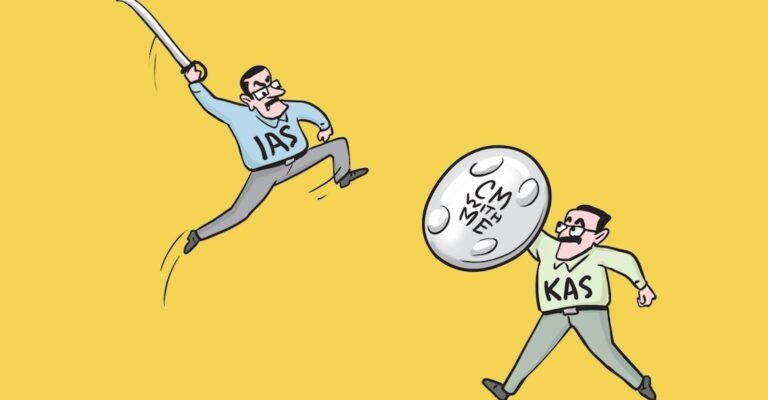
IAS vs KAS Salary Row: Kerala CM Pinarayi Vijayan Faces Heat Over Major Pay Disparity Issues

0

THIRUVANANTHAPURAM: The long-standing friction between the Indian Administrative Service (IAS) and the Kerala Administrative Service (KAS) has once again reached a boiling point, presenting a significant administrative challenge for Chief Minister Pinarayi Vijayan’s government.

​At the heart of the dispute is a notable salary disparity where entry-level KAS officers reportedly receive a higher basic pay than their IAS counterparts. According to reports, while an entry-level IAS officer starts with a basic salary of approximately ₹56,100, a KAS officer’s basic pay has been fixed significantly higher, around ₹81,800.

​The Hierarchy Crisis

The IAS Association has raised formal concerns, arguing that this “inverted” pay structure undermines the traditional administrative hierarchy. Since KAS was designed as a “feeder service” to the IAS, senior officials argue it is illogical for a subordinate service to have a higher starting pay scale.

​Government’s Stand

While Chief Minister Pinarayi Vijayan has championed the KAS as a way to professionalize state bureaucracy and provide opportunities for talented local youth, the IAS and IPS associations have labeled the pay fixation a “blunder.” Critics within the service suggest that such discrepancies could lead to coordination issues in district administrations and state departments where KAS officers might draw more than the superiors they report to.

​Internal Friction

Recent meetings chaired by the Chief Secretary have seen heated exchanges, with IAS officers alleging that the KAS cadre is focused more on remuneration than on field duties. On the other hand, KAS supporters argue that the IAS officers receive higher central allowances and faster promotion cycles, which balances the lifetime earnings.
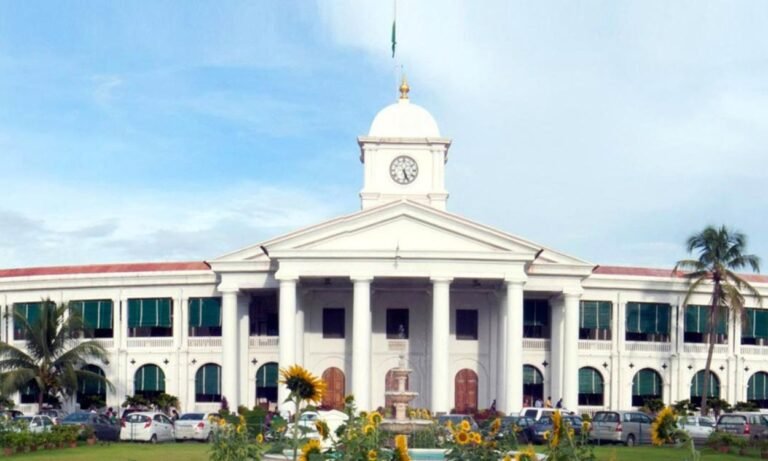
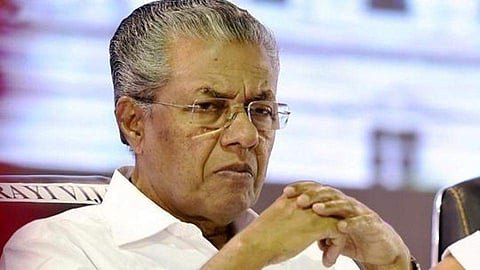
KAS Officers Under Fire: Chief Secretary Meeting Exposes Major Lapses

0

THIRUVANANTHAPURAM: The Pinarayi Vijayan government’s flagship Kerala Administrative Service (KAS) is under intense scrutiny. A high-level meeting, chaired by the Chief Secretary and attended by various Department Secretaries, has raised serious red flags regarding the conduct and efficiency of KAS officers.

​The minutes of the meeting suggest that the prestigious service, designed to create a professional bureaucratic tier, is failing its core objectives.

​Field Work Avoidance and “Convenience” Postings

​The most damning allegation is that KAS officers are showing a strong reluctance to work in field positions. Instead of serving on the ground, many are reportedly leveraging “working arrangements” and deputations to secure comfortable desk jobs, often without the knowledge of their respective Secretaries.

​”The tendency to prioritize personal convenience and interests over administrative duties is weakening the very purpose of the KAS,” the meeting observed.

​The “Status” Issue and High Salaries

​The report highlights a growing ego clash within the hierarchy. Many officers reportedly refuse specific tasks, claiming the work is “below their dignity” or status. This comes despite the fact that KAS officers currently enjoy a salary structure that is nearly 35% higher than IAS officers at entry levels, while reportedly handling a significantly lighter workload.

​Key Failures Highlighted in the Meeting:

  • ​Lack of Field Experience: Officers are avoiding field postings, which is drastically affecting their administrative efficiency and performance.
  • ​Perks Over Productivity: The focus has shifted from public service to securing government benefits and personal perks.
  • ​Working Arrangement Abuse: The system is being manipulated to avoid tough assignments, leaving field posts vacant.
  • ​The 4-Year Promotion Demand: While the government mandates 8 years for promotion, the KAS officers’ association is ironically lobbying to slash this to 4 years despite the current performance concerns.

​Proposed Reforms

​To salvage the service’s integrity, the Secretary-level meeting proposed several mandatory changes:

  1. ​Mandatory Field Tenure: Officers must serve in field positions for a minimum of three years.
  2. ​Cadre Priority: All cadre posts must be filled before creating or utilizing “Deputation Reserves.”
  3. ​Strict Deputation Rules: Field posts should be the primary focus of the Deputation Reserve to ensure grassroots administration doesn’t suffer.

KAS Officers Urge Kerala Government to Slash Promotion Tenure to Four Years

0

THIRUVANANTHAPURAM – The Kerala Administrative Service (KAS) Officers Forum has officially moved the State government to fast-track their career progression, demanding a significant reduction in the mandatory waiting period for their first promotion.

​In a memorandum submitted to the government, the officers described the current eight-year eligibility criteria as “excessively long” and have requested that it be halved to four years.

​The Argument for Early Promotion

​Under the existing KAS Special Rules, officers must serve eight years in the Junior Scale before becoming eligible for promotion. While the government previously defended this duration—citing uniformity with other state services, including medical officers—the KAS cadre argues their unique training structure warrants a change.

​The officers highlighted that:

  • ​They undergo two years of rigorous pre-service training.
  • ​This training is followed by a two-year probation period.
  • ​The government recently recognized the training period as “active duty.”

​The Forum contends that if the training period is factored in, eligibility technically shifts to six years. However, they are pushing for a total overhaul to ensure promotion immediately upon the successful completion of their four-year training and probation cycle.

​Pay Scale and Protocol Parity

​The demand isn’t just about rank; it’s about maintaining a competitive edge and securing administrative perks. Currently, KAS officers enjoy a higher starting basic salary and an additional 10% special pay compared to junior IAS officers.

​By securing a promotion within four years, the officers aim to:

  1. ​Maintain Pay Superiority: Stay in a higher pay bracket than junior IAS counterparts post-promotion.
  2. ​State Protocol: Gain inclusion in the State protocol list.
  3. ​Benefits: Access official vehicles and government facilities on par with the elite IAS cadre.

Horror at Swiss Ski Resort: Fire Erupts at High-Altitude Bar

0

​CRANS-MONTANA, SWITZERLAND – What began as a high-energy “après-ski” party turned into a night of terror as a fire ripped through a popular high-altitude bar in a Swiss ski resort, forcing panicked holidaymakers to smash windows to escape the encroaching flames.

​Witnesses at the scene described a harrowing ordeal that began when the ceiling of the crowded venue suddenly caught fire. As smoke began to fill the room, the festive atmosphere instantly evaporated, replaced by screams and a desperate scramble for the exits.

​”People Were Jumping for Their Lives”

​Eyewitnesses recounted the moment the blaze took hold. “The ceiling was just suddenly on fire,” one partygoer told local news outlets. “People didn’t wait for the doors; they started smashing the glass windows with anything they could find—skis, chairs, whatever was at hand.”

​Videos circulating on social media show thick plumes of black smoke billowing from the mountain-top structure as skiers and snowboarders watched in disbelief from the slopes. Some witnesses reported seeing people jumping from balconies and through shattered windows to escape the heat and suffocating smoke.

​Emergency Response

​Emergency services, including mountain rescue teams and fire crews, were dispatched immediately to the site. Given the bar’s high-altitude location, reaching the blaze presented significant logistical challenges. Helicopters were reportedly used to assist in the evacuation and to transport any injured individuals to nearby medical facilities.

​While the full extent of the injuries has not yet been officially confirmed, local authorities have stated that several people were treated for smoke inhalation and minor cuts from the broken glass.

​Investigation Underway

​The cause of the fire remains unknown. Preliminary reports suggest the blaze may have started in the kitchen or near the ceiling’s electrical wiring, but a formal investigation is now being conducted by Swiss cantonal police.

​The resort, a popular destination for international tourists, has temporarily closed the affected area as safety inspectors assess the structural damage. For now, the “horror at the bar” serves as a grim reminder of how quickly mountain celebrations can turn into a fight for survival.

Malayali Priest Arrested in Nagpur Over Alleged Forced Conversion; VD Satheesan Seeks PM, CM Intervention

0

THIRUVANANTHAPURAM: The arrest of a Malayali priest and his family members in Nagpur, Maharashtra, has sparked a major political row. Following the incident, Kerala Leader of Opposition (LoP) V.D. Satheesan has officially reached out to Prime Minister Narendra Modi and Maharashtra Chief Minister, seeking their immediate intervention to ensure justice and the safety of the detained individuals.

​The Incident

​The priest, identified as Father Sudhir (a member of the Nagpur Mission under the CSI South Kerala Diocese), his wife Jasmine, and a helper were taken into custody by the Nagpur police during a Christmas prayer meeting held at Shingodi.

​According to reports, the police action followed allegations of “forced religious conversion” raised by local groups. The CSI South Kerala Diocese has vehemently denied these allegations, stating that the group was merely conducting a peaceful prayer session to celebrate the festive season.

​V.D. Satheesan’s Intervention

​Expressing grave concern over the incident, V.D. Satheesan stated that the arrest appears to be an act of harassment against religious minorities. In his letters addressed to the Prime Minister and the Maharashtra Chief Minister, the LoP highlighted that:

  1. ​Freedom of Religion: The arrests violate the fundamental right to practice and propagate one’s religion as guaranteed by the Constitution.
  2. ​Safety of Malayalis: There is a growing concern regarding the safety of Malayali missionaries and workers serving in other states.
  3. ​Diplomatic & Legal Support: He urged the Kerala government to coordinate with the Maharashtra government and provide necessary legal aid to the priest and his family.

​Church Response

​The CSI Church authorities have clarified that Father Sudhir has been serving the community in Nagpur for several years. They alleged that the police acted under pressure from fringe elements who disrupted the prayer meeting. The Church has called for a fair investigation, maintaining that no laws were violated during the gathering.

​While the Nagpur police are currently investigating the complaints, the incident has triggered a wave of protests among the Malayali community and human rights activists, who view the move as a targeted attack on the clergy.

AICC praises VD Satheesan’s strategic social engineering as Kerala’s Christian vote bank returns to UDF, marking a major shift in the state’s political landscape

0

NEW DELHI: In a significant political shift that could redefine Kerala’s electoral future, the All India Congress Committee (AICC) has observed that the influential Christian vote bank—which had distanced itself from the Congress for nearly two decades—has made a resounding return to the United Democratic Front (UDF).

​According to the AICC Working Committee, the primary architect of this transition is the Leader of the Opposition, VD Satheesan. His meticulously crafted “social engineering” strategy over the last four and a half years is credited with steering the minority community back to the UDF fold, as evidenced by the front’s stellar performance in the recent local body elections.

​The Shift of Major Churches

​The most notable change is seen in the Malankara Orthodox Church, which had openly supported the LDF in 2016 following disputes with the then-Oommen Chandy government. Additionally, the Syro-Malabar Church, which at one point appeared to be gravitating toward the BJP, has now firmly realigned with the UDF.

​Satheesan’s Proactive Engagement

​The party high command highlighted Satheesan’s vocal stance against atrocities faced by Christians in North India as a key factor in building trust. His direct intervention in local issues—including human-wildlife conflicts, coastal community grievances, the Munambam land dispute, and aided school appointments—has resonated deeply with the community.

Satheesan personally attended over 250 Christian community gatherings, engaging with both religious leaders and believers. This hands-on approach has successfully bridged the gap that existed for years.

​Winning Without the Mani Group

​One of the most significant takeaways for the AICC is that the UDF achieved this consolidation without the help of the Jose K. Mani-led Kerala Congress (M), which is currently with the LDF. The UDF managed to sweep the high-range and coastal belts in districts like Kottayam, Idukki, Pathanamthitta, Ernakulam, Kannur, and Kozhikode.

​Political analysts suggest that if this trend continues into the upcoming Assembly elections, the UDF is well-positioned to secure a comfortable victory and return to power in Kerala.

Kerala State Budget to be Presented on January 29: A Pre-Election ‘Bonanza’ Expected

0

THIRUVANANTHAPURAM: Finance Minister KN Balagopal is set to present the Kerala State Budget for the 2026-27 financial year on January 29. This marks the final full budget of the second Pinarayi Vijayan government, and all signs point toward a massive “election-special” presentation aimed at winning over the electorate.

​With the state assembly elections looming, Chief Minister Pinarayi Vijayan has reportedly directed the Finance Department to shift away from the austerity and tax hikes that defined previous years. Instead, the focus is now on populist schemes and major fund allocations across all sectors.

​From ‘Tax Hikes’ to ‘Public Outreach’

​This will be Minister Balagopal’s sixth budget presentation. His previous five budgets (from the 2021-22 revised budget to 2025-26) were frequently criticized by the public and the opposition for heavy taxation and “anti-people” fiscal policies. However, with the government’s term nearing its end, the strategy is expected to change drastically.

​Focus Areas: VIP Constituencies and Welfare

​Political insiders suggest that the budget will feature:

  • ​Mega Projects for Dharmadam: Significant announcements are expected for the Chief Minister’s home constituency.
  • ​Kottarakkara Development: The Finance Minister is also likely to shower his own constituency with major projects.
  • ​Welfare Spending: Increased allocations for social security pensions and rural development to mitigate anti-incumbency.

​While the current government is making the promises, the fiscal responsibility of implementing these high-cost projects will fall on the administration that takes charge after the upcoming elections.

AA Rahim’s English Speech in Karnataka Sparks Viral Troll Storm: Is AI Defending the MP?

0

THIRUVANANTHAPURAM – Rajya Sabha MP and DYFI National President AA Rahim has once again found himself at the center of a social media firestorm. A recent video of Rahim speaking in English during a visit to Karnataka has gone viral, triggering a wave of memes and sharp criticism from political opponents.

​The controversy erupted after a clip of Rahim’s interaction with a news channel in Karnataka surfaced online. Critics on social media were quick to point out that the English used by the MP, who holds a postgraduate degree from Kerala University, did not match the expected standard for a national representative.

​Congress leader Adv. Veena S. Nair joined the fray, taking a jab at the MP on Facebook. “Not knowing how to speak English is not a crime,” she wrote, “but trying to create mischief with it is taking it too far.”

​The AI Twist: Digital Intelligence vs. Social Media Trolls

​In a fascinating turn of events, while human trolls are busy mocking the MP, Artificial Intelligence appears to be on his side. Search queries and AI-driven overviews are reportedly describing AA Rahim’s English proficiency as “excellent.”

​AI reports highlight his ability to speak fluently on national platforms and in the Rajya Sabha, praising his communication skills. This digital endorsement has added a new layer to the debate, pitting automated “objective” analysis against the subjective ridicule of social media users.

​Despite being a frequent target for his English speeches in the past, Rahim remains undeterred. The CPM leader continues to present his political stances in English on national stages, maintaining that the message is more important than the accent.

Age No Bar: Retired IAS Sheikh Pareeth Gets Another Tenure Extension at Kerala Coastal Development Corp

0

THIRUVANANTHAPURAM – In a move that continues to bypass standard age protocols for Public Sector Undertakings (PSUs), the Kerala State Cabinet has approved a further extension for retired IAS officer P.I. Sheikh Pareeth. He will continue to serve as the Managing Director (MD) of the Kerala State Coastal Area Development Corporation (KSCADC).

​The decision, finalized in a recent cabinet meeting, extends Sheikh Pareeth’s tenure for one more year. The veteran officer, who has been at the helm of the corporation since 2018 following his retirement from active civil service.

​Relaxing the Rules

​Under current government guidelines, the maximum age limit for serving as a Managing Director of a PSU is generally set at 65 years. However, Sheikh Pareeth, who is now 67, has been granted a special exemption. The government justified the relaxation by citing his “indispensable” role in overseeing several critical, time-bound projects currently being undertaken by the KSCADC.

The extension was granted following a request from the officer himself, supported by Fisheries Minister Saji Cherian. The rationale provided was that a change in leadership at this juncture could potentially stall ongoing modernization projects in the coastal and fisheries sectors.

Aadhaar-PAN Linking Deadline Dec 31: Miss It and Face ₹1,000 Penalty; Here’s What You Need to Do

0

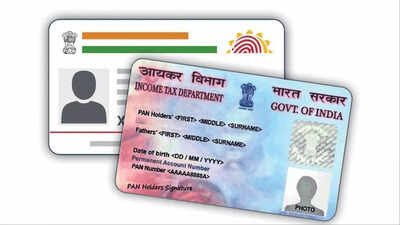
NEW DELHI: The Income Tax Department has issued a final call for taxpayers to link their Permanent Account Number (PAN) with Aadhaar by the looming deadline of December 31, 2025. Failing to complete this mandatory linkage will result in the PAN card becoming “inoperative,” leading to significant financial hurdles and a mandatory late fee.

​The ₹1,000 Penalty and Deadline Rules

​According to the latest Central Board of Direct Taxes (CBDT) directives, individuals who have not yet linked their documents must pay a penalty of ₹1,000 under Section 234H of the Income Tax Act before submitting the linking request.

​While the deadline is December 31, there is a specific relaxation for those who obtained their PAN card after October 1, 2024, using an Aadhaar enrolment ID; these users can link their documents free of charge until the end of the year. However, for the majority of taxpayers who missed previous windows, the ₹1,000 fee is mandatory.

​What Happens if You Miss the Deadline?

​From January 1, 2026, any unlinked PAN will be declared inoperative. The consequences of an inactive PAN are severe:

  • ​No Tax Refunds: You will not be able to claim pending income tax refunds.
  • ​Higher TDS/TCS: Taxes will be deducted at much higher rates on your income.
  • ​Banking Blocks: You may face issues in opening new bank accounts or conducting high-value transactions.
  • ​Investment Restrictions: Mutual fund investments and stock market trading through Demat accounts could be frozen.

​Step-by-Step: How to Link Your Aadhaar and PAN Online

​Taxpayers can complete the process in a few minutes via the official e-filing portal:

  1. ​Visit the Portal: Go to www.incometax.gov.in.
  2. ​Quick Links: Click on the ‘Link Aadhaar’ option under the ‘Quick Links’ section.
  3. ​Enter Details: Provide your PAN and Aadhaar number.
  4. ​Pay the Fee: If applicable, pay the ₹1,000 penalty through ‘e-Pay Tax’ using Minor Head (500).
  5. ​Validation: After payment, wait 4-5 working days for the payment to reflect, then submit the linking request.
  6. ​OTP Verification: Enter the 6-digit OTP received on your Aadhaar-registered mobile number.

​Exempted Categories

​Linking is mandatory for most, but certain groups remain exempt, including:

  • ​NRIs (Non-Resident Indians).
  • ​Individuals aged 80 years or older.
  • ​Residents of Assam, Meghalaya, and Jammu & Kashmir.
  • ​Non-citizens of India.

​With only a few days remaining, taxpayers are advised to verify their status immediately to avoid the last-minute rush and potential financial penalties.