

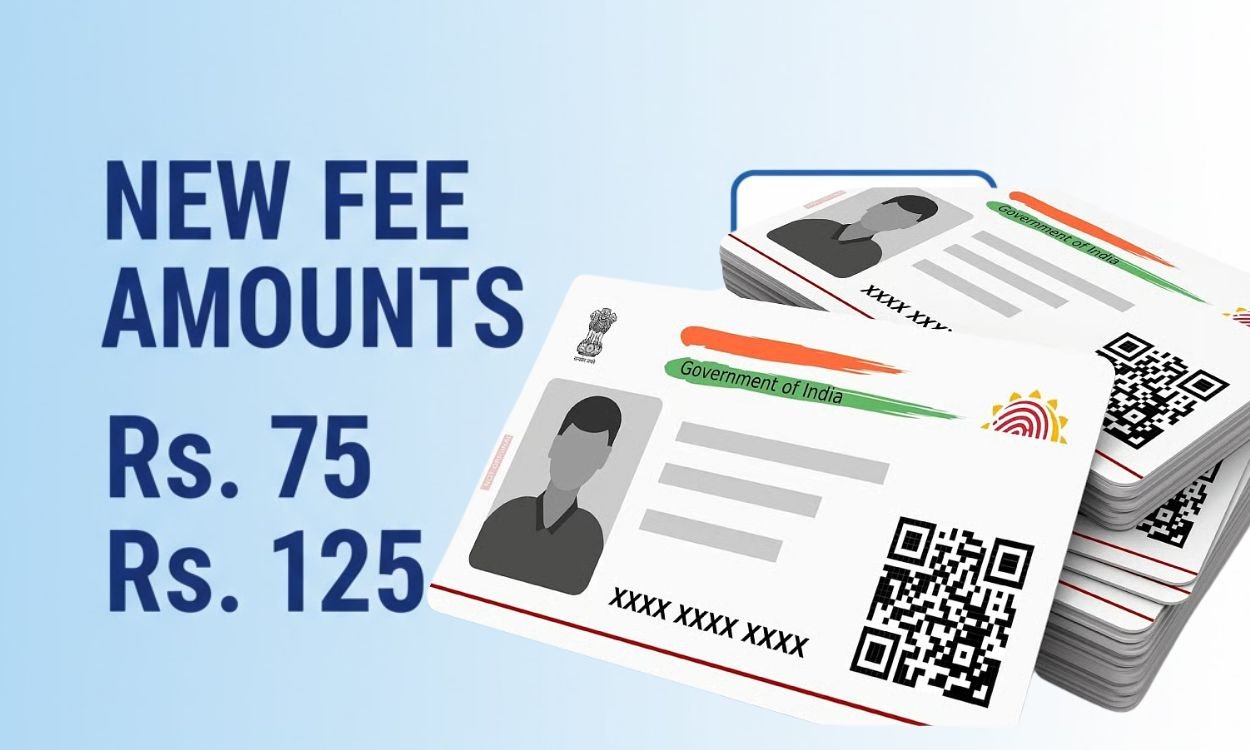

NEW DELHI – The government has introduced several significant changes to Aadhaar rules, impacting financial transactions, banking services, and small savings schemes. With increased fees for updates and stricter Know Your Customer (KYC) norms, citizens are urged to check their Aadhaar status and linkages immediately to avoid financial disruptions.
Aadhaar Update Fees Increased
Effective October 1, 2025, the Unique Identification Authority of India (UIDAI) has revised the service charges for updates:
| Service Type | New Fee (From Oct 1, 2025) | Old Fee |
| Demographic Updates (Name, Address, DoB, Mobile, Email) | ₹75 | ₹50 |
| Biometric Updates (Fingerprint, Iris, Photo) | ₹125 | ₹100 |
Mandatory biometric updates for children aged 5–7 and 15–17 years remain free. Document updates are also free online until June 14, 2026.
PAN-Aadhaar Linking: The Critical Deadline
The government has reiterated that failure to link PAN and Aadhaar will render the Permanent Account Number (PAN) inoperative. An inactive PAN can block critical financial activities, including investing in mutual funds, opening Demat accounts, and processing investment redemptions.
Timely linking is now deemed crucial for maintaining seamless financial health.
Simplified and Safer Aadhaar e-KYC
To enhance data security, UIDAI has launched new features like offline Aadhaar KYC and Aadhaar e-KYC Setu. These allow banks and Non-Banking Financial Companies (NBFCs) to verify customers without needing access to their full Aadhaar number, simplifying account opening and enhancing privacy.
Simultaneously, validation norms have been tightened: financial institutions can only perform Aadhaar-based KYC if the Aadhaar number is active and non-duplicate. Invalid or duplicated Aadhaar numbers will halt bank account or investment processes.
Upcoming Changes (Effective January 2026)
- AePS Tightening: Starting January 1, 2026, RBI will implement new fraud monitoring and KYC verification rules for the Aadhaar Enabled Payment System (AePS). This move, while aimed at reducing fraud, may make Aadhaar-based cash withdrawal or deposit services more expensive or limited, particularly in rural areas.
- Small Savings Expansion: Aadhaar e-KYC is being expanded for small savings schemes (like Post Office RD, PPF, and NSC), enabling paperless onboarding. However, unlinked or outdated Aadhaar information could lead to blocked deposits or withdrawals.
Investors and citizens must regularly check and update their Aadhaar status to avoid transaction delays, interest losses, and KYC rejections, ensuring compliance in the evolving digital identity landscape.